
In short: Often not: a Florida court will not order a sale when the writing does not identify the land with enough certainty, and if the description itself is patently ambiguous, outside evidence generally cannot fill the gap. In Boles v. St. Marks Pond Industrial, LLC, buyers paid $65,000 under a two-page agreement for 65 acres of a larger St. Johns County tract whose exact boundaries were to be set after industrial sites were finalized. After a bench trial, the court found the description patently ambiguous and no contract formed, and the Fifth District affirmed without a written opinion on June 18, 2024.
The Facts
Michael and Daria Boles wanted land in St. Johns County for a bobwhite quail preserve. St. Marks Pond Industrial, LLC owned a large tract with a conservation easement in the middle and planned industrial sites on its north side. Gregory Jones, a real estate licensee who knew both sides, drafted the paperwork. After an earlier letter of intent, the parties signed a two-page “binding intent to purchase and sell” agreement dated December 31, 2020.
The agreement described the property as 65 acres within the northwest part of the seller’s parcel, as shown on an attached map outlined in red, and said the exact metes and bounds would be determined when the industrial park sites on the north side were finalized, with the eastern line to be adjusted to make up the acreage. It called for a $65,000 payment, a closing in early January 2021 or 30 days after a mortgage release, and a lease of the property if the closing did not occur.
No closing happened. When the buyers sought a clearing permit, they learned the seller had applied to rezone the whole parcel for industrial use. The buyers sued for specific performance and related relief against the seller, its principal Daniel Hill and others. After a four-day bench trial, the trial court found the legal description patently ambiguous, found no meeting of the minds and therefore no contract, and entered judgment for the defendants. The buyers appealed (No. 5D2023-3532). Richard Q. Lewis III argued for the buyers and J. Russell Collins for St. Marks Pond and Hill. The points below are what the lawyers argued, not findings by the court.
- The buyers argued Florida law does not require a metes and bounds description, and that the agreement, its red-outlined map, a later survey that differed by under an acre, and emails and texts from Hill promising to “honor the contract” all identified the same land.
- They argued the northwest portion held only about 67 acres, so the land was fixed, and that the open item was only where one boundary would fall once the industrial sites were surveyed, for which the agreement supplied a mechanism.
- They argued the seller’s side drafted the description and could not use its vagueness to escape, and that the final judgment largely copied the seller’s proposed judgment and misstated the description.
- The seller argued the agreement was meant as a contract but was poorly drafted without lawyers. The land was whatever remained after the industrial sites and a road area were decided, which had not happened, so a court could not look at the words and locate the land.
- The panel asked whether the uncertainty was really a contingency, a future event that would fix the boundary, rather than an ambiguity, and what property could be leased under the agreement if the land to be sold could not be identified.
The Decision
The Fifth District affirmed on June 18, 2024. The ACIS docket lists the disposition as “Per Curiam Affirmed,” with no written opinion, and the mandate issued July 9, 2024.
Because there is no opinion, the affirmance does not tell us which of the trial court’s reasons the panel accepted. It means the judgment for the seller stands. It is not a published rule that every agreement with an open boundary is unenforceable.
The Law
Under the statute of frauds, section 725.01, a contract for the sale of land must be in writing and signed by the party to be charged. To be enforced by specific performance, the writing must also identify the land with reasonable certainty. Florida courts distinguish a latent ambiguity, where the words look clear but outside facts create doubt and parol evidence can resolve it, from a patent ambiguity, where the uncertainty appears on the face of the description and parol evidence generally cannot be used to supply what the parties left out.
The buyers relied on the Fifth District’s 1991 decision in Bosanji v. Magnethal, where a description that included “other surrounding property” was held capable of being applied to the land through parol evidence. The seller relied on the rule that a court cannot write the description the parties failed to agree on. The trial court sided with the seller.
The buyers also objected that the judgment tracked the seller’s proposed order. The Florida Supreme Court has criticized trial courts that adopt a party’s proposed final judgment verbatim without showing independent judgment, though using a party’s proposal is not error by itself, particularly when both sides were invited to submit one.
Lessons
- Describe the land precisely before you sign: a legal description, a survey, or at least a description that a surveyor can locate without new decisions by the seller.
- If boundaries depend on a future event, say exactly how they will be fixed, by whom, by when, and what happens if the event never occurs.
- Calling a document “binding” does not make it enforceable. A short form drafted without lawyers can cost far more than it saves.
- Do not pay a nonrefundable deposit unless the agreement says what happens to it if the deal cannot close.
- A per curiam affirmance decides only this case. A better-drafted description could come out differently.
Watch the Oral Argument
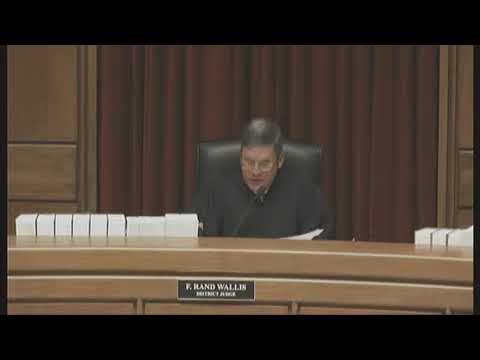
This is the recording of the actual oral argument, posted on the channel. What lawyers and judges say at argument is not the ruling; the decision is summarized above.
LAND DEAL GONE WRONG! Contract or Letter of Intent? | B.S. v. St. Mark's Pond | OA 23-3532
Go Deeper
- A $10 Million Land Deal That Never Closed: Buyer Loses on Appeal (Pine Grove v. Robert Diesel)
- Closing Date Passed, but Was It Extended? Buyer's Case Revived (Stav Software v. Lederman)
- When Does the 20-Day Title Objection Deadline Start? (ATS Residential v. Arthur)
Frequently Asked Questions
Is a letter of intent to buy land binding in Florida?
It depends on its terms. A letter of intent that contemplates a later contract is usually not binding, while a signed writing with all essential terms can be. Even a document labeled binding fails if it does not identify the land with reasonable certainty, which is what the trial court found in Boles v. St. Marks Pond.
Does a real estate contract need a full legal description?
Not necessarily a metes and bounds description, but the writing must identify the land well enough that it can be located, as section 725.01 and the specific performance cases require. A street address or recorded parcel can be enough. A description that leaves the boundaries to future decisions may not be.
Can I get specific performance if the property boundaries were never finalized?
Usually not if the uncertainty appears on the face of the agreement, because the court would have to write terms the parties never agreed on. In Boles, the buyers argued a survey and emails fixed the land, but the trial court found the description patently ambiguous and the Fifth District affirmed.
What is the difference between a patent and latent ambiguity in a deed or contract?
A patent ambiguity is uncertainty visible on the face of the writing, and parol evidence generally cannot cure it. A latent ambiguity appears only when the words are applied to the facts on the ground, and outside evidence can be used to resolve it. Which one you have often decides whether a land contract can be enforced.
Talk to a Florida real estate litigation lawyer
Weidner Law, P.A. handles Florida real estate disputes, title problems and appeals from St. Petersburg. If you need a real estate litigation lawyer, call (727) 954-8752 or email weidner@mattweidnerlaw.com.
Read the law yourself, free: every Florida statute and court rule is on floridarules.net.
This article is general information about Florida law, not legal advice about your situation. Reading it, watching the videos, or contacting the firm does not create an attorney-client relationship. Every case turns on its own facts, and past results do not guarantee a similar outcome. The hiring of a lawyer is an important decision that should not be based solely upon advertisements.
