
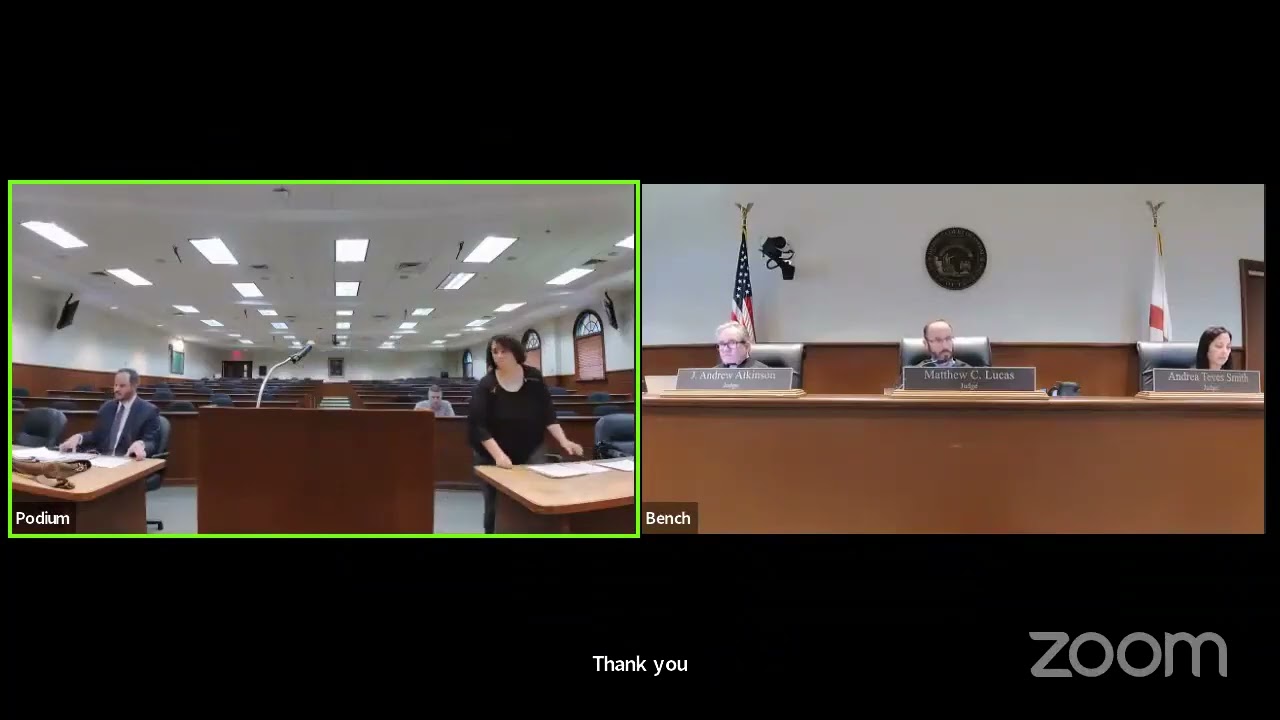
In short: Not always. Under section 83.56, a landlord who accepts rent knowing the tenant is in default can waive that default, but accepting partial rent or a government rent subsidy does not by itself waive an eviction for nonpayment. In Elkins v. PAC Wiregrass Ranch, a Pasco County tenant argued her apartment landlord waived its eviction by cashing three state rental-assistance checks after it sued. The Second District Court of Appeal affirmed the eviction judgment on May 10, 2024, without a written opinion.
The Facts
Sabrina Elkins rented an apartment from PAC Wiregrass Ranch, LLC, doing business as Horizon Wiregrass Ranch, in Pasco County. According to the landlord’s lawyer at oral argument, she had a 15-month lease running from May 2021 to October 2022 at $1,434 a month. The landlord served a three-day notice for nonpayment on December 4, 2021, the notice expired December 9 without payment, and the landlord filed for eviction on December 16, 2021.
Ms. Elkins was approved for rental assistance through the state’s Our Florida program. The landlord’s lawyer said the first assistance check did not arrive until about December 29 or 30, after the notice expired and after the suit was filed. The county court later determined the rent owed, and the landlord accepted three assistance checks covering December, January and February and credited them to her account, while the case went forward. A fourth check, for March, was not accepted. The court held a trial in April 2022 and entered a final judgment of eviction. Ms. Elkins appealed without a lawyer.
No written opinion explains the decision, so the points below are what each side argued at the February 21, 2024 oral argument, not findings by the court.
- Ms. Elkins argued the landlord blocked her online rent payments before any default, which she called a modern form of self-help eviction, and that cashing three checks after suit was filed waived the eviction.
- She said the landlord refused the fourth check even though the trial judge had told it to accept the payments, and that she was never properly served with the complaint.
- The landlord argued the case turned on one fact: rent was not paid within the three-day notice period in December. It said rent-subsidy payments do not create a waiver under section 83.56(5), that Ms. Elkins never deposited the March or April rent into the court registry, and that without a transcript of the trial the appellate court could only look for error on the face of the judgment.
The Decision
The Second District affirmed on May 10, 2024, in a one-word per curiam opinion: “Affirmed.” The mandate issued June 7, 2024. Earlier in the appeal, the court had denied the landlord’s motion to dismiss the appeal.
A per curiam affirmance without an opinion decides only this case. It tells us the eviction judgment stands. It does not announce a rule about online payment portals, rental-assistance checks or waiver.
The Law
Section 83.56(3) lets a residential landlord terminate the lease if rent remains unpaid for three days, excluding weekends and court-observed holidays, after the landlord delivers a written demand for the rent or possession.
Section 83.56(5)(a) is the waiver rule. A landlord who accepts rent with actual knowledge of the tenant’s noncompliance waives the right to terminate or sue for that noncompliance. But accepting partial rent is not a waiver. If partial rent is accepted after the notice is posted, the landlord must give the tenant a receipt, deposit the partial payment into the court registry when it files, or post a new three-day notice for the new balance.
Section 83.56(5)(c) says the waiver rule does not apply to the portion of rent paid by a local, state or federal rent subsidy, although waiver can still occur if the landlord does not file suit within 45 days after learning of the noncompliance. That is the provision the landlord relied on for the Our Florida checks.
To defend an eviction for nonpayment, a tenant must pay into the court registry the rent alleged due and the rent that comes due while the case is pending. Section 83.60(2) treats a failure to do so as a waiver of defenses other than payment, and section 83.56(5)(b) points tenants to that requirement. Separately, section 83.67 bars landlords from self-help such as cutting off utilities, changing locks or removing the tenant’s belongings.
Current law (2026): Section 83.56(4) now also allows the three-day notice to be delivered by e-mail in accordance with section 83.505, in addition to mailing, hand delivery, or leaving a copy at the residence when the tenant is absent.
Lessons
- For tenants, paying late does not undo a three-day notice that has already expired. The time to pay is within the notice period.
- Once an eviction is filed, deposit the rent into the court registry. Handing checks to the landlord, or keeping them, is not the same thing.
- Landlords who accept money after a notice should follow section 83.56(5) exactly: receipt, registry deposit, or a new notice.
- A tenant who wants to appeal needs a transcript of the trial. Without one, the appellate court usually cannot review what the trial judge heard.
- Rental-assistance payments from a government program get special treatment under section 83.56(5)(c).
Source: Elkins v. PAC Wiregrass Ranch d/b/a Horizon Wiregrass Ranch, No. 2D2022-1239 (Fla. 2d DCA May 10, 2024) (per curiam affirmance); ACIS docket.
Watch the Oral Argument
This is the recording of the actual oral argument, posted on the channel. What lawyers and judges say at argument is not the ruling; the decision is summarized above.
🏛️ Landlord Cashed Her Checks Then Filed for Eviction — Did That Waive the Claim? | Elkins
🎯 Evicted After Landlord Accepted Rent — Did Accepting Payments Waive Eviction? | 22-1239 | FL DCA
Go Deeper
- Commercial Tenant Skipped Registry Rent, Lost Notice Defense (Goldstein v. 270/286 NE 39th St)
- Is an Eviction Appeal Moot Once the Tenants Move Out? (Sierra v. 3011 N.W. 36th Street)
- Residential Tenant Rights in Florida: Know Your Rights
Frequently Asked Questions
If my landlord accepts rent after giving me a 3-day notice, is the eviction cancelled?
Not automatically. Under section 83.56(5)(a), accepting partial rent is not a waiver, but the landlord must give a receipt, put the money in the court registry, or serve a new three-day notice. Accepting full rent with knowledge of the default can waive that default.
Does accepting rental assistance waive an eviction in Florida?
Generally no. Section 83.56(5)(c) says the waiver rule does not apply to the part of the rent paid by a government rent subsidy, unless the landlord waits more than 45 days after learning of the default to file. In Elkins, the landlord accepted three Our Florida checks and the eviction was still affirmed.
Do I have to pay rent into the court registry to fight an eviction?
Yes, in a nonpayment case. Section 83.60(2) requires the tenant to deposit the rent alleged due and the rent that accrues during the case. If you don’t, you waive your defenses other than payment and the landlord can get a default judgment.
Can a landlord refuse to take my rent?
Once a three-day notice expires unpaid, the landlord is not required to accept late rent and can file for eviction. Before that, the lease and the facts matter. A landlord cannot use self-help like changing the locks or shutting off utilities, which section 83.67 prohibits.
Talk to a Florida real estate litigation lawyer
Weidner Law, P.A. handles Florida real estate disputes, title problems and appeals from St. Petersburg. If you need a real estate litigation lawyer, call (727) 954-8752 or email weidner@mattweidnerlaw.com.
Read the law yourself, free: every Florida statute and court rule is on floridarules.net.
This article is general information about Florida law, not legal advice about your situation. Reading it, watching the videos, or contacting the firm does not create an attorney-client relationship. Every case turns on its own facts, and past results do not guarantee a similar outcome. The hiring of a lawyer is an important decision that should not be based solely upon advertisements.
