
In short: Homeowners who accused a former HOA president of misusing association money during a board election campaign lost a defamation jury verdict, and the Second DCA affirmed without a written opinion in June 2015. The court also provisionally awarded the former president appellate attorney’s fees based on a rejected settlement proposal.
The Facts
Because the Second District affirmed without an opinion, the facts here come from the arguments described on appeal and from an earlier published decision in the same lawsuit, not from a written opinion on the verdict. James Oliver, a past president of the Majors Homeowner’s Association, sued several homeowners for defamation. He alleged they falsely accused him of abusing his position and using association funds for personal projects. The statements were made in connection with an HOA board election. The defendants raised truth as a defense.
Before trial, the case produced a 2013 published decision, Rogan v. Oliver, 110 So. 3d 980 (Fla. 2d DCA 2013), holding that a former officer could not block depositions of the association’s former lawyers by asserting the association’s attorney-client privilege; that privilege belongs to the current board. The case then went to a jury, which returned a verdict for Mr. Oliver. Three defendants filed separate appeals that were consolidated. A central argument on appeal was whether the evidence was enough to show express malice, which is needed to overcome a qualified privilege.
The Decision
On June 17, 2015, the Second District affirmed in all three appeals with a per curiam affirmance (a PCA) and no written opinion. The same day it provisionally granted Mr. Oliver’s motion for appellate attorney’s fees under section 768.79, Florida Statutes, the offer-of-judgment statute, leaving it to the circuit court to confirm his entitlement and set the amount. The defendants’ fee motions were denied, and their motions for rehearing or a written opinion were denied in July 2015.
A PCA leaves the verdict in place but does not explain the court’s reasoning and is not precedent. It does not establish that any particular campaign statement is or is not defamatory.
The Law
Defamation requires a false statement of fact, published to a third party, that damages the plaintiff’s reputation, made with at least negligence (or actual malice if the plaintiff is a public figure). Truth is a defense. Florida also recognizes a qualified privilege for statements made in good faith on a subject in which the speaker and listeners share an interest, such as how an HOA is run. The privilege can be lost if the plaintiff proves express malice: that the speaker’s primary motive was to harm the plaintiff rather than to serve the shared interest.
Under section 768.79, a party who makes a proposal for settlement that the other side rejects can recover attorney’s fees if the final judgment beats the proposal by the statutory margin. That can include fees for the appeal. Statements in HOA elections are also subject to Chapter 720’s rules for association elections, but those rules do not shield defamatory statements.
Lessons
- HOA campaign speech is not a free-for-all. Accusing a board member of misusing funds is a factual claim that can be tested in court.
- If you raise concerns about association finances, stick to documents and verifiable facts, and frame opinions as opinions.
- A qualified privilege protects good-faith communications on shared community issues, but it can be lost by proof of express malice.
- Rejecting a proposal for settlement can carry real cost: the other side may recover fees through trial and appeal under section 768.79.
Watch the Oral Argument
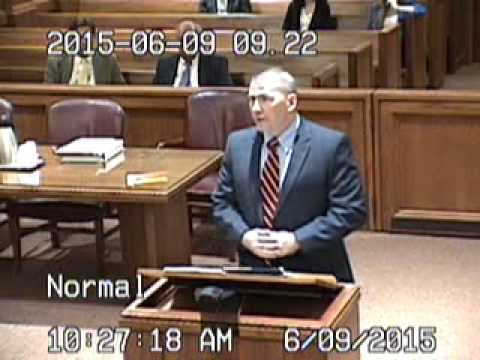
This is the recording of the actual oral argument, posted on the channel. What lawyers and judges say at argument is not the ruling; the decision is summarized above.
HOA Election Defamation & Express Malice | Rogan v. Oliver, 2D14-2640
Go Deeper
- Can a Master Association Strip Condo Owners' Rights by Amendment? (De Soleil v. Perrin)
- Bought at a Foreclosure Sale, Sold It, and Still Had a Live HOA Dispute (Viera East)
Frequently Asked Questions
Can I be sued for defamation over statements in an HOA election?
Yes. Statements of fact about a board member or candidate, such as accusing someone of misusing association money, can support a defamation claim if they are false and damaging. In this case, a jury found for a former HOA president, and the appellate court affirmed the verdict.
What is qualified privilege in a Florida defamation case?
It is a defense for statements made in good faith on a subject where the speaker and audience share an interest, like the management of their HOA. The privilege is lost if the plaintiff proves express malice, meaning the speaker’s main purpose was to injure the plaintiff rather than to inform the community.
Who controls an HOA's attorney-client privilege?
The association’s current board, not former officers. In an earlier decision in this same lawsuit, the Second DCA held that a past president could not block depositions of the association’s former lawyers by asserting the association’s privilege over the wishes of current management.
What is a proposal for settlement under section 768.79?
It is a formal written offer to resolve a case for a specific amount. If the other side rejects it and the final result is significantly worse for them than the offer, the offering party can recover attorney’s fees and costs incurred after the offer, which can include fees on appeal.
Talk to a Florida HOA dispute lawyer
Weidner Law, P.A. handles homeowners association, covenant and community disputes from St. Petersburg. If you need a property dispute lawyer, call (727) 954-8752 or email weidner@mattweidnerlaw.com.
Read the law yourself, free: every Florida statute and court rule is on floridarules.net.
This article is general information about Florida law, not legal advice about your situation. Reading it, watching the videos, or contacting the firm does not create an attorney-client relationship. Every case turns on its own facts, and past results do not guarantee a similar outcome. The hiring of a lawyer is an important decision that should not be based solely upon advertisements.
