
In short: A default lets a landlord establish that the tenant breached the lease, but it does not fix the amount owed when that amount depends on payments, credits and timing. In Maggiano v. Whiskey Creek, the Second DCA reversed a $23,381.51 judgment because the unpaid-rent damages were unliquidated and required an evidentiary hearing.
The Facts
A medical practice signed a five-year lease for professional office space starting in April 2009, and the doctor and his wife personally guaranteed it. The lease was later assigned to Whiskey Creek Professional Center, LLC. In January 2014, Whiskey Creek sued to evict the tenant, collect unpaid rent and enforce the guaranty. The complaint said the tenant had made sporadic partial payments and owed $22,788.61, but it did not say when payments stopped or how the figure was calculated.
The defendants did not respond at first, and the clerk entered a default. A lawyer later appeared and filed an answer. Whiskey Creek moved for a default judgment for the amount in the complaint and, in the alternative, for summary judgment based on an affidavit claiming a different number, $24,738.04, with no accounting attached. The defendants denied that the rent was unpaid.
The trial court refused to set aside the default and entered judgment for $23,381.51, including interest. A handwritten note on the judgment said the default had made the damages in the complaint liquidated.
The Decision
The Second District reversed and sent the case back for a new determination of damages. It held that a lump-sum dollar figure in a complaint does not turn a claim into a liquidated one. Whether damages are liquidated depends on whether the amount can be fixed by simple arithmetic from the pleadings or a document, without weighing evidence. Here it could not: figuring out what was owed required testimony about the security deposit, when rent came due and how the irregular partial payments were applied. Three different numbers in the record (complaint, affidavit and judgment) made the point.
The court also treated the judgment as a default judgment despite its partial summary judgment label. Because the damages were unliquidated, the defendants were entitled to notice and a hearing where the landlord had to prove the amount.
The Law
Defaults are governed by Florida Rule of Civil Procedure 1.500. A default admits the well-pleaded allegations of liability, but for unliquidated damages the plaintiff still has to prove the amount, and a defaulted defendant has the right to notice of the damages hearing and the chance to cross-examine and contest the evidence. Damages are liquidated only when the exact amount can be computed from the face of the complaint or an attached instrument, such as a promissory note with a fixed balance.
For residential evictions, possession and rent are handled under Chapter 83, including the rent-deposit requirement in section 83.60. This case involved a commercial lease, where Part I of Chapter 83 applies, but the damages rule from the default cases is the same for any money claim.
Lessons
- Landlords: a default gets you liability, not a number. If rent was paid sporadically or there is a deposit to credit, be ready to prove the balance with a ledger and testimony.
- Tenants and guarantors: even after a clerk’s default, you can show up and contest the amount at the damages hearing if the claim is unliquidated.
- Inconsistent figures between the complaint, the affidavit and the proposed judgment are a red flag that the damages are not liquidated.
- Calling a judgment a summary judgment does not change what it is; appellate courts look at substance.
Watch the Oral Argument
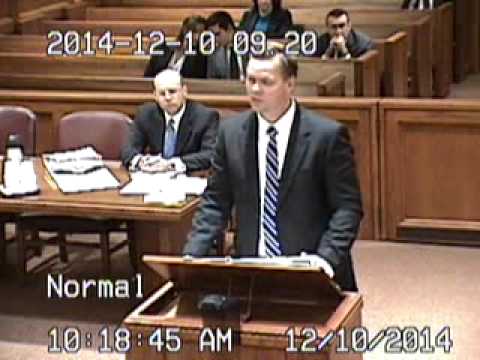
This is the recording of the actual oral argument, posted on the channel. What lawyers and judges say at argument is not the ruling; the decision is summarized above.
Default Judgment & Liquidated Damages in a Breach of Lease | Maggiano v. Whiskey Creek, 2D14-2612
Go Deeper
- Commercial Lease Fights in Florida: Lockouts, Holdovers and One Word in the Lease
- How to Vacate a Default or Final Judgment in Florida: Rule 1.540 and Its Limits
Frequently Asked Questions
Does a default judgment mean I owe whatever the landlord claims?
Not necessarily. A default establishes that you are liable on the claim, but if the amount depends on evidence, such as how partial payments, credits or a security deposit should be applied, the damages are unliquidated. The landlord must prove the amount at a hearing, and you are entitled to notice and a chance to contest it.
What is the difference between liquidated and unliquidated damages in Florida?
Liquidated damages can be calculated exactly from the complaint or an attached document using simple arithmetic, like the unpaid balance on a promissory note. Unliquidated damages require the court to weigh testimony or other evidence to decide the amount. A conclusory dollar figure in a complaint does not make the damages liquidated.
Can I still participate in my case after a clerk's default is entered?
A clerk’s default cuts off your ability to contest liability unless it is set aside, but for unliquidated damages you still have the right to notice of the damages hearing and to cross-examine witnesses and present evidence on the amount. Moving promptly to set aside the default is also an option if you have good cause and a meritorious defense.
What should a commercial landlord bring to a default damages hearing?
A clear rent ledger showing each charge and payment, the lease and any assignment, records of the security deposit and how it was applied, and a witness who can explain the numbers. Affidavits that state a total without an accounting invite reversal, as this case shows.
Talk to a Florida landlord-tenant and lease lawyer
Weidner Law, P.A. handles residential and commercial lease disputes and evictions from St. Petersburg. If you need a real estate litigation lawyer, call (727) 954-8752 or email weidner@mattweidnerlaw.com.
Read the law yourself, free: every Florida statute and court rule is on floridarules.net.
This article is general information about Florida law, not legal advice about your situation. Reading it, watching the videos, or contacting the firm does not create an attorney-client relationship. Every case turns on its own facts, and past results do not guarantee a similar outcome. The hiring of a lawyer is an important decision that should not be based solely upon advertisements.
