

In short: The owner kept possession. In Corbin v. McDaniel (2024), a tenant who had used land for over 14 years under a handwritten 50-year lease signed by only one of two spouse-owners lost an emergency possession ruling. The Second District affirmed per curiam without opinion and refused to write one.
The Facts
This appeal came from Pinellas County circuit court (23-6403-CI). Because the Second District affirmed without an opinion, the facts below are what the parties argued, as described in the oral argument video, not findings by the appeals court.
According to that description, a horse trainer, Trudy Corbin, had used a property for more than 14 years under a handwritten 50-year lease. One of the two co-owners, who were spouses, had signed the lease. The other spouse, Diane McDaniel, had not. The trial court issued an emergency writ of possession in favor of McDaniel.
The trainer took a non-final appeal. Per the description, she argued that her long possession and investment were part performance that took the lease outside the statute of frauds, and that the signing spouse’s signature bound the property. The owner relied on the statute of frauds and on the fact that she never signed.
The Decision
On June 14, 2024, after oral argument, the Second District affirmed per curiam without a written opinion. The trainer moved for rehearing, certification, or a written opinion. The court denied that motion on July 24, 2024, and the mandate issued August 15, 2024.
A PCA leaves the possession order in place but explains nothing and sets no precedent. We do not know whether the court rested on the statute of frauds, on the missing signature of a co-owner, or on the limited review available for a non-final possession order.
The Law
Florida’s statute of frauds, section 725.01, makes a lease of land for more than one year unenforceable unless it is in writing and signed by the party to be charged, or by that party’s authorized agent. section 689.01 requires a signed writing to create any estate or term of more than one year in land. Since 2020, that section has exempted leases from its two-witness requirement.
Florida courts recognize part performance as an equitable exception, usually requiring payment plus possession and valuable improvements made in reliance on the agreement. Separately, when spouses own property together (often as tenants by the entirety), one spouse generally cannot lease or encumber it without the other’s agreement. A signature from only one owner is therefore a serious risk for anyone relying on a long-term lease.
Current law (2026): s. 689.01 amended by ch. 2020-102 to exempt leases from the two-witness requirement; s. 725.01 still requires a signed writing for leases over one year.
Lessons
- Long-term tenants: get every owner on record to sign, and have the lease typed, dated and recorded or memorialized.
- Years of use do not cure a missing signature. Part performance is an uphill equitable argument.
- Property owners: check how title is held before relying on, or challenging, a lease signed by a spouse or co-owner.
- Possession orders can move fast. Act at the trial level, because a PCA on appeal usually ends the matter.
Source: Corbin v. McDaniel, No. 2D2024-0001 — Fla. 2d DCA (June 14, 2024).
Watch the Oral Argument
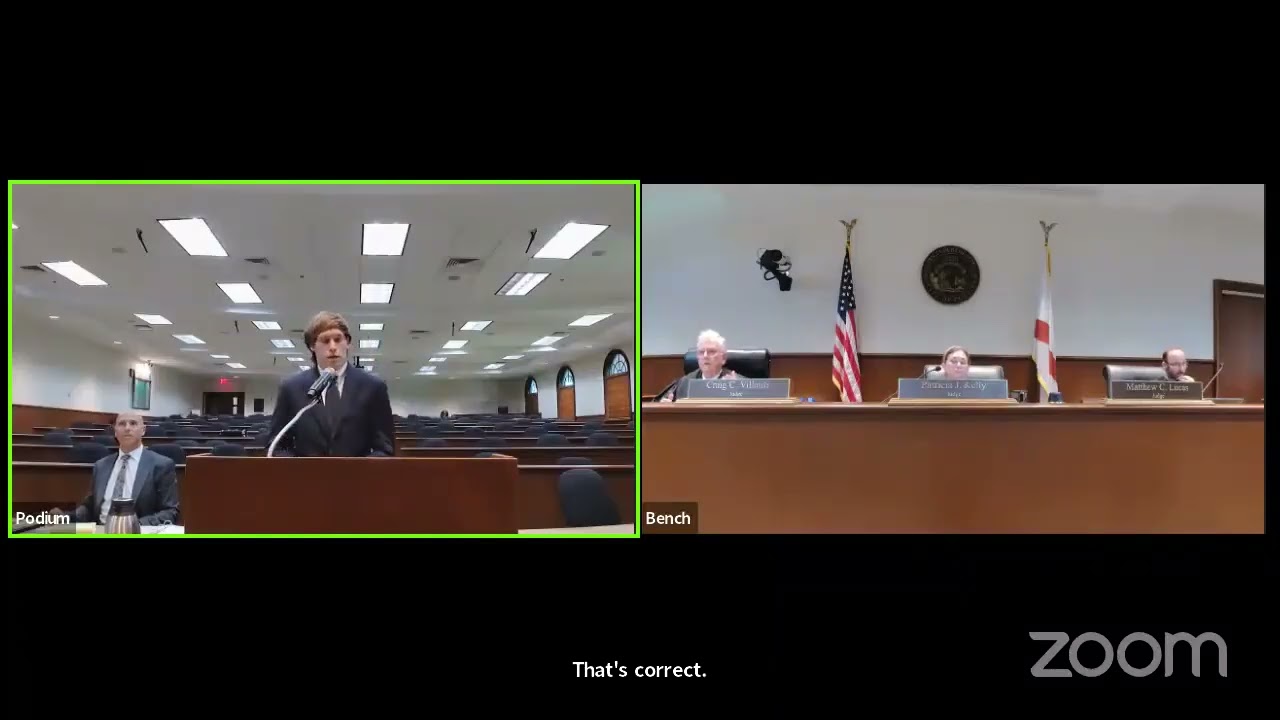
This is the recording of the actual oral argument, posted on the channel. What lawyers and judges say at argument is not the ruling; the decision is summarized above.
50-Year Horse Stable Lease: Non-Signatory Spouse | Corbin v. McDaniel, 2D24-0001
Go Deeper
- Oral Family Real Estate Deal: Statute of Frauds Doesn't End It (Gomez v. Gomez)
- Commercial Lease Fights in Florida: Lockouts, Holdovers and One Word in the Lease
Frequently Asked Questions
Is a lease signed by only one spouse valid in Florida?
Often it is not, as against the spouse who did not sign. A lease longer than one year must be signed by the party to be charged under section 725.01. Property owned by spouses as tenants by the entirety generally cannot be leased by one spouse alone. In Corbin v. McDaniel, the non-signing owner obtained possession and the appeals court affirmed without opinion.
Does a lease over one year have to be in writing in Florida?
Yes. Under section 725.01, a lease of land for longer than one year must be in a writing signed by the party against whom it is enforced. Since a 2020 amendment, section 689.01 no longer requires two subscribing witnesses for leases, so a signed lease does not fail just because it was not witnessed.
What is part performance under the Florida statute of frauds?
It is an equitable exception that can let a court enforce an unsigned land agreement when the claimant paid, took possession and made valuable improvements in reliance on it. Courts apply it narrowly. The tenant in Corbin v. McDaniel argued 14 years of use, but the possession order was affirmed.
Can I get a written opinion if the Florida appeals court issues a PCA?
You can ask in a motion for rehearing or written opinion, but courts rarely grant one. In Corbin v. McDaniel the Second District denied the tenant’s motion for rehearing, certification and a written opinion about six weeks after the PCA.
Talk to a Florida landlord-tenant and lease lawyer
Weidner Law, P.A. handles residential and commercial lease disputes and evictions from St. Petersburg. If you need a real estate litigation lawyer, call (727) 954-8752 or email weidner@mattweidnerlaw.com.
Read the law yourself, free: every Florida statute and court rule is on floridarules.net.
This article is general information about Florida law, not legal advice about your situation. Reading it, watching the videos, or contacting the firm does not create an attorney-client relationship. Every case turns on its own facts, and past results do not guarantee a similar outcome. The hiring of a lawyer is an important decision that should not be based solely upon advertisements.
