
In short: Not on summary judgment when there is a real dispute over whether the limited partners consented, because selling a partnership’s only property is not ordinary business a general partner can do alone. In Sterling Crest, Ltd. v. Blue Rock Partners Realty Group, the trial court ordered an Orange County partnership to close a $27,250,000 sale of its 360-unit apartment complex. On June 12, 2015, the Fifth District reversed the summary judgment for specific performance and the order to close, and remanded for further proceedings.
The Facts
Sterling Crest, Ltd., a limited partnership, owned the Sterling Crest Apartments, a 360-unit complex in Orange County. Its general partner, Royal American Development, Inc., held 50%. Two limited partners held the other 50%. The partnership agreement let the general partner negotiate contracts, but required the consent of all limited partners to sell the property.
The property was listed in November 2012. In early 2013, the limited partners’ representative raised tax concerns and asked for assurance that there would be no sale without their consent; the general partner’s president would not give it. On February 11, 2013, Sterling Crest signed a $27,250,000 contract with Blue Rock Partners Realty Group, representing that its partners had authorized the deal. On February 21 and 25, the limited partners’ representative told the general partner in writing that they did not consent.
Blue Rock sued on five counts, including specific performance, and moved for partial summary judgment on that count. The trial court granted it, reasoning that the limited partners objected only after letting the general partner proceed and that it would be inequitable to let them block the sale. It entered a mandatory injunction requiring Sterling Crest to close within 90 days. Sterling Crest appealed.
The Decision
The Fifth District reversed the partial summary judgment and the mandatory injunction and remanded. It held that disputed facts on two separate questions made summary judgment premature.
Authority. The agreement required the limited partners’ affirmative consent, not a failure to object. There was no written consent and no meeting vote, and waiver had to be “unmistakably manifested.” Statutory authority did not fill the gap: a general partner binds the partnership only in the ordinary course of its business, and selling the sole asset of a partnership formed to build and lease apartments was not shown to be ordinary course. The court also noted that, by statute, a sale of substantially all partnership property requires approval by limited partners holding a majority of distribution rights. On apparent authority, the court stressed that it must come from the conduct of the principal, not the agent, so the general partner’s own representations in the contract could not create it. Whether Blue Rock reasonably relied, and whether the limited partners knowingly let the general partner act, were fact questions.
Ready, willing and able. A buyer seeking specific performance must show it was ready, willing and able to close. Blue Rock’s lender term sheet said it was not a commitment to lend, its equity partners had no binding commitments in the record, and its ability to close was “certainly a disputed fact.”
The court affirmed the remaining issues without comment, so the docket lists the result as affirmed in part, reversed in part, and remanded.
The Law
Under section 620.1402, a general partner’s act binds a limited partnership if it is apparently for carrying on the partnership’s activities in the ordinary course. Acts outside the ordinary course need actual authority. Under section 620.1406, a sale of all or substantially all of the partnership’s property outside the ordinary course requires the approval of the general partners and of limited partners owning a majority of the rights to receive distributions, unless the partnership agreement provides otherwise. Sterling Crest’s agreement required all of the limited partners.
Specific performance is available for real estate contracts because land is unique, but the buyer must prove a binding contract made with authority and that it was ready, willing and able to perform. When the buyer depends on outside financing, courts look for a definite, binding commitment.
Current law (2026): The case was decided under the old summary judgment standard. Since May 1, 2021, rule 1.510 follows the federal standard, which asks whether a reasonable jury could find for the non-moving party. The result here turned on genuine factual disputes, which still defeat summary judgment.
Lessons
- Buyers dealing with a partnership or LLC should ask for proof of authority, such as a written consent of the partners or members, before signing, not just a representation in the contract.
- A representation by the seller’s general partner that it has authority does not create apparent authority by itself.
- If you want specific performance, document that you could have closed: a binding loan commitment and committed equity, not term sheets.
- Limited partners who oppose a sale should object in writing, promptly, as the limited partners did here.
Source: Sterling Crest, Ltd. v. Blue Rock Partners Realty Group, LLC, 164 So. 3d 1273 (Fla. 5th DCA June 12, 2015), No. 5D14-4629; ACIS docket.
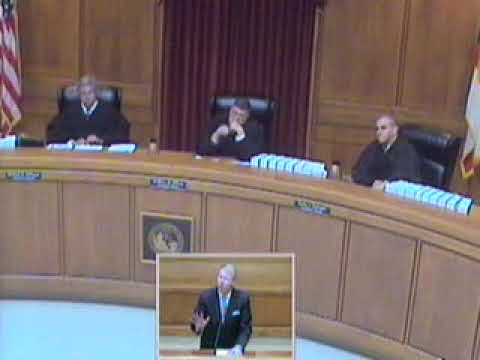
Watch the Oral Argument
This is the recording of the actual oral argument, posted on the channel. What lawyers and judges say at argument is not the ruling; the decision is summarized above.
🏢💼 Real Estate Business Dispute
Read the Law on FloridaRules.net
The statutes and court rules discussed in this article, free to read on FloridaRules.net:
Go Deeper
- Closing Date Passed, but Was It Extended? Buyer's Case Revived (Stav Software v. Lederman)
- Officer Conveyed Company Property Without Approval? Appeal Affirmed (Wesley v. DeKloet)
- A $10 Million Land Deal That Never Closed: Buyer Loses on Appeal (Pine Grove v. Robert Diesel)
Frequently Asked Questions
Can a general partner sell partnership property without the limited partners' consent?
Not if the sale is outside the ordinary course and the agreement or statute requires their approval. Section 620.1406 requires limited partner approval for a sale of substantially all partnership property, and Sterling Crest’s agreement required every limited partner to consent.
Does staying silent count as consent to a sale?
Not when the agreement requires affirmative consent. In Sterling Crest, the Fifth District rejected the idea that the limited partners consented by not objecting sooner, noting that waiver must be unmistakably shown.
What does a buyer need to prove to get specific performance in Florida?
A binding contract, and that the buyer was ready, willing and able to close on the closing date. A lender term sheet that says it is not a commitment to lend was not enough for Blue Rock to win on summary judgment.
Can I rely on the seller's statement that it has authority to sell?
Not by itself. Apparent authority must come from the conduct of the principal, here the partnership and its limited partners, not from the agent’s own statements. Ask for written proof of authority before you sign.
Talk to a Florida real estate litigation lawyer
Weidner Law, P.A. handles Florida real estate disputes, title problems and appeals from St. Petersburg. If you need a real estate litigation lawyer, call (727) 954-8752 or email weidner@mattweidnerlaw.com.
Read the law yourself, free: every Florida statute and court rule is on floridarules.net.
This article is general information about Florida law, not legal advice about your situation. Reading it, watching the videos, or contacting the firm does not create an attorney-client relationship. Every case turns on its own facts, and past results do not guarantee a similar outcome. The hiring of a lawyer is an important decision that should not be based solely upon advertisements.
