
In short: Jiaxian Zhao contracted to sell a Miami-Dade home and collected the price, but no deed was ever delivered. When he sued over judgment liens on the property, the trial court ruled he no longer had standing because he had sold it. On March 27, 2019, the Third District reversed, holding that disputed facts about whether Zhao still owned the property made summary judgment improper.
The Facts
Jiaxian Zhao bought a house in Miami-Dade County. He later signed a purchase and sale contract with a buyer, Ying Cui, and the purchase price was paid to him. The buyer’s title search then turned up judgment liens held by General Lending Corporation (GLC) and Premier American Bank.
According to the opinion, the record suggested that no deed was ever executed or delivered to the buyer, that Zhao kept paying the property taxes, and that he agreed to refund the price if he could not deliver clear title. Zhao sued to establish an equitable lien based on equitable subrogation. GLC counterclaimed to foreclose its two judgment liens, and the bank also counterclaimed.
The trial court granted summary judgment for GLC on both its foreclosure counterclaim and Zhao’s complaint, ruling that Zhao lacked standing because he had sold the property. Zhao appealed. The points below are what the lawyers argued, not findings by the court.
- Zhao argued that title does not pass in Florida until a deed is delivered, so he was still the owner and was obligated under the contract to clear title. His lawyer told the court the buyer had paid about $680,000 and moved in, but there was never a closing.
- He argued the judgments were against only one of the two prior owners, so the liens could reach only that person’s undivided one-half interest, and that equitable subrogation should keep the creditors from a windfall after Zhao’s money paid off two senior mortgages.
- GLC argued that once the contract was signed and the buyer took possession, the buyer held the equitable interest, Zhao held only bare legal title, and Zhao had testified at deposition that the sale closed. It also asked the court to affirm on other grounds under the tipsy coachman doctrine.
- The panel asked why Zhao had taken different positions on ownership, and one judge asked how a party could be barred from even defending a foreclosure of his own legal title.
The Decision
The Third District reversed in a per curiam opinion filed March 27, 2019. It held there was a genuine dispute of material fact about whether Zhao still owned the property, and so whether he had standing. It pointed to the evidence that no deed appeared to have been executed or delivered, that Zhao kept paying the taxes, and that he agreed to refund the price if he could not clear title.
The court reversed both final summary judgments for GLC and remanded for further proceedings. It expressly took no position on the merits of Zhao’s equitable subrogation claim or his defenses to the lien foreclosure.
Zhao also tried to appeal an earlier order denying his motion for partial summary judgment on the one-half interest issue. The court held that order was non-final and not appealable, so the scope of the liens was left for the trial court.
The Law
Standing is the threshold question of whether a party has a sufficient stake in the dispute to bring or defend the claim. A seller who signs a contract but has not closed usually keeps legal title, while the buyer holds an equitable interest. Which of them can act to protect the property, and how, can turn on the contract and the facts of the deal.
A summary judgment can be entered only when there is no genuine dispute as to any material fact. Here the court found the ownership facts were disputed, so the standing question could not be decided on summary judgment.
Current law (2026): Florida adopted the federal summary judgment standard in Rule 1.510, effective May 1, 2021, after this decision. The new rule does not change the basic point that genuinely disputed material facts must go to trial. The rule is on floridarules.net.
Judgment liens on Florida real property are created by recording a certified copy of the judgment under section 55.10. A lien attaches only to the judgment debtor’s interest in the land.
Lessons
- Signing a contract and taking the buyer’s money does not by itself transfer title. Until a deed is delivered, the seller may still hold legal title and the problems that come with it.
- If a title search turns up liens, put the agreement about who will clear them, and what happens to the money if they cannot be cleared, in writing.
- Inconsistent testimony about whether a sale closed can create exactly the kind of fact dispute that keeps a case from being decided on summary judgment.
- An order denying partial summary judgment is generally not appealable on its own; the issue has to wait for a final judgment.
Source: Zhao v. Premier American Bank, No. 3D17-1783 (Fla. 3d DCA Mar. 27, 2019) (per curiam opinion, reversed and remanded); ACIS docket.
Watch the Oral Argument
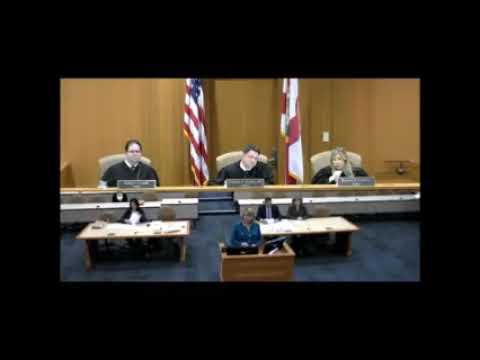
This is the recording of the actual oral argument, posted on the channel. What lawyers and judges say at argument is not the ruling; the decision is summarized above.
Seller Who Never Delivered the Deed: Standing to Fight Judgment Liens on the Property?
Go Deeper
- Equitable Lien vs. a Third-Party Buyer Ends in a PCA (Osman v. Whitburn, LLC)
- Officer Conveyed Company Property Without Approval? Appeal Affirmed (Wesley v. DeKloet)
- Can an Old Mortgage Expire Under Florida's Statute of Repose? (Howell v. SunTrust)
Frequently Asked Questions
When does title to Florida real estate pass to the buyer?
Title generally passes when a properly executed deed is delivered to and accepted by the buyer, not when the contract is signed or the money is paid. In Zhao, the record suggested no deed was ever delivered, which is why the court found a real question about whether the seller still owned the property.
Does a judgment lien attach to property owned jointly with someone who is not the debtor?
A recorded judgment lien attaches only to the debtor’s interest in the property. Zhao argued the liens could reach only one prior owner’s one-half interest, but the Third District did not decide that issue because the order he appealed on it was non-final.
Can a seller who has taken the buyer's money still sue over the property?
It depends on the facts. In Zhao, the seller kept legal title, kept paying taxes and promised a refund if he could not clear title, and the Third District held those facts created a genuine dispute about his standing that could not be resolved on summary judgment.
What is equitable subrogation in a lien dispute?
Equitable subrogation lets a party who pays off a prior lien step into that lien’s priority, so that a junior creditor does not get a windfall. Zhao raised it against the judgment creditors, but the Third District expressed no opinion on whether the claim had merit.
Talk to a Florida real estate litigation lawyer
Weidner Law, P.A. handles Florida real estate disputes, title problems and appeals from St. Petersburg. If you need a real estate litigation lawyer, call (727) 954-8752 or email weidner@mattweidnerlaw.com.
Read the law yourself, free: every Florida statute and court rule is on floridarules.net.
This article is general information about Florida law, not legal advice about your situation. Reading it, watching the videos, or contacting the firm does not create an attorney-client relationship. Every case turns on its own facts, and past results do not guarantee a similar outcome. The hiring of a lawyer is an important decision that should not be based solely upon advertisements.
