
In short: In Otero v. Gomez, a bicyclist hit by a car sued the Miami-Dade homeowner whose corner wall, he said, blocked the driver’s view. At the start of trial the court ruled the homeowner owed no duty because the wall sat inside his property line, and it dismissed the case on what were only motions in limine. On July 30, 2014, the Third District reversed, holding that a motion in limine cannot be used as an unnoticed summary judgment. It expressed no opinion on whether the homeowner owed a duty.
The Facts
In December 2011, Antonio Otero sued Gilberto Gomez III for injuries he suffered when a car pulling into an intersection struck his bicycle. The driver was not a party. Otero claimed a wall on Gomez’s corner property blocked the view of oncoming traffic. The developer built the wall years earlier, and a prior owner altered it without permits. Otero’s expert planned to testify that the wall obstructed the intersection’s sight triangle and violated county ordinances and Florida Department of Transportation standards.
On February 15, 2013, Gomez moved in limine to exclude that testimony, arguing he owed no duty under Williams v. Davis, 974 So. 2d 1052 (Fla. 2007). On February 19 he moved for summary judgment on the same theory, but the record contained no notice of hearing, and at a February 21 pretrial conference the court said the summary judgment motion would not be heard before trial. Gomez then amended his motion in limine to repeat the summary judgment arguments.
At a March 5 hearing, Gomez’s counsel argued no duty existed and asked for dismissal, though neither motion in limine requested it. The next day the court ruled there was no duty because the wall was within Gomez’s boundaries, granted an oral motion to dismiss, and cancelled the trial. Final judgment for Gomez followed on March 26, 2013.
At oral argument, the points below were what the lawyers argued, not findings by the court:
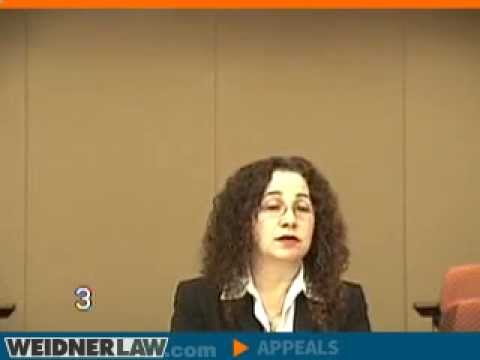
- Otero’s counsel, Maria L. Rubio, argued the trial court treated Williams as a bright-line rule, when that case involved natural foliage on a wooded lot and its footnote 11 left room for government regulation of conditions on private property. She argued evidence of unpermitted wall changes and sight-triangle rules would have created a fact issue.
- Gomez’s counsel, Scott A. Cole, conceded he knew of no authority allowing a final judgment on a motion in limine, but argued the motions and the duty question were intertwined and that, once the expert’s opinions were excluded, nothing was left to create a duty.
The Decision
The Third District reversed and remanded for further proceedings in a per curiam opinion filed July 30, 2014. The mandate issued August 18, 2014.
The court held that Gomez’s summary judgment motion was served only fourteen days before trial, short of the twenty days the rule then required, and that granting summary judgment on such a motion is reversible error. A hearing on a motion in limine may not be used to present an unnoticed motion for summary judgment. Neither motion in limine asked for dismissal, and a court cannot grant relief the parties did not request. Expanding a hearing to decide unnoticed matters also violates due process.
The court expressly did not decide whether Gomez owed Otero a duty. That question goes back to the trial court.
The Law
A motion in limine is a tool to decide whether evidence comes in at trial. It is not a substitute for a motion for summary judgment, a motion to dismiss or a directed verdict. The opinion relied on Fouts v. Bowling, 596 So. 2d 95 (Fla. 3d DCA 1992), Connell v. Capital City Partners, LLC, 932 So. 2d 442 (Fla. 3d DCA 2006), and Bank of New York Mellon v. Reyes, 126 So. 3d 304 (Fla. 3d DCA 2013).
On the merits, Williams v. Davis held that a private residential landowner generally owes no duty to passing motorists for foliage wholly within the property, though the owner must keep it from extending into the public right-of-way. Its footnote 11 says the holding does not consider or preclude government regulation of conditions on private property. Whether that leaves room for liability for an unpermitted man-made wall is the question this appeal framed but did not decide.
Current law (2026): The twenty-day notice rule applied in this case has been replaced. Since May 1, 2021, Florida Rule of Civil Procedure 1.510 follows the federal summary judgment standard, and amendments effective January 1, 2025 tie the motion’s timing to the case management order and give the opposing party 60 days after service to respond. The core point of Otero, that summary judgment must come by a properly served and noticed motion, still holds.
Lessons
- If you want the case ended on a legal issue like duty, file and notice a summary judgment motion in time. A motion in limine will not do it.
- When the other side tries to turn an evidentiary hearing into a merits ruling, object on the record to lack of notice and due process. That objection is what won this appeal.
- Property owners with corner walls, fences or hedges should check sight-triangle rules and permits. Unpermitted changes are exactly what plaintiffs point to.
- A reversal on procedure is not a win on the merits. The plaintiff still has to prove a duty on remand.
Source: Otero v. Gomez, No. 3D13-936 — Fla. 3d DCA per curiam opinion (July 30, 2014); ACIS docket 3D2013-0936.
Watch the Oral Argument
This is the recording of the actual oral argument, posted on the channel. What lawyers and judges say at argument is not the ruling; the decision is summarized above.
🔏 Can a Landowner Be Liable for a Wall Inside the Property Line? | Otero v. Gomez, 3D13-936
Go Deeper
- Neighbor Fell Into a Hole From the Construction Site Next Door (Schramm v. Adams Homes)
- SMACKDOWN- 2nd DCA Reverses Another Summary Judgment
- “First Principles” in Florida Courts: Why the Text of the Law Now Beats Decades of Precedent
Frequently Asked Questions
Can a Florida judge dismiss a case on a motion in limine?
No. In Otero v. Gomez, the Third District held that a motion in limine hearing may not be used as a vehicle for an unnoticed motion for summary judgment, and that a court cannot grant dismissal when no motion asked for it. The final judgment was reversed.
Is a homeowner liable if a wall or hedge on the property blocks drivers' view?
Under Williams v. Davis (Fla. 2007), a residential owner generally owes no duty to motorists for foliage wholly within the property, but footnote 11 leaves room for government regulation. Otero did not decide whether an unpermitted man-made wall changes that, so the answer remains fact-specific.
How much notice is required for a summary judgment motion in Florida?
In 2013 the rule required service at least twenty days before the hearing, which Gomez’s motion did not meet. Under the current Rule 1.510, as amended effective January 1, 2025, timing is set by the case management order and the response is due 60 days after service.
What is a sight triangle?
It is the area at an intersection that must be kept clear so drivers can see cross traffic. Local codes and Florida Department of Transportation standards regulate walls, fences and plants inside it, and the plaintiff in Otero relied on those rules.
Talk to a Florida real estate litigation lawyer
Weidner Law, P.A. handles Florida real estate disputes, title problems and appeals from St. Petersburg. If you need a real estate litigation lawyer, call (727) 954-8752 or email weidner@mattweidnerlaw.com.
Read the law yourself, free: every Florida statute and court rule is on floridarules.net.
This article is general information about Florida law, not legal advice about your situation. Reading it, watching the videos, or contacting the firm does not create an attorney-client relationship. Every case turns on its own facts, and past results do not guarantee a similar outcome. The hiring of a lawyer is an important decision that should not be based solely upon advertisements.
