
In short: In Schramm v. Adams Homes, the Fifth DCA reversed summary judgment for a home builder whose construction site produced a growing hole that a neighbor fell into. Where he was standing and whether the danger was obvious were disputed facts. Even on his own land, the builder could owe a duty because the hazard came from its site.
The Facts
Adams Homes was building a house on the lot next to Robert Schramm’s property in Citrus County. During construction it installed a silt fence and began underground plumbing work. A hole formed on the construction lot and grew after the silt fence fell over and changed how rainwater ran off.
About a month before his fall, Schramm told Adams about the fallen fence and the increased runoff. The problem was not fixed. As the hole spread toward the property line, Schramm walked out from his garage to mark its edge with orange flags. Before he reached the visible edge, the grassy ground under him gave way and he fell in. He sued Adams and the plumbing subcontractor.
The trial court granted summary judgment to Adams. It reasoned that if Schramm was on Adams’s lot he was an undiscovered trespasser, if he was on his own lot Adams owed him no duty, and either way the hole was open and obvious. The court acknowledged the record did not show which side of the line he was on but called that immaterial. Schramm did not appeal the separate judgment for the plumbing subcontractor.
The Decision
The Fifth District reversed. Where Schramm fell was material, not irrelevant, because a landowner’s duty depends on the status of the person on the land. The undiscovered-trespasser protection in section 768.075 applies only if he actually entered Adams’s land without invitation, and the record did not settle that.
If he was on his own property, Adams could still owe a duty. A hazard that started on Adams’s lot and was spreading toward the neighbor’s land created a foreseeable zone of risk, particularly after Adams was told about it. As for the open-and-obvious defense, the court noted that a jury could find the hole itself was obvious while the unstable grass around it was not. Those disputed facts meant the case had to go back to the trial court.
The Law
Negligence requires a duty, a breach, causation and damages. Under the Florida Supreme Court’s foreseeable zone-of-risk approach, a person whose conduct creates a risk to others generally owes a duty to take reasonable precautions. Premises liability also depends on control of the property and notice of the dangerous condition. Section 768.075 limits a landowner’s liability to trespassers, and to undiscovered trespassers in particular, but only when the injured person actually entered the land without invitation.
Summary judgment under Florida Rule of Civil Procedure 1.510 is proper only when there is no genuine dispute of material fact. When the location of an injury or the visibility of a hazard is in dispute, the question usually goes to a jury.
Lessons
- Builders: a hazard that starts on your site can create liability to neighbors, especially after you receive notice. Fix silt fences and drainage problems promptly.
- Neighbors: put complaints about construction hazards in writing and keep copies; notice can be key to proving duty.
- The open-and-obvious defense looks at the specific danger. A visible hole does not make unstable ground around it obvious.
- Before relying on the trespasser statute, the property line and the injured person’s location must actually be established.
Source: Schramm v. Adams Homes of Northwest Florida, Inc., No. 5D2024-0445 — Fla. 5th DCA (June 20, 2025).
Watch the Oral Argument
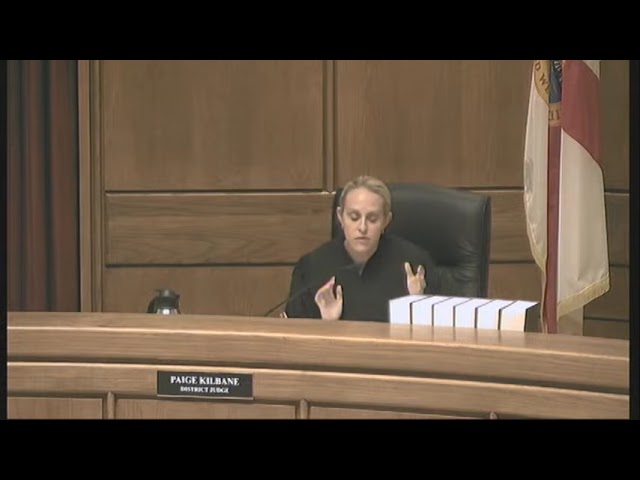
This is the recording of the actual oral argument, posted on the channel. What lawyers and judges say at argument is not the ruling; the decision is summarized above. (The channel has this argument posted twice; the other upload is here.)
Builder Defect Lawsuit | Schramm v. Adams Homes, 5D2024-0445
Go Deeper
- Condo Construction Defects: When an Early Report Starts the Clock (Lexi v. Moss)
- A Mid-Trial Jury Instruction Change and a Lost Condo Defect Case (Eloquence v. CDC Builders)
- A Landlord's Renovation Without Permits and the Tenant's Building-Code Claim (Comptech)
Frequently Asked Questions
Is a builder liable if a hazard from its construction site injures a neighbor?
It can be. In Schramm, the Fifth DCA said a builder may owe a duty to a neighbor even when the neighbor is on his own land, because a hazard spreading from the construction site created a foreseeable zone of risk, especially after the builder was told about it. Whether the builder breached that duty is a question for the jury.
What is an undiscovered trespasser under Florida law?
Under section 768.075, an undiscovered trespasser is someone who enters land without invitation and whose presence the owner does not know about. Owners owe such a person very limited duties. But the statute applies only if the injured person was actually on the owner’s land, which was disputed in Schramm.
Does the open and obvious doctrine bar a premises liability claim in Florida?
It can reduce or defeat some claims, but it depends on whether the specific dangerous condition was obvious. In Schramm, the court said a jury could find the hole was obvious while the weakened grass around it, which collapsed, was not. That dispute prevented summary judgment.
What should I do if construction next door is damaging my property?
Document the problem with photos and dates, notify the builder in writing, and keep records of the response. If a hazard is spreading toward your land, avoid going near it. Notice to the builder can be important later in showing the builder knew about the danger and failed to fix it.
Talk to a Florida construction and lien dispute lawyer
Weidner Law, P.A. handles construction lien, contractor and building defect disputes from St. Petersburg. If you need a real estate litigation lawyer, call (727) 954-8752 or email weidner@mattweidnerlaw.com.
Read the law yourself, free: every Florida statute and court rule is on floridarules.net.
This article is general information about Florida law, not legal advice about your situation. Reading it, watching the videos, or contacting the firm does not create an attorney-client relationship. Every case turns on its own facts, and past results do not guarantee a similar outcome. The hiring of a lawyer is an important decision that should not be based solely upon advertisements.
