
In short: In Seefeldt v. Adrian, a Miami-Dade landowner sold his property under an agreement that let him keep living there. After the trial court found the deal was a sale, not a loan, and allowed the buyer to remove him for failing to make required payments, he argued on appeal that the evidence showed he held a life estate. The panel noted that theory never came up at trial. The Third District affirmed without a written opinion on October 4, 2017, and later denied his request for a written opinion.
The Facts
William Seefeldt signed an agreement and deed transferring his property to Brent Adrian. A separate document, labeled Exhibit A, addressed his right to stay on the property. The relationship broke down, and the case went to a bench trial in Miami-Dade circuit court on whether the transaction was a sale or really a loan.
The trial court found it was a sale, that Adrian was the rightful owner, and that Seefeldt had failed to make the monthly payments the agreement required, so his removal could proceed. Seefeldt and Jose La Torre appealed, and the case was argued in September 2017. The points below are what the lawyers argued, not findings by the appellate court.
- Seefeldt’s appellate lawyer argued the evidence showed a life estate, with Adrian holding the remainder, even though neither side used that theory at trial. He relied on Rule 1.190(b), which lets pleadings be amended to conform to issues tried by consent, even after judgment.
- He argued La Torre held a contingent life interest and had to be made a party before his rights could be cut off.
- The panel said it could not find the remainder theory anywhere in the trial transcript or closing arguments, and asked whether a trial judge is supposed to grant relief no one requested.
- Adrian’s lawyer argued the case was always about sale versus loan, that new arguments cannot be raised on appeal, that any right to stay was conditioned on payments Seefeldt did not make, and that the parties had agreed on the consequence of a breach.
The Decision
The Third District affirmed on October 4, 2017. The docket lists the disposition as “Per Curiam Affirmed,” with no written opinion. Seefeldt moved for a written opinion or certification, and the court denied that motion on November 1, 2017.
The docket also shows a filing in the Florida Supreme Court; on December 29, 2017, a letter that court treated as a motion for reinstatement was stricken as unauthorized. A per curiam affirmance without opinion generally cannot be reviewed by the Florida Supreme Court, and it decides only this case.
The Law
Florida Rule of Civil Procedure 1.190(b) says that when issues not raised by the pleadings are tried by express or implied consent, they are treated as if they had been pleaded, and the pleadings may be amended to conform to the evidence at any time, even after judgment. The key is consent: the other side must have known the issue was being tried.
Appellate courts generally will not reverse on a theory the trial court never heard. In Dober v. Worrell, 401 So. 2d 1322 (Fla. 1981), the Florida Supreme Court held that a party cannot raise on appeal matters that were not presented to the trial court. Adrian’s lawyer relied on that rule.
A life estate gives someone the right to use property for life, with ownership passing to the remainder holder at death. It can be created in a deed or other written instrument, and its terms, including any conditions such as payments, control what happens if those terms are broken.
Lessons
- If a sale lets the seller keep living on the property, put the arrangement in the deed or a recorded instrument, and say whether it is a life estate, a lease, or something else.
- Plead every theory you may need. An argument that never reaches the trial judge is unlikely to win on appeal.
- Rule 1.190(b) helps only when the other side actually tried the issue by consent. Evidence that happens to fit a theory is not the same as trying it.
- Anyone who may hold an interest in the property, like a contingent life tenant, should be considered for joinder early, not after judgment.
Source: Seefeldt v. Adrian, No. 3D2016-2769, Fla. 3d DCA docket (per curiam affirmed October 4, 2017), appeal from Miami-Dade Circuit Court No. 12-12516.
Watch the Oral Argument
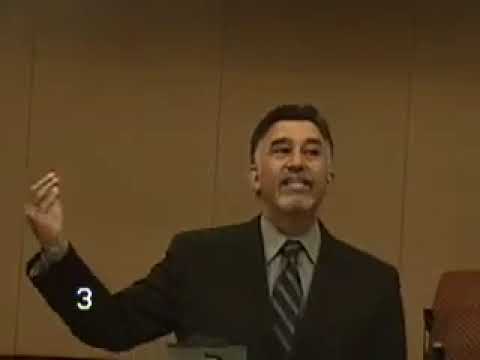
This is the recording of the actual oral argument, posted on the channel. What lawyers and judges say at argument is not the ruling; the decision is summarized above.
Unpleaded Life Estate Raised First on Appeal: Can Rule 1.190(b) Conform the Pleadings Now?
Go Deeper
- Why Is It Called a Lady Bird Deed? The Florida Origin of the Name
- Deed in Lieu Held in Escrow: Court Can Order Foreclosure Instead (Safe Harbor v. 9775 Dixie)
- Equitable Lien vs. a Third-Party Buyer Ends in a PCA (Osman v. Whitburn, LLC)
Frequently Asked Questions
Can I sell my house and keep the right to live there in Florida?
Yes. You can reserve a life estate in the deed or sign a written lease or occupancy agreement. The terms must be clear. In Seefeldt v. Adrian, the seller’s right to stay was in a separate exhibit, and the trial court found it was conditioned on payments he did not make.
Can you raise a new argument for the first time on appeal in Florida?
Generally no. Appellate courts review what the trial court decided, and arguments not presented below are usually not considered. In Seefeldt, the panel noted the life estate theory never appeared in the trial transcript, and the judgment was affirmed.
What does Rule 1.190(b) allow?
It lets a court treat an issue as pleaded if the parties tried it by express or implied consent, and it allows amendment even after judgment. It does not let a party add a new theory the other side never had a chance to contest.
Can the Florida Supreme Court review a per curiam affirmance?
Generally no. A district court affirmance without an opinion is usually final. In Seefeldt, the Third District denied a motion for a written opinion, and a later filing in the Supreme Court was stricken as unauthorized.
Talk to a Florida real estate litigation lawyer
Weidner Law, P.A. handles Florida real estate disputes, title problems and appeals from St. Petersburg. If you need a real estate litigation lawyer, call (727) 954-8752 or email weidner@mattweidnerlaw.com.
Read the law yourself, free: every Florida statute and court rule is on floridarules.net.
This article is general information about Florida law, not legal advice about your situation. Reading it, watching the videos, or contacting the firm does not create an attorney-client relationship. Every case turns on its own facts, and past results do not guarantee a similar outcome. The hiring of a lawyer is an important decision that should not be based solely upon advertisements.
