
In short: In Feldman v. Schocket, a Keys lawyer’s will directed that her Islamorada home be sold, but she was survived by her husband. The personal representative argued the husband had waived his homestead rights by joining two mortgages and by signing a waiver after her death. On September 21, 2022, the Third District affirmed the judgment for the husband, holding that neither the mortgage waivers nor the post-death waiver gave up his constitutional protection.
The Facts
Patricia Silver and Jeffrey Schocket married in 2003 and lived in a home in Islamorada. In 2015 Silver mortgaged the home to fund her law firm. Schocket signed two mortgages, joining for the sole purpose of waiving his homestead rights. The mortgages were witnessed, notarized and recorded.
Silver died on October 26, 2016. Her will, signed two days earlier, directed her executor to sell the house and put the proceeds into the residuary estate, letting Schocket live there until the sale. About three weeks after her death, Schocket signed a spousal waiver presented to him by Robert Feldman, who later became personal representative. It was witnessed but not notarized or recorded. Schocket said he did not read it.
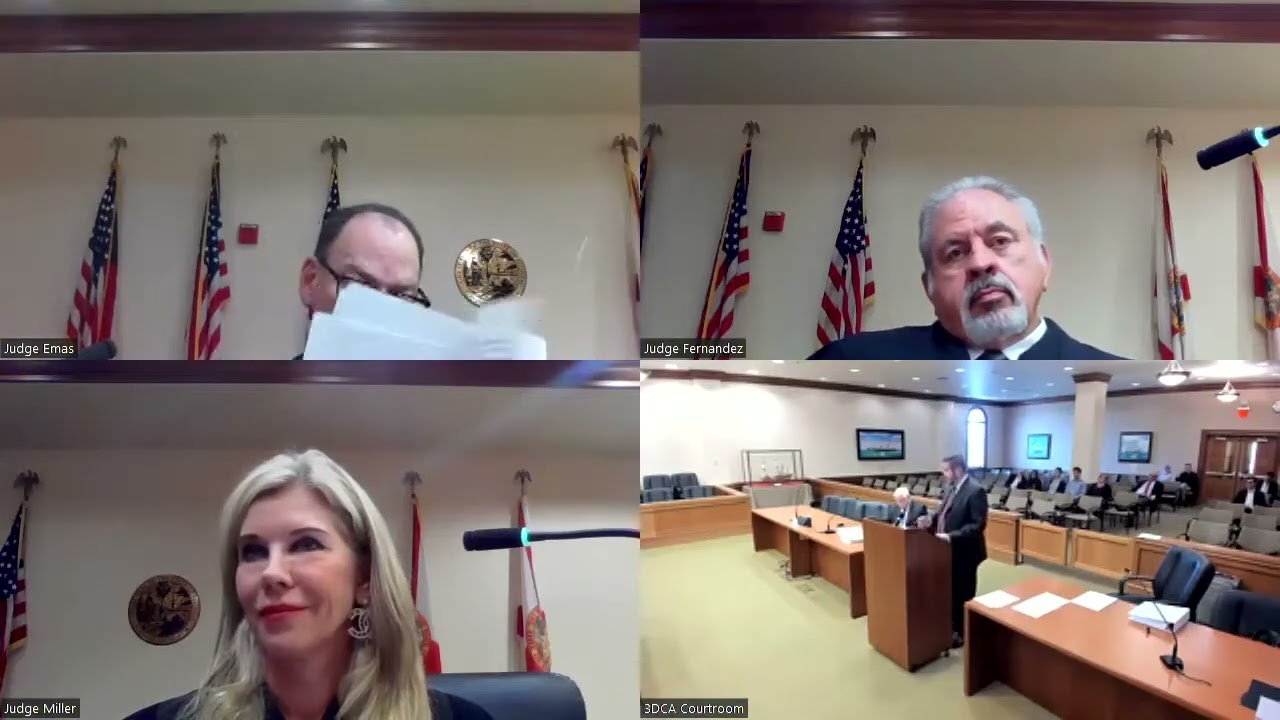
Hurricane Irma later made the house uninhabitable. When the personal representative found a buyer, Schocket sued to determine homestead. The trial court ruled for him on summary judgment, under the old standard and then under the new one on the estate’s affirmative defenses. The points below are what the lawyers argued at the July 29, 2022 argument.
- The personal representative argued the mortgage waivers were express and unlimited, that the post-death waiver dealt with rights that had already vested, and that the court never ruled on the defenses of waiver, estoppel, laches and setoff.
- Schocket argued a mortgage waiver is limited to the mortgage, that title vested in him at his wife’s death, and that a waiver cannot transfer title; only a deed or a statutory disclaimer can.
- The parties disputed whether the setoff defense was moot after a later settlement reimbursed the estate for its costs.
The Decision
The Third District affirmed on September 21, 2022, in Feldman v. Schocket, 366 So. 3d 1104 (Fla. 3d DCA 2022).
The mortgage waivers failed. Schocket received no fair disclosure of his wife’s estate, the waivers were embedded in loan documents and did not mention the restriction on devising homestead, and his signature was needed only for the purpose the Constitution already allows: mortgaging the homestead. The waivers were limited to that purpose.
The post-death waiver also failed. There was no fair disclosure, and section 732.702 contemplates an agreement with a present or prospective spouse, not a deceased one. Because Schocket’s interest vested at his wife’s death, the court called the waiver too little, too late.
Nor was the document a valid disclaimer. It did not declare itself a disclaimer, was not acknowledged before a notary or other officer, and was not recorded, and the disclaimer statute makes no provision for partial compliance. The court distinguished Youngelson v. Youngelson’s Estate, a 1959 decision upholding a post-death settlement, noting that chapter 739 is now the exclusive way to disclaim. In a footnote, the court rejected laches, found the setoff defense moot after the settlement, and affirmed on the remaining defenses.
The Law
Article X, section 4(c) of the Florida Constitution bars devising homestead property when the owner is survived by a spouse or minor child, but allows the owner, joined by the spouse, to mortgage, sell or give away the homestead. Courts construe homestead law liberally in favor of the surviving spouse.
Section 732.702 allows a spouse to waive homestead rights before or after marriage by a written agreement signed before two witnesses; a waiver after marriage requires fair disclosure of the other spouse’s estate. Section 732.7025 provides deed language a spouse can use to waive the devise restriction for a specific property.
When homestead cannot be devised, section 732.401 controls who takes it at death, and the surviving spouse’s interest vests at that moment. A person who wants to give up an inheritance after death must use a disclaimer that complies with section 739.104, including acknowledgment and, for real property, recording.
Lessons
- Signing a mortgage as a spouse waives homestead only for that mortgage. It does not let the other spouse leave the house to someone else.
- A spouse who wants to waive homestead devise rights needs a proper section 732.702 agreement with fair disclosure, or the deed language in section 732.7025.
- After death it is too late to waive. The only route is a disclaimer that meets every requirement of chapter 739.
- Personal representatives should get a homestead determination before treating a house as estate property to be sold. Here the will’s direction to sell the home could not be carried out.
Source: Feldman v. Schocket, No. 3D21-1509, 366 So. 3d 1104 (Fla. 3d DCA Sept. 21, 2022) (affirmed).
Watch the Oral Argument
This is the recording of the actual oral argument, posted on the channel. What lawyers and judges say at argument is not the ruling; the decision is summarized above.
Did a Surviving Spouse Waive Homestead by Signing Mortgages? Summary Judgment and Defenses
Go Deeper
- The Surviving Spouse and the Florida Homestead: Who Gets the House When a Spouse Dies
- Prenups, Divorce, and Inheritance in Florida: What a Spouse Can Waive and What Divorce Revokes
- Can You Disinherit a Spouse or Minor Child in Florida?
Frequently Asked Questions
Does signing a mortgage waive homestead rights in Florida?
Only for that mortgage. In Feldman v. Schocket, the Third District held that a spouse who joins a mortgage to waive homestead rights does not give up the protection against the homestead being devised away, because the signature is needed only to allow the mortgage.
Can a surviving spouse waive homestead after the other spouse dies?
Not by a waiver under section 732.702, which addresses agreements with a living spouse. Once the spouse dies, the survivor’s interest has vested, and giving it up requires a disclaimer that complies with chapter 739.
Can I leave my Florida homestead to someone other than my spouse?
Not unless your spouse has validly waived the right, for example in a prenuptial or postnuptial agreement with fair disclosure, or by signing a deed with the waiver language in section 732.7025. Otherwise the Constitution and section 732.401 control who takes the home.
What makes a disclaimer of homestead valid in Florida?
Chapter 739 requires a written disclaimer that declares itself a disclaimer, is signed and acknowledged before an authorized officer, and for real property is recorded. The Third District said the statute makes no provision for partial compliance.
Talk to a Florida homestead and probate lawyer
Weidner Law, P.A. handles Florida homestead, probate and real estate disputes from St. Petersburg. If you need a probate real estate lawyer, call (727) 954-8752 or email weidner@mattweidnerlaw.com.
Read the law yourself, free: the full Florida Probate Code and Probate Rules and the Florida Trust Code are on floridarules.net.
This article is general information about Florida law, not legal advice about your situation. Reading it, watching the videos, or contacting the firm does not create an attorney-client relationship. Every case turns on its own facts, and past results do not guarantee a similar outcome. The hiring of a lawyer is an important decision that should not be based solely upon advertisements.
