

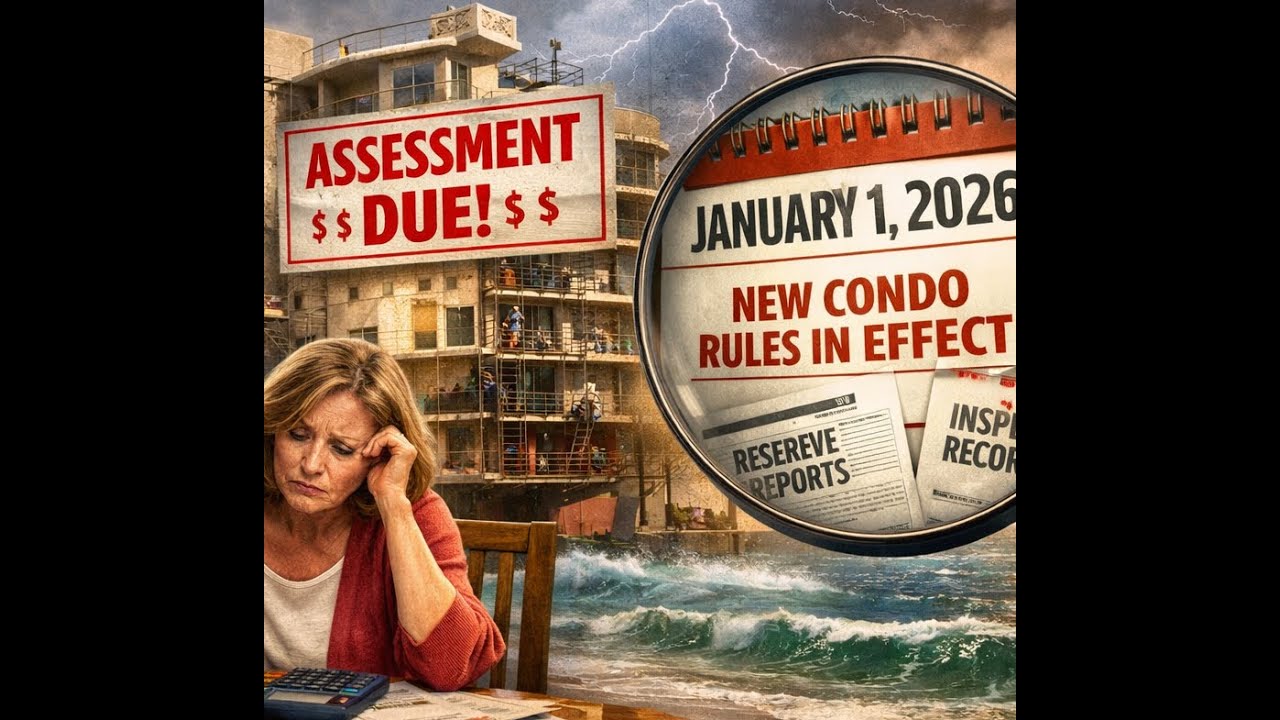
In short: Florida condo associations now face structural integrity reserve studies, milestone inspections, and stricter records and website rules after the 2024 and 2025 reforms. Those costs are driving large special assessments. Owners have the right to inspect official records, to notice of assessments, and to challenge improper fines, which can’t become liens. Unpaid assessments can.
After the Surfside collapse, Florida overhauled condominium law. The bills are now arriving in owners’ mailboxes as special assessments.
Why Assessments Are Rising
- Milestone inspections for buildings three stories or more, starting at 30 years of age.
- Structural integrity reserve studies (SIRS), which HB 913 (2025) required to be completed by December 31, 2025, with mandatory funding of structural reserves.
- Decades of deferred maintenance and underfunded reserves.
HB 913 added some flexibility: boards may pause reserve contributions for up to two budget years after a milestone inspection to fund the repairs, with majority approval of the total voting interests, and may pool reserve accounts.
Your Records Rights
Owners may inspect the association’s official records, and the association must make them available within 10 working days of a written request (§ 718.111(12)). The 2024 reforms (HB 1021) added criminal penalties for knowingly destroying records or forging ballots. Since January 1, 2026, associations with 25 or more units must maintain a website or app with key documents.
Fines vs. Assessments
- A fine can’t become a lien on your unit (§ 718.303(3)).
- An unpaid assessment can, and the association can foreclose it.
Who Owes Back Dues
A unit owner is jointly and severally liable with the prior owner for unpaid assessments when title passes (§ 718.116(1)(a)), with a limited safe harbor for first mortgagees that take title by foreclosure. Whether an association that took title itself becomes a "unit owner" liable for prior assessments is litigated in one of the arguments below.
Before You Pay or Fight
- Request the engineering report, SIRS, and the board minutes approving the assessment.
- Confirm the notice was proper and the vote was taken at a properly noticed meeting.
- Ask about payment plans and financing.
- If you plan to sell, get an estoppel certificate early; buyers will see the assessment.
Watch: the videos behind this article
Florida Condo Owners — Read This Before You Open That Letter
When the Association Takes Title, Does It Become a Unit Owner Who Owes Back Dues?
A Condo Association Attacks the Servicer's Standing: Whose Agreement Is It to Enforce?
Watch the Real Appellate Arguments
These are recordings of actual Florida appellate arguments over condominium association powers, unit transfers, cancellation rights, and lien priority, posted on the channel. An argument is not a ruling: read the written opinion before relying on any outcome.
Can a Condo Board Bar an Owner's Contractor From Working Without Notice and Hearing?
Condo Transfer Approval Signed Only by the President: Can the Association Undo It?
Every Amended Condo Document Restarts the 15-Day Right to Cancel | 3rd DCA Reverses
Condo Lien Buyer Never Intervened: Can It Appeal a Foreclosure Judgment on Lien Priority?
Go Deeper
Frequently Asked Questions
Can a Florida condo association put a lien on my unit for fines?
No. Fines can’t become liens under § 718.303(3). Unpaid assessments can.
How fast must a condo association produce records?
Within 10 working days of a written request to inspect official records under § 718.111(12).
What is a structural integrity reserve study?
A study of the building’s structural components and the reserves needed to repair or replace them. HB 913 set the completion deadline at December 31, 2025.
Do I owe the prior owner's unpaid condo dues?
A new owner is jointly and severally liable with the prior owner for unpaid assessments, subject to a limited safe harbor for foreclosing first mortgagees.
Talk to a Florida condominium lawyer
Weidner Law, P.A. advises Florida condo owners in disputes with associations. If you need a real estate lawyer in St. Petersburg, call (727) 954-8752 or email weidner@mattweidnerlaw.com.
Read the law yourself, free: every Florida rule and statute is on floridarules.net.
This article is general information about Florida law, not legal advice about your situation. Reading it, watching the videos, or contacting the firm does not create an attorney-client relationship. Every case turns on its own facts, and past results do not guarantee a similar outcome. The hiring of a lawyer is an important decision that should not be based solely upon advertisements.
