

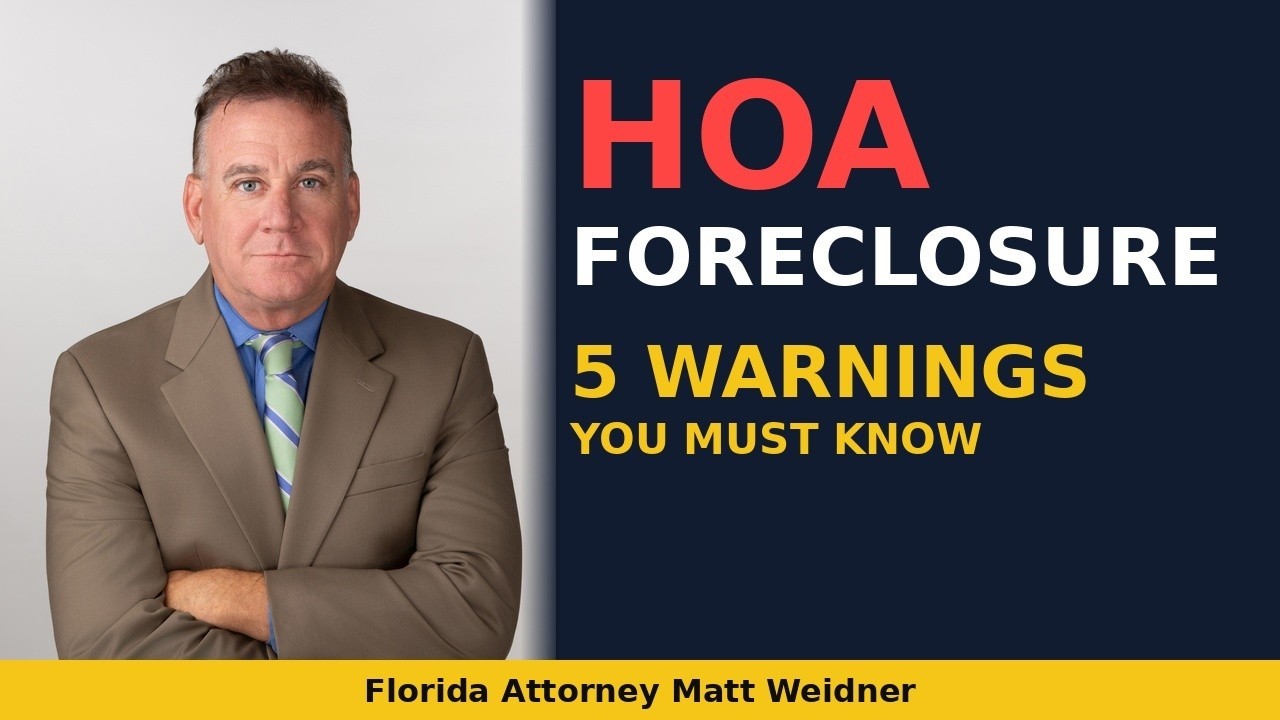
In short: Florida HOAs (§ 720.3085) and condo associations (§§ 718.116, 718.121) can lien and foreclose for unpaid assessments, even small ones. They must follow notice steps first: a 30-day late notice before charging attorney fees, a 45-day notice of intent to lien, and a 45-day notice of intent to foreclose. Missing notices and bad accounting are common defenses, and associations usually have more room to settle than banks.
A $200 bill can become a $10,000 problem. Matt sees it all the time: a homeowner disputes a fine or misses a couple of assessments, the association turns it over to its lawyers, fees pile on, and suddenly there’s a lien and a foreclosure lawsuit over a house worth hundreds of thousands of dollars.
Associations Have Real Foreclosure Power
Florida gives HOAs a lien for unpaid assessments, interest, late charges, and “reasonable costs and attorney fees incurred by the association incident to the collection process” (§ 720.3085(1)). Condo associations have the same kind of lien under § 718.116. They can foreclose it like a mortgage.
With insurance costs, special assessments, and post-hurricane repairs hitting associations hard, Matt expects more of these cases, not fewer.
The Notice Steps an HOA Must Follow (§ 720.3085)
- Notice of late assessment. Since the 2024 amendments, an HOA can’t charge attorney fees for collection unless it first gives the owner 30 days to pay (§ 720.3085(3)(d)).
- Notice of intent to record a lien. At least 45 days before recording a claim of lien (§ 720.3085(4)).
- Notice of intent to foreclose. The foreclosure “may not be brought until 45 days after” this notice (§ 720.3085(5)).
Condominiums have parallel rules: the 30-day late notice and the 45-day notice of intent to lien are in § 718.121, and § 718.116(6)(b) provides that “no foreclosure judgment may be entered until at least 45 days after” the notice of intent to foreclose.
The Defenses Matt Sees Most
- Notice failures. Wrong address, notice to a vacant storm-damaged house, notices never sent, notices sent out of order.
- Accounting errors. Fees, fines, and special assessments that the governing documents or budget don’t support.
- Payments not applied correctly. Florida’s statutes control how partial payments are applied.
- Fines vs. assessments. Under § 720.305(2), an HOA fine of less than $1,000 may not become a lien against a parcel. For condos, § 718.303(3) is broader: “A fine may not become a lien against a unit.”
Matt’s advice in the 2026 videos: save “the receipts.” Every bill, letter, envelope, payment record, and email.
Associations Settle More Than Banks
The good news Matt points to: an association has much more flexibility than a mortgage servicer to reduce fees, set up a payment plan, or settle. If you can document its mistakes, you have leverage.
What Happens to Your Mortgage
The association’s lien is usually junior to an earlier-recorded first mortgage. If the HOA forecloses, the buyer takes title subject to that mortgage, and you still owe it. If the bank forecloses, its liability for past-due assessments is limited by the “safe harbor”: the lesser of 12 months of assessments or “one percent of the original mortgage debt” (§ 720.3085(2)(c); § 718.116(1)(b)), if it meets the statute’s conditions.
The two oral arguments below involve exactly these fights: bank vs. association, and a company that funds association collections.
Watch: the videos behind this article
Florida HOA Foreclosure: How They Legally Take Your Home 5 Red Flags
Florida Homeowners: HOA Fees Can Lead to Foreclosure!
Blindsided by the HOA! How a $200 Bill Becomes $10,000
HOA Foreclosure —Trap Your HOA with “The Receipts”
Watch the Real Appellate Arguments
These are recordings of actual Florida appellate oral arguments in foreclosure cases, posted on the channel. Watch how the judges question both sides. Read the written opinion before relying on any outcome: an argument is not a ruling.
Bank Foreclosure vs Condo Association | Citibank v. Grand Key Condo & Parent | 2D15-1947
LM Funding HOA Debt Collection Model | Florida Appellate Oral Argument | 2nd DCA
Go Deeper
- Served With a Foreclosure Lawsuit in Florida? The 20-Day Answer, the Lis Pendens, and Missed Dates
- Foreclosure Rescue Scams in Florida: What § 501.1377 Prohibits and How to Spot a Con
- Mortgage Servicer Errors and RESPA: Building Your Case Before the Bank Files
Frequently Asked Questions
Can an HOA foreclose on my house in Florida?
Yes. A homeowners’ association has a lien for unpaid assessments, interest, late charges, and reasonable collection costs and attorney fees under § 720.3085, and it can foreclose that lien. Condo associations have similar rights under § 718.116.
What notices does a Florida HOA have to send before foreclosing?
Under § 720.3085, a 30-day notice of late assessment before attorney fees can be charged, a 45-day notice of intent to record a lien, and a foreclosure that may not be brought until 45 days after a notice of intent to foreclose.
Can an HOA foreclose if I have a mortgage?
Yes. The association’s lien is generally junior to a first mortgage recorded earlier, so a buyer at the HOA sale takes subject to that mortgage. You still owe the mortgage.
How much does a bank owe the HOA after it forecloses?
A first mortgagee that acquires title by foreclosure is generally liable only for the lesser of 12 months of past-due assessments or 1% of the original mortgage debt (§ 720.3085(2)(c); § 718.116(1)(b)), if it meets the statute’s conditions.
Talk to a Florida foreclosure defense lawyer
Weidner Law, P.A. has defended Florida homeowners in foreclosure for more than 25 years, from St. Petersburg. If you need a foreclosure defense lawyer in St. Petersburg or anywhere in Florida, call (727) 954-8752 or email weidner@mattweidnerlaw.com.
Read the law yourself, free: Chapter 702, Florida Statutes (Foreclosure of Mortgages and Liens) and Chapter 45 (Judicial Sales).
This article is general information about Florida law, not legal advice about your situation. Reading it, watching the videos, or contacting the firm does not create an attorney-client relationship. Every case turns on its own facts, and past results do not guarantee a similar outcome. The hiring of a lawyer is an important decision that should not be based solely upon advertisements.
