
In short: It depends on who held the real interest in the land when it was taken: when a buyer holds an enforceable right to buy, Florida courts can treat the buyer as the equitable owner and direct the condemnation money to the buyer, with the seller entitled to the unpaid price. In Meyer v. Meyer, the Florida Department of Transportation took 21.294 acres in Hillsborough County that Victor Meyer still held record title to, but his son Daron held a 2013 judgment of specific performance requiring Victor to sell it to him. The trial court treated Daron as the owner for the apportionment and dismissed Victor from the eminent domain case, and the Second District affirmed on February 19, 2025.
The Facts
Victor Meyer and his son Daron Meyer had been fighting over a Hillsborough County property for about 20 years. Daron sued on a written arrangement for sale and in 2013 obtained an amended final judgment of specific performance. It required Victor to deliver a quitclaim deed and Daron to sign a note and mortgage, all within 60 days. The Second District affirmed that judgment in 2015, but the closing never happened. Victor had also deeded the property to himself and his wife, Judith Elaine Williams, as tenants by the entirety.
In March 2021 the Department of Transportation took 21.294 acres, including a house. Its petitions named Victor and Judith as owners and Daron as holder of an encumbrance, the recorded specific performance judgment. In a March 20, 2023 order on entitlement to the proceeds, the trial court dismissed Victor and Judith from the eminent domain case and treated Daron as entitled to the compensation, reserving the father-son cross claims for separate resolution. Victor and Judith appealed (Nos. 2D23-0662 and 2D23-0836, which traveled together). Judith died while the appeal was pending, and Victor continued as personal representative of her estate.
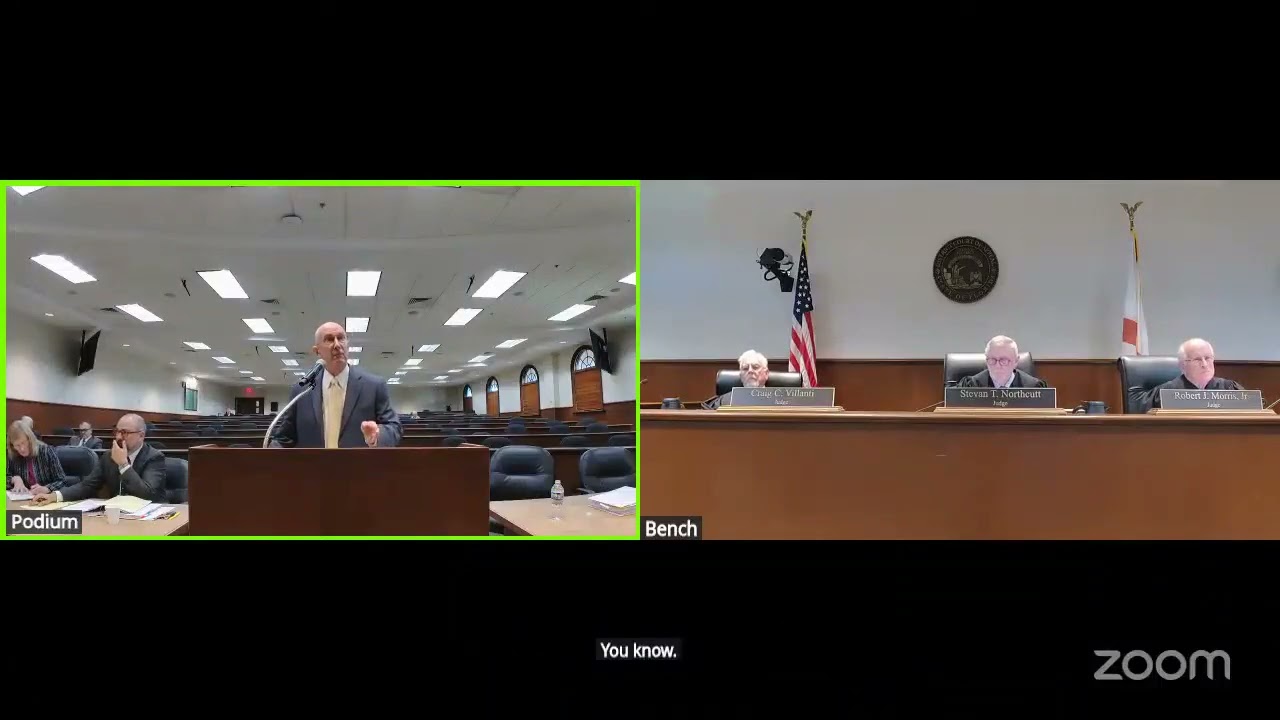
The case was argued on February 4, 2025. David W. Holloway argued for Victor and the estate, Marc A. Peoples for the Department, and Elizabeth S. Wheeler for Daron. The points below are what the lawyers argued, not findings by the court.
- Victor argued that section 73.051 let any person “shown by the record to be interested in the property” appear before the jury to claim compensation, and that he and Judith were record owners in possession, named as owners in the Department’s own petition.
- He argued the specific performance judgment required everything to be done in 60 days, so after that it was only a cloud on title, and that under rule 1.570 Daron got a judgment ordering acts to be performed, not one transferring title. He added that even one day of lawful possession is a compensable property interest.
- He argued Daron filed no proper pleading for the proceeds and that the dispute belonged in a separate declaratory or title action, and that Daron, who never closed, did not meet the ready, willing and able test for a contract buyer to take condemnation proceeds.
- The Department argued that a lienholder or encumbrancer is not entitled to put on valuation evidence before the jury, citing the Florida Supreme Court’s Shavers decision, and that competing claims to the award are sorted out in the apportionment hearing.
- Daron argued that the specific performance judgment worked an equitable conversion, so Victor and Judith held only bare legal title for him, that his claim was properly raised by motion in the apportionment proceeding under section 73.101, and that the trial court correctly refused to let Victor collaterally attack the judgment. He noted Victor’s 2016 motion to vacate it under rule 1.540 had been struck and not appealed.
- The panel asked whether Victor had ever tendered a deed at a closing, and about a 1.644-acre strip Victor said Daron never had a right to buy. Daron’s counsel answered that the legal descriptions and folio numbers were the same and the acreage figure was simply a miscount.
The Decision
The Second District affirmed on February 19, 2025, fifteen days after argument. The ACIS docket lists the disposition as “Affirmed” in both appeals, and we could not locate a written opinion explaining the reasons. The same day the court denied Victor’s motion for appellate attorney’s fees and granted Daron’s motion for appellate fees against the Department as to entitlement, leaving the amount to the trial court. The mandate issued March 10, 2025.
Without an opinion, the affirmance does not tell us which argument decided the case. It means the trial court’s ruling treating Daron as the party entitled to the compensation stands. It is not a published rule about every contract buyer in a condemnation.
The Law
Florida eminent domain cases run in two stages. First a jury sets the full compensation for the property taken. Then, under section 73.101, where there are conflicting claims to the award, the court decides on motion the rights of the interested parties and how the money is apportioned. Section 73.051 lets any person interested in or having a lien on the property file defenses, and says nothing prevents a person shown by the record to be interested in the property from appearing before the jury to claim compensation.
When land under a sale contract is condemned, Florida courts apply equitable conversion. A buyer with an enforceable contract is treated as the equitable owner, and the seller holds legal title as security for the unpaid price. Both sides cited the 1966 decision in Arko Enterprises, Inc. v. Wood, which looks at whether the buyer was ready, willing and able to perform. Victor argued Daron did not meet that test; Daron argued his specific performance judgment already settled his right to the land.
A judgment of specific performance can be enforced in two ways under rule 1.570. Subdivision (c) orders a party to perform an act, such as signing a deed, within a set time. Subdivision (d) lets the judgment itself operate as a conveyance. Victor argued the difference mattered here. An action on a Florida judgment is generally subject to the 20-year limitations period in section 95.11(1), which the parties discussed when arguing how long Daron had to complete the purchase.
Lessons
- If you hold a judgment requiring someone to sell you land, close on it. Leaving it unenforced for years invites exactly this kind of fight when the property is taken or sold.
- Record title alone may not get you the condemnation money. If someone else holds an enforceable right to buy, the court can treat you as holding bare legal title, entitled to the unpaid price rather than the full award.
- Competing claims to condemnation proceeds are usually decided in the apportionment stage. Raise every claim and defense there, in writing.
- A trial court generally will not let a party relitigate an old final judgment inside the eminent domain case. If you want to attack a judgment, do it directly and on time.
- A per curiam affirmance decides only this case. Similar disputes will turn on their own contracts, judgments and facts.
Watch the Oral Argument
This is the recording of the actual oral argument, posted on the channel in three uploads of the same argument. What lawyers and judges say at argument is not the ruling; the decision is summarized above.
🎯 DOT Takes 21 Acres — Who Gets Compensated When There's a Contract Buyer? | 23-0662 | FL DCA
💼 DOT Takes Land — Son's Old Judgment Clouds Who Gets Paid | Meyer v. Meyer | 23-0662
🛣️ DOT Took 21 Acres — What's It Worth? Meyer Family Fights Back | 23-0662
Read the Law on FloridaRules.net
The statutes and court rules discussed in this article, free to read on FloridaRules.net:
Go Deeper
- Does MRTA Protect FDOT Land Held in Fee for a Drainage Canal? (DOT v. Mid-Peninsula Realty)
- Lease Purchase Option Enforced: Order to Sell Affirmed (Tender Loving Care v. Jesher's)
- Closing Date Passed, but Was It Extended? Buyer's Case Revived (Stav Software v. Lederman)
Frequently Asked Questions
Who gets paid when the government takes property that is under contract to sell?
Usually the money is split according to each side’s interest: the buyer with an enforceable contract is treated as the equitable owner, and the seller is entitled to the unpaid purchase price. The court decides the split in an apportionment hearing under section 73.101. In Meyer v. Meyer, the son with a specific performance judgment was treated as entitled to the award, and the Second District affirmed.
Can a lienholder or contract buyer appear at the eminent domain jury trial?
Section 73.051 says nothing prevents a person shown by the record to be interested in the property from appearing before the jury to claim compensation. The Department argued in Meyer that a mere lienholder’s share is decided in apportionment, not by the jury. The affirmance came without an opinion, so it does not resolve that question generally.
What happens if a specific performance judgment is never carried out?
The judgment does not simply disappear when its deadline passes. In Meyer, the father argued the 2013 judgment expired after its 60-day window, but the trial court refused to let him attack it and treated the son as the owner, and that ruling was affirmed. A party who wants to escape a judgment must attack it directly, for example under rule 1.540, and on time.
Does the owner in possession get anything if the land was already sold to someone else?
The record owner can still be entitled to money owed under the contract, such as the unpaid price, but not necessarily to the full award. In Meyer the father argued that possession under legal title until the son closed was itself a valuable interest. The trial court dismissed him from the eminent domain case, reserving the father-son claims for separate resolution.
Talk to a Florida real estate litigation lawyer
Weidner Law, P.A. handles Florida real estate disputes, title problems and appeals from St. Petersburg. If you need a real estate litigation lawyer, call (727) 954-8752 or email weidner@mattweidnerlaw.com.
Read the law yourself, free: every Florida statute and court rule is on floridarules.net.
This article is general information about Florida law, not legal advice about your situation. Reading it, watching the videos, or contacting the firm does not create an attorney-client relationship. Every case turns on its own facts, and past results do not guarantee a similar outcome. The hiring of a lawyer is an important decision that should not be based solely upon advertisements.
