
In short: In Philippe v. Weiner, a borrower handed his lender a deed in lieu of foreclosure, and the lender then sued on the $500,000 note for the shortfall. The trial court used a $155,000 appraisal that surfaced on the day of the hearing and added taxes, insurance and 18% interest for the period after the deed. On July 30, 2014, the Third District affirmed the use of the appraisal but reversed the post-deed taxes and insurance and ordered the interest recalculated.
The Facts
Pierre Philippe signed a $500,000 balloon note secured by a mortgage held by a profit sharing plan of Michael Weiner, M.D., P.A. The note charged 18% interest on defaulted amounts. Philippe defaulted, and on February 24, 2010, he executed and delivered a deed in lieu of foreclosure. The deed was recorded on March 15, 2010. It said the deed did not satisfy the note and that the debt would not merge into the lender’s ownership of the property.
The lender then sued for the deficiency. An earlier appraisal valued the property at about $366,000 as of 2011. A second appraisal, valuing it at $155,000 as of a date close to the deed, was filed on the day of the April 9, 2012 evidentiary hearing. Philippe’s lawyer had withdrawn shortly before, and no court reporter was present. The trial court used the $155,000 figure and entered a deficiency judgment that included prejudgment interest on the full principal, plus taxes, insurance, costs and fees.
At the oral argument, the points below were what the lawyers argued, not findings by the court:
- Philippe’s counsel, Raven R. Liberty, argued that the second appraisal was a backdated valuation that treated the building as worthless, that her client was surprised and unrepresented at the hearing, and that the valuation date should be the day the deed was delivered.
- The lender’s counsel, Paul M. Kade, argued that without a transcript nothing was preserved, that the appraiser testified and could be cross-examined, and that a 19-day gap between the appraisal date and the deed was minor. He conceded that interest computed on the full principal, without crediting the $155,000 value, would have to be recalculated.
- The panel pressed both sides on why a much lower appraisal appeared for the first time at the hearing, and on why a borrower who no longer owned the property should pay its taxes and insurance.
The Decision
The Third District affirmed in part, reversed in part and remanded in a written opinion filed July 30, 2014. The mandate issued August 18, 2014.
On the appraisal, the court affirmed. It reviews the admission of an appraisal for abuse of discretion, and because no transcript of the hearing was provided, it could not conclude that the trial court abused its discretion in relying on the later appraisal.
On taxes and insurance, the court reversed. A deed takes effect when it is delivered, not when it is recorded. Once Philippe delivered the deed, he no longer had to pay taxes or insurance on the property, and the court found no authority for charging him those costs after that date.
On interest, the court reversed. The principal should have been reduced by the property’s value as of the deed date. The court directed that 18% interest run on $500,000 from the default date (February 17, 2009) to the deed date (February 24, 2010), and on $345,000 ($500,000 less the $155,000 value) from February 25, 2010 to the April 9, 2012 judgment. The trial court was told to recalculate the judgment on that basis.
The Law
A deed in lieu of foreclosure ends the borrower’s ownership, but it does not erase the note unless the parties agree that it does. Here the deed said the debt survived, so the lender could still sue on the note for the difference between what was owed and what the property was worth.
The opinion relied on settled rules rather than a statute. A deed takes effect on delivery, and recording matters for notice to third parties, not between the parties (citing Sweat v. Yates, 463 So. 2d 306 (Fla. 1st DCA 1984)). Prejudgment interest compensates for money the creditor was actually out of pocket (citing Argonaut Insurance Co. v. May, 474 So. 2d 212 (Fla. 1985)), so once the lender owned the property, it was not out of pocket for that value. And an appellant who wants review of an evidentiary ruling must bring the appellate court a record of the hearing (citing Applegate v. Barnett Bank of Tallahassee, 377 So. 2d 1150 (Fla. 1979)).
Section 702.06 governs deficiency judgments in foreclosure cases and preserves a lender’s right to sue at common law for a deficiency unless the foreclosure court has already granted or denied one.
Current law (2026): Since 2013, section 702.06 caps a deficiency on owner-occupied residential property at the difference between the judgment amount and the property’s fair market value on the sale date. Section 95.11(6)(g) now sets a one-year deadline to sue for a deficiency on a note secured by a one-to-four-family residence, and for a deed in lieu that year starts the day after the lender accepts the deed. The opinion does not say whether this property was residential, so check the property type before applying either rule.
Lessons
- A deed in lieu does not end the debt unless the paperwork says so. Borrowers should negotiate a written release of any deficiency before signing.
- The borrower’s clock and the lender’s clock both run from delivery of the deed. After that date, taxes, insurance and the value of the property belong to the new owner.
- Bring a court reporter to any evidentiary hearing that matters. Without a transcript, an appellate court will usually presume the trial judge got the evidence right.
- If the other side springs a new appraisal or witness at the hearing, object and ask for a continuance on the record. Silence usually waives the point.
- Check the interest math. Interest on the full principal after the lender already holds the collateral is a common and correctable error.
Source: Philippe v. Michael Weiner, M.D., P.A. Profit Sharing Plan, No. 3D13-597 — Fla. 3d DCA opinion (July 30, 2014); ACIS docket 3D2013-0597.
Watch the Oral Argument
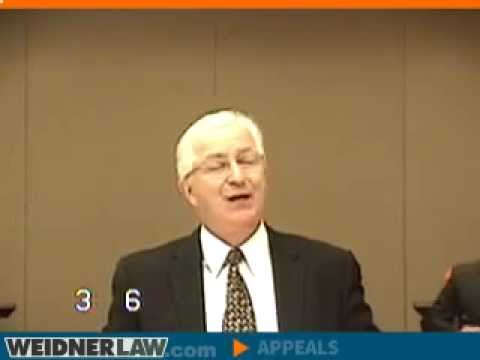
This is the recording of the actual oral argument, posted on the channel. What lawyers and judges say at argument is not the ruling; the decision is summarized above.
🚨 Deed in Lieu Deficiency: Late Appraisal, Post-Transfer Charges | Phillipe v. Weiner, 3D13-0597
Go Deeper
- Deficiency Judgments in Florida: Zombie Mortgage Debt After Foreclosure
- Deed in Lieu Held in Escrow: Court Can Order Foreclosure Instead (Safe Harbor v. 9775 Dixie)
- Short Sale vs. Foreclosure in Florida: Which Is Better for You?
Frequently Asked Questions
Can a lender get a deficiency judgment after a deed in lieu of foreclosure in Florida?
Yes, if the deed or the deed-in-lieu agreement preserves the debt. In Philippe v. Weiner the deed said the note was not satisfied, and the lender sued for the shortfall. A borrower who wants to walk away clean needs a written release of the deficiency.
What date is used to value the property after a deed in lieu?
The deed takes effect when it is delivered, not when it is recorded. In Philippe, the Third District used the February 24, 2010 delivery date to cut off the borrower’s taxes and insurance and to credit the property’s value against the principal.
Do I still owe property taxes and insurance after giving the lender a deed in lieu?
Not for the period after you deliver the deed, according to Philippe v. Weiner. The court reversed the parts of the deficiency judgment that charged the borrower for taxes and insurance after the lender owned the property.
How long does a Florida lender have to sue for a deficiency after a deed in lieu?
For a note secured by a one-to-four-family residence, section 95.11(6)(g) gives the lender one year, starting the day after it accepts the deed in lieu. Other deficiency claims fall under the longer limitations periods in section 95.11, so the property type matters.
Talk to a Florida real estate litigation lawyer
Weidner Law, P.A. handles Florida real estate disputes, title problems and appeals from St. Petersburg. If you need a real estate litigation lawyer, call (727) 954-8752 or email weidner@mattweidnerlaw.com.
Read the law yourself, free: every Florida statute and court rule is on floridarules.net.
This article is general information about Florida law, not legal advice about your situation. Reading it, watching the videos, or contacting the firm does not create an attorney-client relationship. Every case turns on its own facts, and past results do not guarantee a similar outcome. The hiring of a lawyer is an important decision that should not be based solely upon advertisements.
