
In short: The appeal did not settle it. Section 713.345 makes it a crime to misapply construction payments but says it does not prevent withholding payment under the contract or because of a bona fide dispute over the amount due; whether that is an element or a defense was the question argued. In Cottier v. State, a Citrus County roofing contractor convicted of grand theft and twelve counts of misapplication of construction funds raised it on appeal. The Fifth District affirmed his convictions on October 25, 2019, without addressing the issue, and reversed only part of the costs.
The Facts
Duane Michael Cottier ran a roofing business in Citrus County. The facts below come from the oral argument, not from a court opinion. According to the State, dozens of customers paid for roofs that were never built, and a roofing subcontractor who had worked for Cottier stopped being paid in late 2015, finished about a dozen roofs without payment, and recorded liens on those homes. Those unpaid roofs were the basis for the misapplication counts.
Cottier testified that he withheld payment from the subcontractor because of back charges for leaks and other problems. There is no standard jury instruction for misapplication of construction funds, so the lawyers drafted their own. The defense asked to list the absence of a bona fide dispute as a fourth element the State had to prove. The trial court treated it as a defense instead. The jury was told that if it had a reasonable doubt whether Cottier withheld payment under the contract or because of a bona fide dispute, it should find him not guilty.
Cottier was convicted of one count of grand theft of $100,000 or more and twelve counts of misapplication of construction funds, and appealed (No. 5D2018-3213). The points below are what the lawyers argued.
- The defense argued the bona fide dispute language sits in the same subsection as the other elements, so it is an element the State must prove, and that failing to instruct on a disputed element is fundamental error. If the statute is ambiguous, it argued, the rule of lenity requires reading it in the defendant’s favor.
- The defense argued the difference matters because it controls who has the initial burden and whether the defendant must testify to raise the issue.
- The State argued the sentence beginning “This paragraph does not prevent” reads like an exception, not an element, and that defenses often appear in the same sentence as the crime, as in the burglary statute.
- The State argued any error was harmless because the jury was told it must acquit if it had a reasonable doubt about a bona fide dispute, and the defense theory was fully presented.
The Decision
The Fifth District issued a short per curiam opinion on October 25, 2019. It affirmed the judgment and sentence without discussion, so it did not decide whether the bona fide dispute language is an element or a defense. It reversed the costs of prosecution and the public defender fee, which exceeded the statutory amounts without a request for more, and remanded to reduce each to $100; the State conceded that error.
A senior judge concurred specially. He agreed the convictions should be affirmed but called the 45-year sentence for a nonviolent monetary crime extraordinarily harsh, noted a lowest permissible sentence of about 55 months, and urged the trial judge to give great consideration to a motion to mitigate the sentence if one were filed. Rehearing and a request for a written opinion were denied on December 5, 2019.
The Law
Section 713.345(1)(a) requires anyone who receives a payment on account of improving real property to apply it to amounts then due for labor, services and materials furnished for that improvement before the payment was received. The next sentence says the paragraph “does not prevent any person from withholding any payment, or any part of a payment, in accordance with the terms of a contract” or “pursuant to a bona fide dispute regarding the amount due.” Knowing and intentional violations are felonies, graded by the amount misapplied.
Whether statutory language is an element or an affirmative defense decides who must prove it. The State must prove every element beyond a reasonable doubt. For many affirmative defenses, the defendant must first offer some evidence before the burden shifts back to the State. Because no standard jury instruction existed, the parties in Cottier had to draft one, and the defense urged the court to write so the instruction committee could address it.
Lessons
- Contractors who hold back payment from a subcontractor should document the specific reason, in writing, at the time.
- Payments received for a construction job must first cover amounts already owed for work on that job. Diverting them can lead to criminal charges, not just civil suits.
- Subcontractors and suppliers should use their construction lien rights promptly, as the subcontractor here did.
- An affirmance without discussion leaves the element-or-defense question open for a future case.
Source: Cottier v. State, No. 5D18-3213 (Fla. 5th DCA Oct. 25, 2019) (affirmed in part, reversed as to costs and fees, remanded); ACIS docket.
Watch the Oral Argument
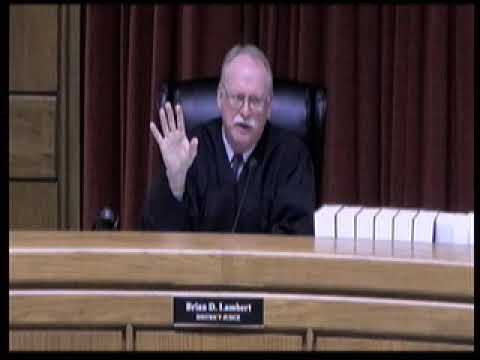
This is the recording of the actual oral argument, posted on the channel. What lawyers and judges say at argument is not the ruling; the decision is summarized above.
👨⚖️ Who Must Prove "No Cause to Withhold Pay" in Construction Fund Theft? | Cottier 18-3213
Go Deeper
- When Is an Overstated Construction Lien Fraudulent in Florida? (Cherry Bomb Electric)
- Contractor’s Owners Held Personally Liable, and Their Homestead Claim Failed (Munro v. Dickinson)
- Contractor’s Lien Found Late and Fraudulent After a Driveway Dispute (Gregan v. Arencibia)
Frequently Asked Questions
Is it a crime for a contractor not to pay subcontractors in Florida?
It can be. Section 713.345 makes it a felony to knowingly and intentionally fail to apply construction payments to amounts already owed for the work. In Cottier v. State, a roofing contractor’s convictions for misapplication of construction funds were affirmed.
Can a contractor withhold payment from a subcontractor over a dispute?
Yes, if the withholding follows the contract or a bona fide dispute about the amount due. The statute expressly allows that. In Cottier, the jury rejected the contractor’s claim that his back charges were a bona fide dispute.
Who has to prove there was no bona fide dispute in a misapplication case?
That was the question argued in Cottier, and the Fifth District did not answer it. The defense said it was an element the State must prove; the trial court treated it as a defense, and the jury was told to acquit if it had a reasonable doubt about a bona fide dispute.
What happens if a contractor takes my deposit and never builds the job?
You may have civil claims for breach of contract and theft, and the conduct may support criminal charges. In Cottier, dozens of homeowners testified they paid for roofs that were never built, and the contractor was convicted of grand theft.
Talk to a Florida real estate litigation lawyer
Weidner Law, P.A. handles Florida real estate disputes, title problems and appeals from St. Petersburg. If you need a real estate litigation lawyer, call (727) 954-8752 or email weidner@mattweidnerlaw.com.
Read the law yourself, free: every Florida statute and court rule is on floridarules.net.
This article is general information about Florida law, not legal advice about your situation. Reading it, watching the videos, or contacting the firm does not create an attorney-client relationship. Every case turns on its own facts, and past results do not guarantee a similar outcome. The hiring of a lawyer is an important decision that should not be based solely upon advertisements.
