
In short: Possibly. A property owner can bring a Bert Harris Act claim when a land-use change inordinately burdens an existing use of its property, and a rule that a permit creates no vested rights for the permit holder does not by itself defeat the owner’s claim. In Karenza Apartments v. City of Miami, the Third District on July 13, 2022 reversed summary judgment for the city and sent the case back for trial on whether the owner had reasonable, investment-backed expectations and was inordinately burdened.
The Facts
Karenza Apartments, LLP owns a building at 100 NE 38th Street in Miami, next to I-95 and across from the Design District. From 2013 until August 2017 the property was inside the area where the City’s mural ordinance allowed advertising murals, and it earned significant rent from murals facing the highway.
In 2014 Karenza leased space to an outdoor advertiser, which obtained two mural permits. In 2015 the City approved a 2,100-square-foot rooftop mural structure, and Karenza spent money on planning and construction. Karenza ended that lease in April 2016 for nonpayment. Effective August 2017, the City amended the mural ordinance and drew the new boundaries to exclude Karenza’s property while keeping a similarly situated neighboring property. At that time Karenza had no active permittee, but it had a contingent lease with a qualified advertiser pending the amendment.
Karenza sued under the Bert J. Harris, Jr., Private Property Rights Protection Act. On cross-motions for summary judgment, the trial court found Karenza had an existing use but ruled for the City, reasoning that the ordinance says a mural permit creates no vested or compensable interest. Karenza appealed, and the case was argued on April 6, 2022. At argument, the points below were made by the lawyers, not found by the court.
- Karenza argued it was inordinately burdened as a matter of law under Ocean Concrete: the property was physically suited to murals and they were allowed there as of right until the amendment, and it alone was carved out of the district.
- It argued the City had to cross-appeal the existing-use finding if it wanted to challenge it, and that the short gap between leases was a normal period of inactivity caused by the City’s year-long pending amendment.
- The City argued the case was like Holmes, where temporary permits could not support reasonable expectations; that no mural could go up without a permit Karenza itself could never hold; and that any future mural income was speculative.
The Decision
The Third District reversed both summary judgment orders on July 13, 2022 and remanded for further proceedings. Because the City did not cross-appeal the trial court’s finding that Karenza had an existing use, that finding stood.
The court held the trial court erred by focusing on the permittee’s lack of vested rights. That provision of the mural ordinance “does not, however, inform the analysis under the Bert J. Harris Act as it applies to the property owner.” Applying the two-step framework of Ocean Concrete, the court held that disputed facts remained on whether Karenza had reasonable, investment-backed expectations, whether the amendment inordinately burdened the property, and what damages, if any, resulted, so summary judgment was improper for either side.
Karenza asked the Florida Supreme Court to review the decision, and on November 23, 2022 the Supreme Court declined to accept jurisdiction. We did not find the result of the remand proceedings.
The Law
The Bert J. Harris, Jr., Private Property Rights Protection Act, section 70.001, gives a property owner a cause of action for relief when a specific action of a governmental entity has inordinately burdened an existing use of real property or a vested right to a specific use. It is a separate remedy from a constitutional takings claim and does not require a taking.
“Existing use” includes an actual, present use or activity on the property, including periods of inactivity normally associated with or incidental to the nature or type of use, as well as reasonably foreseeable, nonspeculative land uses. “Inordinately burdened” means the owner is permanently unable to attain the reasonable, investment-backed expectation for the existing use of the property as a whole, or is left with uses that are unreasonable so that the owner bears a disproportionate share of a burden imposed for the good of the public.
Current law (2026): In 2021 the Legislature amended section 70.001. Among other changes, the presuit notice period was shortened from 150 to 90 days for most claims, and the definition of governmental action was broadened to cover the adoption of an ordinance or regulation that affects the property. Check the current statute before relying on the version that governed this case.
Lessons
- A city’s statement that a permit creates no vested rights protects the city against permit holders. It does not automatically defeat a property owner’s Bert Harris claim.
- Keep records of what you spent in reliance on the rules in place: permits, construction, leases and income. Reasonable, investment-backed expectations are a fact question.
- If you win below but lose on a predicate finding, consider whether you must cross-appeal. Here the City’s failure to cross-appeal left the existing-use finding in place.
- Bert Harris claims have strict presuit notice requirements. Talk to a lawyer as soon as a land-use change threatens a use you already have.
Source: Karenza Apartments, LLP v. City of Miami, No. 3D21-384 (Fla. 3d DCA July 13, 2022); Fla. 3d DCA docket (Florida Supreme Court declined jurisdiction November 23, 2022).
Watch the Oral Argument
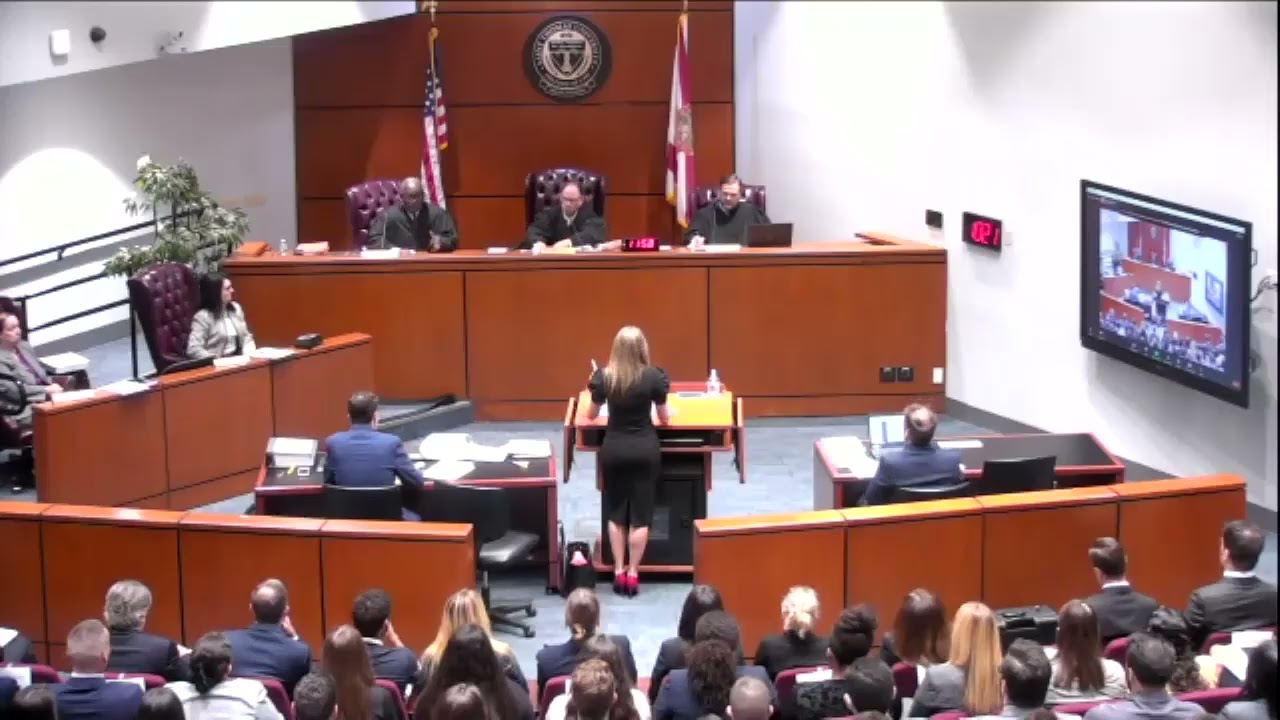
This is the recording of the Third District oral argument on April 6, 2022, posted on the channel. What lawyers and judges say at argument is not the ruling; the court’s written opinion is summarized above.
Property Carved Out of Miami's Mural District: Bert Harris Act Existing Use and Inordinate Burden
Go Deeper
- Florida Real Estate- Bert Harris Claims, Flood Insurance And Construction Permits
- Miami Beach Short-Term Rentals vs. the City: Injunction Denied (Eisenberg v. Miami Beach)
- A 1974 Park Deed's Reverter Clause Survives: Not a Dedication Under 95.36 (1000 Brickell v. City of Miami)
Frequently Asked Questions
What is the Bert Harris Act in Florida?
It is Florida’s Private Property Rights Protection Act, section 70.001. It lets an owner seek compensation when a specific government action inordinately burdens an existing use of real property or a vested right, even if the action does not amount to a constitutional taking.
Can I sue if the city rezones my property and I lose income?
You may have a Bert Harris claim if the change inordinately burdens an existing use. In Karenza v. City of Miami, an owner carved out of the mural district got its case reinstated, but it still had to prove its expectations and the burden at trial.
Does a gap in using my property mean I lost my existing use?
Not necessarily. The statute’s definition of existing use includes periods of inactivity normally associated with or incidental to the type of use. In Karenza, the trial court found an existing use despite a gap between mural leases, and the City did not challenge that on appeal.
How long does the government have to respond to a Bert Harris claim?
For most claims, the owner must give the government written notice and a presuit period before filing suit. After the 2021 amendments to section 70.001, that period is generally 90 days, down from 150 days.
Talk to a Florida real estate litigation lawyer
Weidner Law, P.A. handles Florida real estate disputes, title problems and appeals from St. Petersburg. If you need a real estate litigation lawyer, call (727) 954-8752 or email weidner@mattweidnerlaw.com.
Read the law yourself, free: every Florida statute and court rule is on floridarules.net.
This article is general information about Florida law, not legal advice about your situation. Reading it, watching the videos, or contacting the firm does not create an attorney-client relationship. Every case turns on its own facts, and past results do not guarantee a similar outcome. The hiring of a lawyer is an important decision that should not be based solely upon advertisements.
