
In short: In Munro v. Dickinson, homeowners who paid a construction company for a house that was never finished obtained a summary judgment piercing the corporate veil and holding the company’s owners, James and Adela Munro, personally liable. After the Munros sold their Miami home, the trial court held an evidentiary hearing and rejected their homestead claim, relying in part on their own YouTube and Facebook posts about moving to North Carolina. The Third District affirmed both rulings without a written opinion on September 4, 2013.
The Facts
John and Amanda Dickinson hired a construction company owned and run by James and Adela Munro to build their house in Miami-Dade County. The project failed. A dispute against the company went through non-binding arbitration, and the homeowners then sought to hold the Munros personally liable by piercing the corporate veil. The trial court granted summary judgment against the Munros.
The Munros then sold their Miami home and claimed homestead protection, arguing they intended to buy a new home in Florida. After a full-day evidentiary hearing, the trial court found they had no intent to establish a new Florida homestead. The Munros appealed both rulings, and the two appeals were consolidated under No. 3D13-283 and argued in August 2013. The points below are what the lawyers argued, not findings by the appellate court.
- The Munros’ lawyer argued that a contract case against the company had become a fraud case against individuals, that the company operated as a real business with offices, a warehouse and filed reports, and that paying personal expenses from the business account was poor practice but not enough to pierce the veil on summary judgment.
- She argued the Munros intended to stay in Miami, where Mr. Munro was being treated for cancer and they cared for elderly parents, that they had asked a realtor to find them a new home, and that the North Carolina house was a vacation home used to store their belongings.
- The homeowners’ lawyer argued they paid almost $200,000 for roughly $30,000 to $40,000 of work, that project money was spent on personal items, and that the company used a licensed qualifier in name only to get around licensing laws.
- On homestead, he pointed to Mr. Munro’s YouTube video saying he had bought a house in North Carolina, Facebook posts about the move, and testimony that no Florida home search happened until after judgment. He argued the trial court’s credibility findings controlled.
The Decision
The Third District affirmed on September 4, 2013. The decision is reported as a table entry, Munro v. Dickinson, 121 So. 3d 560, with the single word “Affirmed” and no opinion explaining the reasons. The same day, the court granted the homeowners’ motion for appellate attorney’s fees and costs and sent the amount back to the trial court.
Because there is no opinion, the affirmance does not tell us which arguments the court accepted. It leaves the veil-piercing judgment and the homestead ruling in place for this case only.
The Law
Florida respects the corporate form. Under Dania Jai-Alai Palace, Inc. v. Sykes, 450 So. 2d 1114 (Fla. 1984), a court will disregard it only when the corporation was organized or used to mislead creditors, to commit fraud, or for some other improper purpose. Courts generally ask whether the owners dominated the company so completely that it had no independent existence, whether they used the corporate form fraudulently or for an improper purpose, and whether that misuse caused the plaintiff’s loss.
Florida law lets a contractor’s license be held by a qualifying agent, who takes on supervisory responsibilities under section 489.1195. The homeowners argued that a qualifier who never supervised the job was evidence the company was used improperly.
Homestead protection under Article X, section 4 of the Florida Constitution depends on residence and intent. When a homeowner sells, the proceeds can remain protected only if the owner shows a good-faith intent to reinvest them in a new Florida homestead within a reasonable time. Intent is a fact question, so the trial judge’s view of the witnesses, and of the owner’s own words, often decides it.
Lessons
- Running personal expenses through a business account invites a veil-piercing claim. Pay yourself from the company first, then spend from a personal account.
- A licensed qualifier must actually supervise the work. A paper arrangement can be used as evidence of improper purpose.
- Homestead protection for sale proceeds turns on intent to buy a new Florida home. What you post online can be used to prove what you intended.
- When a trial judge hears the witnesses and makes credibility findings, an appeal is unlikely to change the result.
- Losing an appeal can add the other side’s appellate fees to the judgment, as it did here.
Source: Munro v. Dickinson, Nos. 3D13-283 and 3D12-3130 (consolidated), Fla. 3d DCA docket (affirmed September 4, 2013); reported without opinion at 121 So. 3d 560.
Watch the Oral Argument
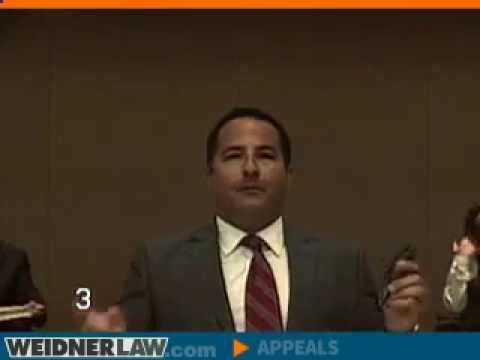
This is the recording of the actual oral argument, posted on the channel. What lawyers and judges say at argument is not the ruling; the decision is summarized above.
⚖️ Veil Piercing on Summary Judgment and a Lost Homestead Claim | Munro v. Dickinson, 3D13-283
Go Deeper
- Homestead Sale Proceeds Invested in a Brokerage Account Stayed Exempt (JBK Associates v. Sill Bros.)
- A Law Firm Chased the Wife's Homestead Sale Proceeds and Paid Her Fees (Law v. Law)
- Unlicensed Contractor's Lien and a Sanctions Award Reversed (MacAlister v. Bevis)
Frequently Asked Questions
When can you pierce the corporate veil in Florida?
Only when the owners used the corporation fraudulently or for an improper purpose, usually after dominating it so completely that it had no independent existence, and that misuse caused the loss. Owning and controlling a company, or sloppy bookkeeping alone, is not enough. In Munro v. Dickinson, the homeowners pointed to project money spent on personal items and a qualifier used in name only.
Can I hold a contractor's owner personally liable in Florida?
Sometimes. Besides veil piercing, an owner who personally commits fraud or other wrongdoing can be liable for it. In Munro, the trial court held the owners personally liable on summary judgment and the Third District affirmed without an opinion.
Are the proceeds from selling a Florida homestead protected from creditors?
They can be, if the owner intends in good faith to reinvest them in a new Florida homestead within a reasonable time and keeps them separate. In Munro, the trial court found the owners did not intend to buy a new Florida home, so the protection failed.
Can social media posts be used against me in a homestead dispute?
Yes. Intent is the key question, and your own statements are evidence of it. In Munro, the homeowners relied on a YouTube video and Facebook posts in which Mr. Munro talked about moving to North Carolina.
Talk to a Florida real estate litigation lawyer
Weidner Law, P.A. handles Florida real estate disputes, title problems and appeals from St. Petersburg. If you need a real estate litigation lawyer, call (727) 954-8752 or email weidner@mattweidnerlaw.com.
Read the law yourself, free: every Florida statute and court rule is on floridarules.net.
This article is general information about Florida law, not legal advice about your situation. Reading it, watching the videos, or contacting the firm does not create an attorney-client relationship. Every case turns on its own facts, and past results do not guarantee a similar outcome. The hiring of a lawyer is an important decision that should not be based solely upon advertisements.
