
In short: Loans the partners made to a real estate venture generally get repaid before profit is split, but whether a loan exists, and whether it carries interest, is a fact question a jury can decide against the lenders. In Williamsburg Developers v. Singer, a limited partner in an Orlando development venture sued for his share of profit from a roughly $20 million land sale, and the general partners argued that partner loans at 9% interest left nothing to distribute. The Fifth District affirmed the judgment for the limited partner without a written opinion on July 8, 2014.
The Facts
Gary Singer was a limited partner in Williamsburg Developers Limited Partnership. Developers owned no land itself. It was the general partner of, and held the main investment in, two other partnerships that owned the Williamsburg project in Orlando: one residential and one commercial. Singer’s interest was only in Developers.
In 2006 the commercial partnership sold the last significant parcel in the project for about $20 million. According to the developers, the net proceeds went to pay off debt, including money that individual partners had advanced over the years, so there was no profit to distribute. Singer sued for his share. At a jury trial in Orange County, his accountant testified that Singer should have received a distribution of $1,265,000. The developers appealed (No. 5D2013-0860). The points below are what the lawyers argued at oral argument, not findings by the court.
- The developers argued that the expert used a 15% interest when Singer had pleaded, and testified to, a smaller percentage after a 1990s restructuring, a difference they put at roughly $320,000 to $350,000.
- They argued that, under Michigan partnership law, Developers as general partner was liable for the residential partnership’s debts, so those loans had to be repaid before Developers could have any profit, and that a distribution leaving the partnership unable to pay its debts was prohibited.
- They argued the partner loans always carried 9% interest, the rate on the project mortgages, and that Singer’s own on-site bookkeeping staff had booked them that way, although there were no written loan agreements.
- Singer argued the pretrial statement made his percentage an issue for trial, and that the partnership tax returns from 2000 to 2006 showed him as a 15% partner.
- He argued the promissory notes the developers relied on were never admitted, that no books showed interest accruing, and that the final 2006 tax returns treated the money paid to the lending partners as a return of capital and capital gain, not interest. The residential partnership’s returns showed no remaining liability.
- Members of the panel asked whether the jury had competent evidence that the loans carried no interest, and whether the developers had told the IRS one thing and the jury another.
The Decision
The Fifth District affirmed on July 8, 2014, in a per curiam affirmance without a written opinion (a “PCA”). The mandate issued July 25, 2014.
A PCA does not say which arguments the court accepted. It means the judgment for Singer stands. It is not a ruling that partner loans never carry interest, or that a general partner’s liability for an affiliate’s debt can be ignored when calculating profit.
The Law
The lawyers argued the case under Michigan partnership law. Florida’s limited partnership act has comparable rules. Under section 620.1404, the general partners are generally liable for the obligations of the limited partnership. Under section 620.1508, a limited partnership may not make a distribution if, afterward, it could not pay its debts as they come due or its liabilities would exceed its assets.
Those rules explain why the developers argued the loans had to be paid first. But they do not answer the factual questions the jury decided: whether money advanced by a partner was a loan or a capital contribution, how much was still owed, and whether it carried interest. Without a written loan agreement, the answers come from the books, the tax returns and the witnesses.
The pleadings matter too. A party is generally bound by what it pleads, but issues tried by express or implied consent are treated as if they had been raised in the pleadings under rule 1.190(b). Singer’s lawyer pointed to the pretrial statement, which listed his percentage interest as an issue to be tried.
Lessons
- If partners advance money to a real estate venture, put it in a signed note that states the interest rate and repayment terms. Here there was no loan agreement, and the 9% rate became a jury question.
- Tax returns are evidence. When the final returns treated the payouts as capital, not interest, that hurt the lenders’ claim that interest was owed.
- Keep the partnership agreement and every amendment to percentage interests current and consistent with the K-1s. Conflicting documents invite a fight over who owns what.
- A per curiam affirmance decides only this case. It does not announce a rule about partner loans or distributions.
Watch the Oral Argument
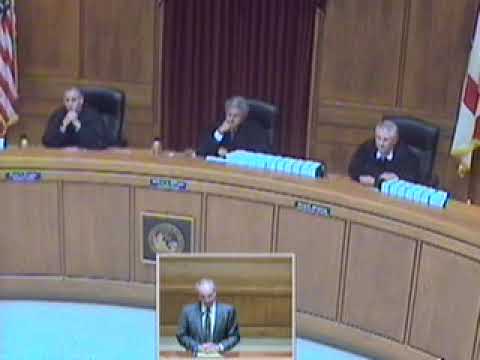
This is the recording of the actual oral argument, posted on the channel. What lawyers and judges say at argument is not the ruling; the decision is summarized above.
🏗️⚖️ Developer vs. Landowner: Property Dispute
Read the Law on FloridaRules.net
The statutes and court rules discussed in this article, free to read on FloridaRules.net:
Go Deeper
- Family Oral Partnership Claim Over Restaurants Fails on Appeal (Montalvan v. Montalvan)
- Officer Conveyed Company Property Without Approval? Appeal Affirmed (Wesley v. DeKloet)
- A $10 Million Land Deal That Never Closed: Buyer Loses on Appeal (Pine Grove v. Robert Diesel)
Frequently Asked Questions
Do partner loans get paid back before profits are distributed?
Generally, yes. Debts, including real loans from partners, are paid before profit is split, and section 620.1508 bars a Florida limited partnership from making a distribution that would leave it unable to pay its debts. The fight is usually over whether the money was really a loan, and on what terms.
Does a loan from a partner carry interest if there is no written agreement?
Only if the evidence shows the partners agreed to interest. In Williamsburg v. Singer there was no loan agreement, the final tax returns showed no interest, and the jury’s judgment for the limited partner was affirmed.
Is a general partner responsible for the debts of a partnership it manages?
Generally, yes. Under section 620.1404, the general partners of a Florida limited partnership are generally liable for its obligations. The developers in Williamsburg argued that this made the residential partnership’s debts their own, but the appeal ended in an affirmance without opinion.
Can a limited partner sue for his share of profit from a property sale?
Yes. A limited partner who believes the general partner withheld a distribution he was owed can sue, and the case often turns on the partnership’s books and tax returns. Singer won at trial, and the Fifth District affirmed.
Talk to a Florida real estate litigation lawyer
Weidner Law, P.A. handles Florida real estate disputes, title problems and appeals from St. Petersburg. If you need a real estate litigation lawyer, call (727) 954-8752 or email weidner@mattweidnerlaw.com.
Read the law yourself, free: every Florida statute and court rule is on floridarules.net.
This article is general information about Florida law, not legal advice about your situation. Reading it, watching the videos, or contacting the firm does not create an attorney-client relationship. Every case turns on its own facts, and past results do not guarantee a similar outcome. The hiring of a lawyer is an important decision that should not be based solely upon advertisements.
