
In short: In Marin v. Marin (2d DCA, Oct. 15, 2025), a former husband let a $700,000 life insurance policy securing his alimony lapse, and the trial court turned that into a $700,000 judgment. The Second DCA reversed that judgment: a compensatory contempt sanction must match an actual loss, and no death benefit is owed while the husband is alive.
The Facts
The couple’s 2017 divorce judgment adopted a settlement agreement requiring the husband to pay $14,000 a month in permanent alimony and to keep an existing $700,000 term life policy naming the wife, as security for that alimony.
He kept paying alimony but let the policy lapse. He testified he is now uninsurable because of a medical condition, and reinstatement was denied for that reason.
The wife moved for contempt. In December 2023 the court found his failure willful and gave him 60 days to obtain coverage or face a judgment.
In August 2024 the court entered a $700,000 judgment plus interest, even while finding his insurance applications had been denied for medical reasons.
The Decision
The Second District Court of Appeal reversed the $700,000 judgment, affirmed the unchallenged fee and cost award, and remanded (Case No. 2D2024-2222, decided October 15, 2025; opinion by Judge Black).
Civil contempt sanctions are either coercive (to force compliance) or compensatory (to make the injured party whole). Under the Florida Supreme Court’s decision in Parisi v. Broward County, a compensatory fine must be based on the actual loss caused by the violation.
The wife’s right to a death benefit would arise only at the husband’s death. While he is alive and paying alimony, her loss is contingent and speculative, so a lump-sum judgment for the full face amount was not a valid compensatory sanction. It did not work as a coercive sanction either, since he could not buy insurance. The trial court must reconsider an appropriate remedy.
In a footnote the court left open whether the policy secured only unpaid alimony or was meant to replace alimony after his death.
The Law
Florida family courts may order life insurance to secure support. The provision cited in Marin, then § 61.08(3), is now § 61.08(4) after the 2023 alimony reform, and it now requires specific findings of special circumstances before insurance or a bond is ordered.
Family Law Rule 12.570(c)(2) allows contempt to enforce a judgment requiring a specific act, such as keeping a policy in force.
Lessons
- Insurance securing support is a promise that can fail. Health changes can make a lapsed policy impossible to replace.
- A spouse protected by insurance should require proof of coverage every year, so a lapse is caught early.
- Courts will look for a remedy that fits the real risk, such as a bond, other security or a claim against the estate, rather than awarding the face amount up front.
- For estate planning, a support obligation secured by insurance can become a creditor claim against the estate if the policy is gone.
Source: Opinion, Marin v. Marin, No. 2D2024-2222 (Fla. 2d DCA Oct. 15, 2025)
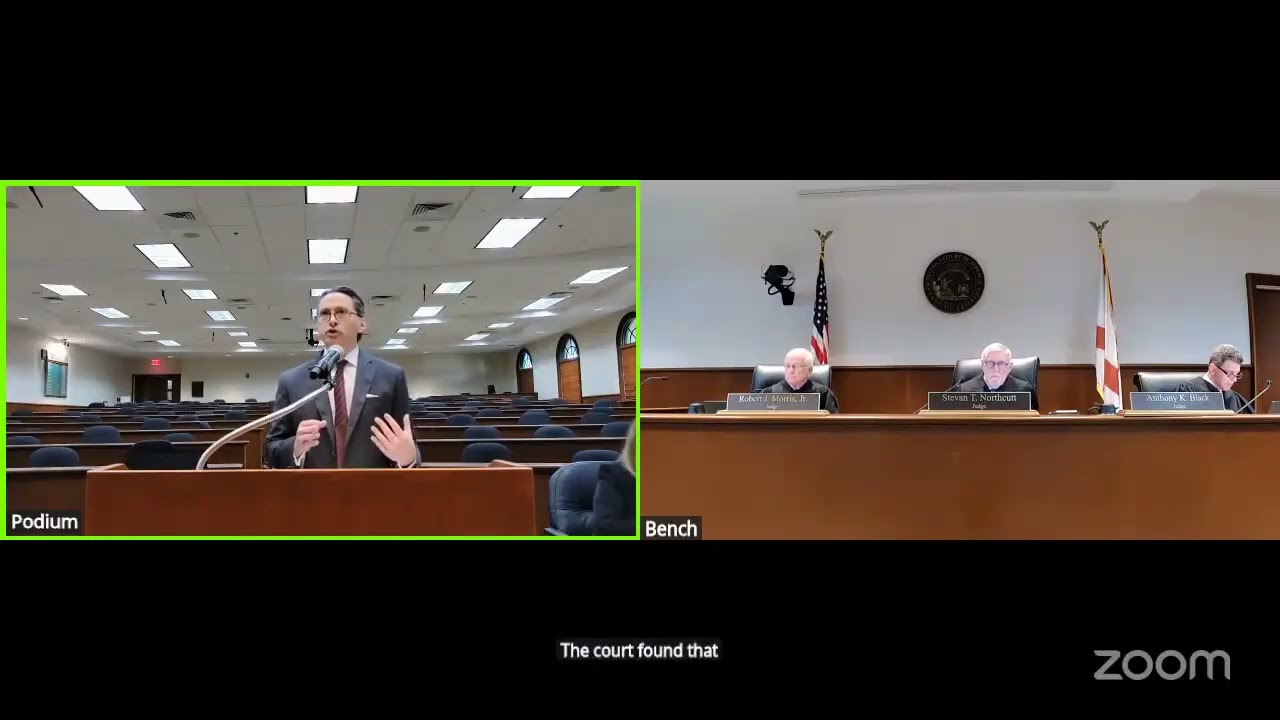
Watch the Oral Argument
This is the recording of the oral argument. The video title calls the case “Baron”; the correct caption is Marin v. Marin. What lawyers and judges say at argument is not the ruling; the decision is summarized above.
$700K Judgment for Missing Life Insurance, But He’s Not Dead Yet | Marin v. Marin, 2D2024-2222
Go Deeper
- Does a Revocable Trust’s Trustee Owe Anything to Contingent Heirs? (Capo v. Capo)
- Purge Paid, But Homestead Still Ordered Sold for Child Support? (Pacin v. Granja)
- Can an Irrevocable Trust Be Ended If the Settlor and Beneficiaries Agree? (Peck v. Peck)
Frequently Asked Questions
What happens if an ex-spouse lets court-ordered life insurance lapse in Florida?
The court can hold them in contempt. Under Marin, though, a judgment for the full death benefit while the insured is alive is not a valid compensatory sanction.
Can a court order life insurance to secure alimony in Florida?
Yes. Section 61.08(4) allows it, but since 2023 the court must make findings of special circumstances first.
What is the difference between coercive and compensatory contempt?
Coercive sanctions push someone to comply and must offer a way to purge. Compensatory sanctions repay an actual, proven loss.
What can the protected spouse do if the insured cannot get new coverage?
Ask the court for an alternative remedy, such as a bond or other security, or preserve a claim against the estate.
Talk to a Florida probate litigation lawyer
Weidner Law, P.A. handles Florida probate, trust, guardianship and elder-exploitation disputes from St. Petersburg. If you need a probate litigation lawyer, call (727) 954-8752 or email weidner@mattweidnerlaw.com.
Read the law yourself, free: the full Florida Probate Code and Probate Rules and the Florida Trust Code are on floridarules.net.
This article is general information about Florida law, not legal advice about your situation. Reading it, watching the videos, or contacting the firm does not create an attorney-client relationship. Every case turns on its own facts, and past results do not guarantee a similar outcome. The hiring of a lawyer is an important decision that should not be based solely upon advertisements.
