
In short: In Hubbell v. HH Condominium Investments, a buyer believed his Miami-Dade condo contract had a financing contingency signed by the seller. The seller said the addendum was forged and kept his $144,000 deposit. On November 27, 2013, the Third District affirmed summary judgment for the seller, but reversed the summary judgment for the sales associate because genuine issues of material fact remained as to her.
The Facts
William H. Hubbell agreed to buy a condominium unit from HH Condominium Investments, LLC, a developer, and put down a $144,000 deposit. His attorney signed the documents for him under a power of attorney. Hubbell believed the contract included an addendum, signed by the seller, that let him cancel if he could not get financing.
When Hubbell could not get financing and asked for his deposit back, HH said the addendum was a forgery and kept the deposit under the contract. Hubbell sued HH for unjust enrichment and also sued Victoria Martin, the sales associate. Both won summary judgment. Hubbell’s two appeals (Nos. 3D12-3392 and 3D12-3391) were consolidated and argued in October 2013. Martin did not participate in the appeal. The points below are what the lawyers argued, not findings by the court.
- Hubbell argued that, with no written agreement making Martin a single agent, the brokerage statute presumes she was a transaction broker, and that the presumption either is conclusive or at least shifts the burden of proof, so summary judgment was improper.
- He argued there was no meeting of the minds because he thought the contract had a financing contingency, and that HH lost nothing because it resold the unit at the same price.
- HH argued every person involved in the forgery question was on the buyer’s side: his attorney under the power of attorney, his real estate agent, and Hubbell himself. HH said it did not learn of the addendum until the lawsuit, and that keeping a 20% deposit the contract allowed is not unjust enrichment.
- HH argued the transaction-broker point was never raised in the trial court and was waived. Hubbell answered that no transcript is needed to preserve an issue on appeal from summary judgment. The panel pressed him on where the record showed the trial court was ever asked to consider the statute.
- A judge noted that nothing in the record suggested HH had anything to do with the forgery, and asked what the law does when two innocent parties are both harmed. HH answered that, between a principal and an innocent third party, the principal bears the loss caused by his own agents.
The Decision
On November 27, 2013, the Third District affirmed the final judgment for HH Condominium Investments. It reversed the final judgment for Martin, concluding that the record presented genuine issues of material fact about her that “were not explained or clarified on appeal” because she did not participate in the appeal.
Martin later moved for rehearing; the court denied it on April 16, 2014, noting her answer brief had not been properly filed. The mandate issued May 5, 2014. The result: the seller kept the deposit, and Hubbell’s claim against the sales associate went back to the trial court.
The Law
Section 475.278(1)(b) says it “shall be presumed that all licensees are operating as transaction brokers” unless a single agent or no brokerage relationship is established in writing with the customer. A transaction broker gives limited representation and is not either party’s fiduciary agent.
Florida’s Evidence Code sorts rebuttable presumptions into two kinds. Under sections 90.303 and 90.304, some presumptions only shift the burden of producing evidence and disappear once contrary evidence comes in; the rest shift the burden of proof. Hubbell argued the brokerage presumption is the stronger kind.
Unjust enrichment is an equitable claim. It generally is not available when an express contract covers the same subject, which is why Hubbell had to argue there was no meeting of the minds before he could reach it.
Current law (2026): This case was decided under Florida’s old summary judgment standard. Since May 1, 2021, Florida Rule of Civil Procedure 1.510 follows the federal standard, which makes summary judgment easier to obtain when the opposing party cannot point to evidence supporting its position.
Lessons
- Read and check every page of a contract signed on your behalf, especially a contingency that decides whether you can get your deposit back.
- If you give someone a power of attorney to sign a real estate contract, the law will generally treat their acts as yours when an innocent seller is involved.
- Raise every legal theory in the trial court, in writing. An argument the appellate court cannot find in the record may be treated as waived.
- A party who does not file a proper brief on appeal risks losing a judgment it won below, as the sales associate did here.
Source: Hubbell v. HH Condominium Investments, LLC, Nos. 3D12-3392 & 3D12-3391 (Fla. 3d DCA Nov. 27, 2013) — opinion; ACIS docket.
Watch the Oral Argument
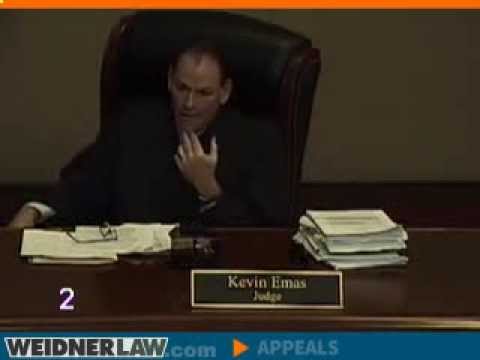
This is the recording of the actual oral argument, posted on the channel. What lawyers and judges say at argument is not the ruling; the decision is summarized above.
🏛️ Forged Financing Addendum: Who Bears the Loss? | Hubbell v. HH Condominium, 3D12-3392
Go Deeper
- Buyer's Agents, Commissions, and Dual Agency in Florida After the NAR Settlement
- BUYER BEWARE: Fraud Cannot Be Pursued in a Florida Real Estate Contract
- A $10 Million Land Deal That Never Closed: Buyer Loses on Appeal (Pine Grove v. Robert Diesel)
Frequently Asked Questions
Can a seller keep the deposit if the buyer cannot get financing?
If the contract has no financing contingency and lets the seller keep the deposit as liquidated damages, usually yes. In Hubbell the only financing contingency was in an addendum the seller said was forged, and the judgment letting the seller keep the $144,000 deposit was affirmed.
Who bears the loss when a real estate document is forged?
It depends on who was in a position to prevent it. HH argued that between a principal and an innocent third party, the principal bears the loss caused by his own agents, and every actor involved was on the buyer’s side. The Third District affirmed for the seller.
Is a Florida real estate agent a transaction broker or my agent?
Under section 475.278, a licensee is presumed to be a transaction broker unless a single agent or no brokerage relationship is established in writing. A transaction broker gives limited representation and is not a fiduciary for either side.
Can you sue for unjust enrichment when there is a written contract?
Generally not, because unjust enrichment is meant for situations with no enforceable contract on the subject. That is why the buyer in Hubbell argued there was no meeting of the minds.
Talk to a Florida real estate litigation lawyer
Weidner Law, P.A. handles Florida real estate disputes, title problems and appeals from St. Petersburg. If you need a real estate litigation lawyer, call (727) 954-8752 or email weidner@mattweidnerlaw.com.
Read the law yourself, free: every Florida statute and court rule is on floridarules.net.
This article is general information about Florida law, not legal advice about your situation. Reading it, watching the videos, or contacting the firm does not create an attorney-client relationship. Every case turns on its own facts, and past results do not guarantee a similar outcome. The hiring of a lawyer is an important decision that should not be based solely upon advertisements.
