
In short: No. Under Florida’s foreclosure surplus statutes, the surplus goes to subordinate lienholders who timely claim it and then to the owner of record as of the lis pendens, not to the buyer at the sale, even if the buyer wants it applied to a senior mortgage. In Pineda v. Wells Fargo Bank, N.A., a Miami-Dade trial court let the third-party purchaser take about $99,500 in surplus to pay down the first mortgage it bought subject to. The Third District reversed in a written opinion on July 23, 2014.
The Facts
Wells Fargo Bank, N.A. sued Walter and Eider Pineda to foreclose its first mortgage on their Miami-Dade home. Florida Bankers Realty, LLC, which held a second mortgage, filed a crossclaim to foreclose its subordinate mortgage and obtained a judgment for $76,611.28 before Wells Fargo’s own case reached a sale.
At the sale on the second mortgage, Nocari Investment, LLC bought the property for more than $184,000, subject to Wells Fargo’s first mortgage. After the second mortgage judgment was paid, about $99,500 remained in the court registry. Nocari asked the court to apply the surplus to Wells Fargo’s mortgage, arguing the Pinedas had received a bankruptcy discharge of their debt to Wells Fargo and would otherwise get a windfall. The Pinedas claimed the surplus as the owners of record. The trial court granted Nocari’s motion and released the funds for payoff of the first mortgage. The Pinedas appealed (No. 3D13-2968).
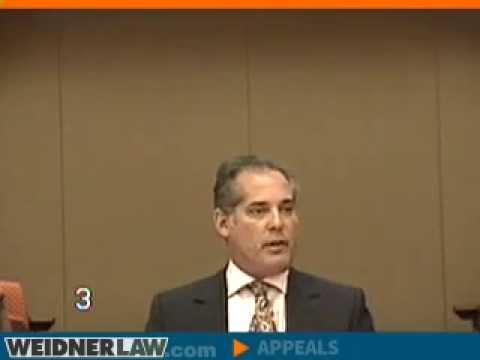
Michael J. Farrar argued for the Pinedas. The points below are what the lawyers argued; the decision follows.
- The Pinedas argued chapter 45 tells the court exactly who can receive surplus: subordinate lienholders, the owner of record and its proper assignees. A buyer at the sale is mentioned only for when title passes and to protect its title, never as a surplus claimant.
- They argued that a buyer who bids above the junior judgment, knowing a senior mortgage stays on the property, gets no equitable right to the extra money, and that any increase in value is equity that belongs to the owner.
- Nocari’s counsel argued Nocari did not keep the money; it went to Wells Fargo, which was paid in full, sparing the Pinedas a possible deficiency. Counsel argued the statute creates only a rebuttable presumption in favor of the owner and that a court sitting in equity could direct surplus to a senior lienholder.
- The panel asked how a bidder would ever know what to bid if surplus might later be redirected to a senior mortgage, whether Wells Fargo had even asked for the money, and how a ruling for Nocari could be squared with the statute and earlier cases such as Garcia v. Stewart.
The Decision
The Third District reversed on July 23, 2014, in a written opinion. The court held that distribution of foreclosure surplus is governed by a plain and unambiguous statutory procedure, and that the owner of record at the time the lis pendens was recorded is entitled to the surplus. Nocari was not an owner of record, an assignee of the owner, or a subordinate lienholder, so it had no right to the funds.
The court acknowledged Nocari’s equitable argument but declined to carve an exception into a clear statute. It remanded with directions that Nocari deposit the surplus funds back into the court registry and that the case proceed consistent with the opinion. The mandate issued August 11, 2014.
The Law
Section 45.031 governs judicial sales, including the certificate of disbursements and how sale proceeds are paid under the final judgment. Any surplus is then handled under section 45.032 and section 45.033.
Section 45.032(2) creates a rebuttable legal presumption that the owner of record on the date the lis pendens was filed is entitled to the surplus after subordinate lienholders who timely file claims are paid. It also states the Legislature’s intent to abrogate the common law rule that surplus belongs to the owner on the date of the sale. A person claiming as an assignee of the owner must prove entitlement, and section 45.033 governs those assignments.
The presumption is about the owner versus assignees and lienholders. Nothing in the statutes lists the sale buyer, or a senior lienholder whose mortgage survives the sale, as a surplus claimant. The current statute still contains the same presumption.
Lessons
- If you bid at a foreclosure sale on a junior lien, you take the property subject to the senior mortgage. Do not count on the surplus to pay it off.
- Search title before you bid so you know which liens survive the sale.
- Former owners: if your home sells for more than the judgment, the surplus may belong to you. File your claim on time and follow the statute.
- A bankruptcy discharge of the senior debt did not change who was entitled to the surplus here.
- Courts generally will not use equity to override a clear statute, even to prevent what looks like a windfall.
Source: Pineda v. Wells Fargo Bank, N.A., No. 3D13-2968 (Fla. 3d DCA July 23, 2014) (reversed and remanded); ACIS docket.
Watch the Oral Argument
This is the recording of the actual oral argument, posted on the channel. What lawyers and judges say at argument is not the ruling; the decision is summarized above.
💼 The Third-Party Buyer Got the Surplus — Does Chapter 45 Allow That at All?
Go Deeper
- When Does the 60-Day Clock to Claim Foreclosure Surplus Start? (Eduartez v. Fannie Mae)
- Junior Lender Took the $176K Foreclosure Surplus, No Priority Ruling (Wells Fargo v. Aristo)
- The Florida Foreclosure Sale: Timing, Redemption, Surplus Funds, and When You Have to Move
Frequently Asked Questions
Who gets the surplus after a Florida foreclosure sale?
First, subordinate lienholders who timely file claims; then the owner of record as of the date the lis pendens was filed, under section 45.032. In Pineda v. Wells Fargo, the Third District held that the buyer at the sale had no right to the surplus.
Can the buyer at a foreclosure sale claim the surplus funds?
No, not as the buyer. The surplus statutes do not list the purchaser as a claimant. In Pineda, the buyer wanted about $99,500 applied to the first mortgage it bought subject to, and the Third District reversed the order giving it the money.
Does a senior mortgage holder get the surplus when a junior lien is foreclosed?
Generally no. A senior mortgage is not wiped out by a junior foreclosure; it stays on the property, and the buyer takes subject to it. In Pineda, the court refused to send the surplus toward the surviving first mortgage.
How long do I have to claim foreclosure surplus in Florida?
Subordinate lienholders must file a claim within the time set by statute after the sale, and unclaimed surplus is reported as unclaimed property after one year under section 45.032 unless a proceeding is pending. Owners should file promptly, because deadlines and procedures are strict.
Talk to a Florida real estate litigation lawyer
Weidner Law, P.A. handles Florida real estate disputes, title problems and appeals from St. Petersburg. If you need a real estate litigation lawyer, call (727) 954-8752 or email weidner@mattweidnerlaw.com.
Read the law yourself, free: every Florida statute and court rule is on floridarules.net.
This article is general information about Florida law, not legal advice about your situation. Reading it, watching the videos, or contacting the firm does not create an attorney-client relationship. Every case turns on its own facts, and past results do not guarantee a similar outcome. The hiring of a lawyer is an important decision that should not be based solely upon advertisements.
