
In short: Yes. In Florida a foreclosure plaintiff must prove it was entitled to enforce the note when it filed suit, not only at trial. In Long v. Nationstar, a Pinellas homeowner appealed a homestead foreclosure judgment, arguing the original complaint admitted the servicer did not have the note and the trial evidence never showed when the bank got it or when it was endorsed. After oral argument the parties stipulated to dismiss the appeal, and the Second District dismissed it on July 21, 2015, so the court never ruled.
The Facts
Aurora Loan Servicing filed a foreclosure against Leslee A. Long in Pinellas County. According to the argument, the first complaint attached a note payable to a third party with no endorsements and also included a lost-note count alleging Aurora did not have the note when it sued. An amended complaint attached an endorsement and dropped the lost-note count. Nationstar Mortgage later substituted in as plaintiff, the case went to trial, and the court entered a foreclosure judgment on Long’s home.
Long appealed (No. 2D14-117), represented on appeal by Michael Alex Wasylik. The points below are what the lawyers argued, not findings by the court.
- Long’s lawyer argued the bank’s witness admitted at trial that the endorsements were undated and that there was no record of when the note came into the plaintiff’s possession, so there was no proof of standing at inception.
- He argued the power of attorney Nationstar relied on listed trusts that the evidence never connected to this loan, so the servicer never proved whose behalf it was suing on. He asked for reversal with directions to dismiss.
- Nationstar’s lawyer conceded no custodial record showed possession on the filing date. He argued the court could infer standing from the servicing history, the default letter, the power of attorney, a later “hello” letter naming the trust, and possession of the original note at trial.
- He also argued that at trial, unlike summary judgment, lack of standing should be treated as an affirmative defense the borrower must prove. The panel pressed him on how a custodian who could not say when the note arrived could prove possession at filing.
The Decision
There was no decision on the merits. The ACIS docket shows a stipulated dismissal of the appeal filed July 1, 2015, and an order granting voluntary dismissal on July 21, 2015. The docket does not show the terms of any settlement.
Because the appeal was dismissed, the argument is a record of how the standing-at-inception issue was litigated, not a ruling on it.
The Law
A foreclosure plaintiff must be a person entitled to enforce the note under section 673.3011: the holder, a nonholder in possession with the rights of a holder, or a person entitled to enforce a lost note under section 673.3091. Florida’s district courts have long required the plaintiff to show it had that status when it filed the complaint. A party cannot cure a lack of standing by acquiring the note after the case starts.
Current law (2026): for residential foreclosures, section 702.015 and rule 1.115 now require the complaint to allege that the plaintiff holds the original note or to set out the specific facts showing it is entitled to enforce it. A servicer suing under delegated authority must describe that authority and identify the document that grants it. A plaintiff that claims to hold the note must file a sworn certification saying where the note is and who verified possession and when.
A lost-note count and a holder count make an awkward pair. The argument in Long shows why: the lost-note count can be read as an admission that the plaintiff did not have the note on the day it filed.
Lessons
- Compare the original complaint with the amended one. An unendorsed note or a lost-note count in the first complaint can matter at trial.
- Ask the bank’s witness when the note was endorsed and when the plaintiff got it. Undated endorsements and no custodial records leave a gap the bank has to fill.
- A servicer suing for a trust has to connect the power of attorney to this loan and this trust.
- Standing is decided on the evidence at trial. Inferences from servicing activity were the bank’s main answer here.
- A dismissed appeal settles nothing about the law.
Watch the Oral Argument
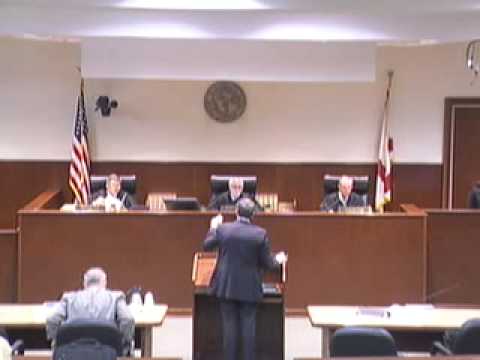
This is the recording of the actual oral argument, posted on the channel. What lawyers and judges say at argument is not the ruling; the decision is summarized above.
🏠📜 Did Lender Have Standing When It Filed? Homestead Foreclosure | Long v. Nationstar | 2D14-117
Read the Law on FloridaRules.net
The statutes and court rules discussed in this article, free to read on FloridaRules.net:
Go Deeper
- Foreclosure Trial: Unlisted Power of Attorney and Undated Endorsements (Cintron v. Aurora)
- Note Payable to a Bank ‘Division’: Did a Merger Give TD Bank Standing? (Stone v. TD Bank)
- A Real Estate/Foreclosure Trial WIN! Foreclosure of IndyMac/Deutsche Bank DENIED!
Frequently Asked Questions
Does the bank have to have the note when it files the foreclosure?
Yes. Florida courts require the plaintiff to prove it was entitled to enforce the note under section 673.3011 on the day it filed suit, not just at trial. That was the issue in Long v. Nationstar, though the appeal was dismissed before a ruling.
Can a bank fix standing by filing an allonge later?
An allonge or endorsement helps only if the evidence shows it existed, and the plaintiff had the note, when the case was filed. In Long, the homeowner argued the endorsement was undated and no record showed when it was added.
Can a mortgage servicer foreclose in its own name?
A servicer can sue for the owner or holder, but it must prove its authority. Under section 702.015 the complaint must describe that authority and identify the document granting it, and at trial the servicer must connect that document to the loan.
What happens if the bank cannot prove standing at trial?
The homeowner can ask for an involuntary dismissal or, on appeal, reversal of the judgment. Long’s lawyer asked the Second District to reverse and direct dismissal, but the appeal ended by stipulation.
Talk to a Florida real estate litigation lawyer
Weidner Law, P.A. handles Florida real estate disputes, title problems and appeals from St. Petersburg. If you need a real estate litigation lawyer, call (727) 954-8752 or email weidner@mattweidnerlaw.com.
Read the law yourself, free: every Florida statute and court rule is on floridarules.net.
This article is general information about Florida law, not legal advice about your situation. Reading it, watching the videos, or contacting the firm does not create an attorney-client relationship. Every case turns on its own facts, and past results do not guarantee a similar outcome. The hiring of a lawyer is an important decision that should not be based solely upon advertisements.
