
In short: Yes. Under Florida law, a lender that sues on the promissory note and gets a money judgment can still foreclose the mortgage later, as long as the debt has not been paid. In NLG, LLC v. Hazan, a Miami-Dade trial court ruled that a seller-lender had elected its remedy and lost the right to foreclose a Fisher Island home. The Third District reversed on September 3, 2014, and sent the case back for enforcement of the mortgage.
The Facts
In 2007, NLG, LLC sold a Fisher Island home to Elizabeth Hazan for $5.1 million and took back a purchase-money note and mortgage for $1.275 million. When she missed payments, NLG sued on the note. After a settlement that was not honored, a default money judgment of about $1.62 million was entered in 2008, and the Third District affirmed it.
NLG then obtained a sheriff’s deed to the property. Ms. Hazan moved to set it aside, claiming homestead. A December 2008 order vacated the sheriff’s deed and said title was quieted. She later argued that order also wiped out NLG’s mortgage.
After a second settlement and another default, NLG filed a foreclosure in 2011. Following a nonjury trial, the trial court entered judgment for Ms. Hazan, finding among other things that NLG had elected its remedy by taking the money judgment.
- NLG argued that a note does not merge into a money judgment the way a mortgage merges into a foreclosure judgment, so the mortgage survived, and that the 2008 order only knocked out the sheriff’s deed.
- Ms. Hazan’s counsel argued that NLG never provided a trial transcript, that the trial judge gave several independent reasons after a day and a half of evidence, and that the judgment had to be presumed correct.
- The panel asked how a debt of more than a million dollars could simply evaporate, and whether anything in the motion behind the 2008 order asked to cancel the mortgage.
The Decision
The Third District reversed on September 3, 2014, in a written opinion, and remanded with directions to proceed with enforcement of NLG’s mortgage and to reinstate its lis pendens. The court held that suing on the note and recording the money judgment did not bar a later foreclosure of the mortgage, relying on Junction Bit & Tool Co. v. Village Apartments, Inc., 262 So. 2d 659 (Fla. 1972).
The court also held that the 2008 order only vacated the sheriff’s deed and removed occupants other than Ms. Hazan. Nothing in the motion or the order supported extinguishing the senior purchase-money mortgage. Her default was undisputed, she had conceded it in the settlement agreements, and the trial court had found that NLG had standing. Because her pleadings supplied no legal basis for the judgment, it could not stand.
Rehearing and rehearing en banc were denied on November 3, 2014. The mandate issued on November 25, 2014.
The Law
Election of remedies bars a party from pursuing inconsistent remedies for the same wrong. A note and a mortgage are not inconsistent remedies. The note is the debt, and the mortgage is security for it. A money judgment on the note does not satisfy the debt, so the security remains until the debt is paid.
Florida treats a mortgage as a lien, not a transfer of title, under section 697.02. Foreclosure is the way that lien is enforced, through a judicial sale under section 45.031.
The opinion does not discuss the missing transcript. The general rule is that an appellant who does not provide a transcript cannot show that factual findings were wrong. But when the error is a legal one that appears on the face of the judgment and the pleadings, an appellate court can reverse without one, and the court’s reasoning here rested on the documents and the law.
Lessons
- A lender that takes a money judgment on the note can usually still foreclose the mortgage if the judgment is not paid.
- Read any order that “quiets title” closely. An order can only grant the relief that was actually requested and noticed.
- Settlement agreements that concede default and waive defenses carry weight later.
- If your appeal turns on facts, provide the transcript. If it turns on law, make that clear in the brief.
Source: NLG, LLC v. Hazan, No. 3D13-684 (Fla. 3d DCA Sept. 3, 2014); ACIS docket (rehearing denied November 3, 2014).
Watch the Oral Argument
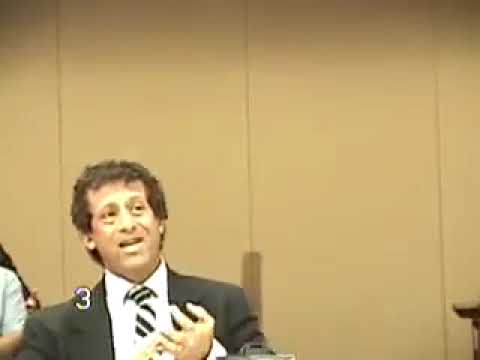
This is the recording of the actual oral argument, posted on the channel. What lawyers and judges say at argument is not the ruling; the decision is summarized above.
⚖️ A Money Judgment on the Note — Did the Lender Elect Its Remedy and Lose Foreclosure?
Go Deeper
- Deed in Lieu, Then a Deficiency Suit: What the Borrower Still Owed (Philippe v. Weiner)
- Lender Lost $393,609 Redemption Fight With No Court Reporter (GMAC v. Palenzuela)
- The Florida Foreclosure Process, Step by Step (From Default to Writ of Possession)
Frequently Asked Questions
Can a lender sue on the note and then foreclose the mortgage later?
Yes. In NLG v. Hazan, the Third District held that getting a money judgment on the note did not bar a later foreclosure, following the Florida Supreme Court’s Junction Bit decision. The mortgage secures the debt until the debt is actually paid.
What is election of remedies in a Florida foreclosure?
It is a doctrine that bars pursuing inconsistent remedies for the same wrong. A suit on the note and a foreclosure of the mortgage are consistent remedies for the same debt, so the doctrine did not apply in NLG.
Does a money judgment on a promissory note cancel the mortgage?
No. The note does not merge into the money judgment in a way that releases the mortgage. Until the judgment is paid, the lender can still enforce its lien under section 697.02 through foreclosure.
Can an appeals court reverse without a trial transcript?
Sometimes. Without a transcript, factual findings are presumed correct. But if the judgment is wrong as a matter of law on the face of the record, as in NLG, the appellate court can reverse.
Talk to a Florida real estate litigation lawyer
Weidner Law, P.A. handles Florida real estate disputes, title problems and appeals from St. Petersburg. If you need a real estate litigation lawyer, call (727) 954-8752 or email weidner@mattweidnerlaw.com.
Read the law yourself, free: every Florida statute and court rule is on floridarules.net.
This article is general information about Florida law, not legal advice about your situation. Reading it, watching the videos, or contacting the firm does not create an attorney-client relationship. Every case turns on its own facts, and past results do not guarantee a similar outcome. The hiring of a lawyer is an important decision that should not be based solely upon advertisements.
