


In short: Since January 1, 2025, every Florida civil case is assigned to a track (streamlined, 12 months; general, 18 months; complex, 30 months) and governed by a case management order with deadlines courts must strictly enforce. Continuances are disfavored. Judges are measured against time standards and case data, and inactive cases can be dismissed for lack of prosecution.
Lawyers and litigants across Florida have noticed it: cases that sat for years are suddenly set for trial, and extensions that used to be routine are denied. That is by design.
The 2025 Rules
Amendments to Florida Rule of Civil Procedure 1.200, effective January 1, 2025, require every civil case to be assigned to a track:
- Streamlined: resolved within 12 months.
- General: resolved within 18 months.
- Complex: resolved within 30 months.
The court issues a case management order setting deadlines for service, adding parties, fact and expert discovery, summary judgment, pretrial motions, and mediation. The rule directs that those deadlines be strictly enforced. Parties can extend them by agreement only if the change doesn’t disturb the remaining schedule.
Continuances Are Disfavored
Rule 1.460 now treats trial continuances as disfavored, granted only for good cause, and allows sanctions when a party’s dilatory conduct causes delay.
Judges Are Measured
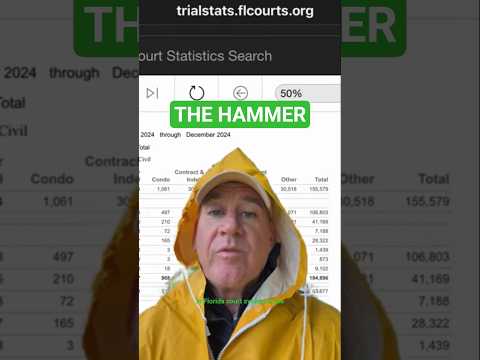
The judicial branch tracks case filings, dispositions, clearance rates, and the age of pending cases. Rule 2.250 sets time standards for how long cases should take. In the videos below, Matt Weidner walks through the court performance data and explains why judges feel the pressure to close cases, and why that pressure falls hardest on litigants who aren’t ready.
Underfunding Makes It Worse
The court system’s share of Florida’s state budget is commonly cited as under 1%. Fewer staff attorneys, case managers, and court reporters mean judges have less help moving cases, and faster deadlines with less support increase the risk of mistakes.
Dismissal for Lack of Prosecution
Under Rule 1.420(e), if there is no record activity for 10 months, the court or a party can serve notice. If there is still no activity in the following 60 days, the case can be dismissed unless a party shows good cause. The arguments below show how often that rule is litigated.
County-by-County Differences
Statewide rules don’t mean identical practice. Each circuit and judge has procedures for hearings, motion practice, and trial settings. A foreclosure in Pinellas can move very differently from one in Osceola.
What This Means for You
Treat every deadline in the case management order as final. Start discovery early. If you are a defendant, assume the case will reach trial on schedule.
Watch: the videos behind this article
The "Secret" Dashboard Closing Your Case: Trial Court Administration Exposed
MAY 31: The Hidden Deadline Forcing Florida Judges to Rule on Your Case NOW
The Disturbing 1% Fact Making Florida Lawsuits a Nightmare
More Short Videos on This Issue


Watch the Real Appellate Arguments
These are recordings of Florida Supreme Court arguments on the case management rules and appellate arguments over dismissal for lack of prosecution, posted on the channel. An argument is not a ruling: read the written opinion before relying on any outcome.
Can Florida Courts Streamline Civil Cases with New Case Management? | SC22-122
Proposed Changes to Florida Civil Procedure: Active Case Management | In Re: Fla. Rules Civ. Pro.
Dismissal for Lack of Prosecution Florida Rule 1.420 | Case No. 24-1034 | Appellate
The Trial Order Never Arrived — Void Dismissal, or Just Excusable Neglect?
Go Deeper
Frequently Asked Questions
What are the case tracks under Florida Rule 1.200?
Streamlined (12 months), general (18 months), and complex (30 months), assigned within 120 days after a case is filed.
Can I get a continuance in Florida civil court?
Continuances are disfavored under amended Rule 1.460 and require good cause.
When can a Florida case be dismissed for lack of prosecution?
After 10 months without record activity, notice is served; if there is no activity in the next 60 days and no good cause, the case can be dismissed (Rule 1.420(e)).
Why are Florida courts moving faster?
The 2025 case management rules require fixed tracks and strictly enforced deadlines, and courts are measured against time standards.
Talk to a Florida litigation lawyer
Weidner Law, P.A. handles Florida civil litigation and appeals from St. Petersburg. To have your case reviewed, call (727) 954-8752 or email weidner@mattweidnerlaw.com.
Read the law yourself, free: the Florida Rules of Civil Procedure, Appellate Procedure, and Judicial Administration are all on floridarules.net.
This article is general information about Florida law, not legal advice about your situation. Reading it, watching the videos, or contacting the firm does not create an attorney-client relationship. Every case turns on its own facts, and past results do not guarantee a similar outcome. The hiring of a lawyer is an important decision that should not be based solely upon advertisements.
