
In short: Not if the opponents had probable cause to bring their challenge, and Florida sets that bar low. In Palm Coast Intracoastal, LLC v. Preserve Flagler Beach and Bulow Creek, Inc., a developer sued a citizens’ group, a member and the group’s lawyer for malicious prosecution after their certiorari petitions against the county’s approval of its project failed. On November 7, 2025, the Fifth District affirmed summary judgment for the citizens, holding they had probable cause as a matter of law.
The Facts
Palm Coast Intracoastal, LLC owned land in Flagler County planned for residential development. In 2020 a divided Flagler County Commission approved the project with an at-grade road connection to John Anderson Highway. Preserve Flagler Beach and Bulow Creek, Inc., a local group, opposed it.
The group’s position was that county law did not allow direct, at-grade access to the highway. It petitioned the circuit court for a writ of certiorari, arguing the commission departed from the essential requirements of law. The circuit court denied the petition, and the Fifth District denied second-tier certiorari.
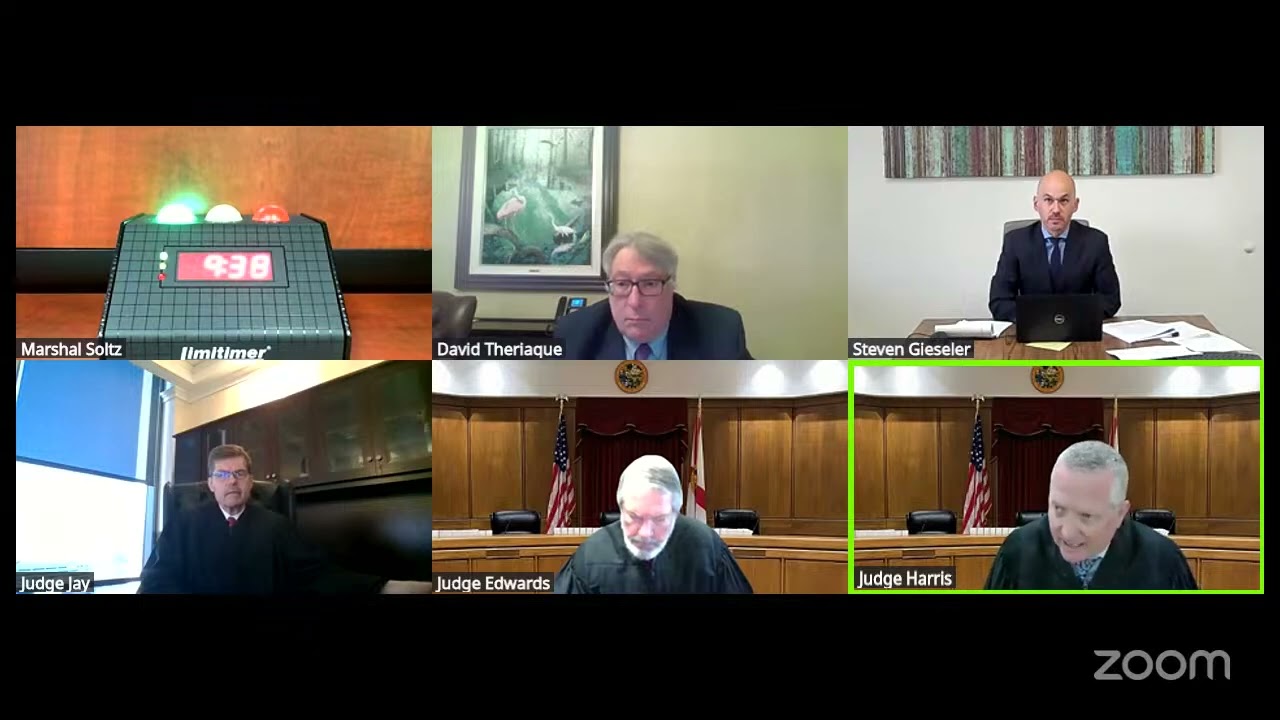
The developer then sued the group, member Stephen Noble and attorney John Tanner for malicious prosecution, alleging the petitions had no lawful basis and were filed to delay construction. The trial court entered final summary judgment for the defendants. Its order found probable cause for the petitions and also discussed Florida’s anti-SLAPP statute. The developer appealed, and the case was argued by Zoom. The points below are what the lawyers argued, not findings by the court.
- The developer argued the judgment was unclear about whether it rested on summary judgment or the anti-SLAPP statute, and that the court mixed the two standards.
- It argued the trial court treated probable cause as a pure question of law when the underlying facts were disputed, and that a certiorari petition has little chance under the deferential competent substantial evidence standard.
- The citizens argued the material facts were undisputed: the ordinance, the development agreement, a 2019 staff determination that an at-grade connection was not allowed, and testimony from county and city officials. They also relied on advice of counsel.
- They warned that if losing a certiorari petition exposed a party to a malicious prosecution suit, every unsuccessful challenger of a land-use decision would be at risk.
The Decision
The Fifth District affirmed in a written opinion on November 7, 2025. Lack of probable cause is one of six elements of malicious prosecution, and failing any one defeats the claim.
The court explained that when the material facts are undisputed, probable cause is a question of law for the court. Probable cause means only a reasonable belief, based on the facts known when the proceeding began, that the claim was valid. It called that standard extremely low and easily satisfied. Losing the earlier case does not by itself show a lack of probable cause.
The undisputed record, including statements from county officials and the Flagler Beach city attorney that county law did not permit direct highway access, showed the group’s legal position was at least debatable. That was enough. Because probable cause decided the case, the court did not address the anti-SLAPP part of the trial court’s order.
The Law
A malicious prosecution plaintiff must prove that (1) a judicial proceeding was started or continued against it, (2) the defendant was the legal cause of that proceeding, (3) the proceeding ended in the plaintiff’s favor, (4) there was no probable cause for it, (5) there was malice, and (6) the plaintiff suffered damages. The Florida Supreme Court set out these elements in Alamo Rent-A-Car, Inc. v. Mancusi, 632 So. 2d 1352 (Fla. 1994).
A party affected by a county’s quasi-judicial land-use decision can seek first-tier certiorari review in circuit court, then ask the district court for second-tier certiorari. Those petitions are the “proceedings” the developer said were brought without probable cause.
Florida’s anti-SLAPP statute bars lawsuits filed without merit and primarily because the defendant exercised the right of free speech in connection with a public issue, which includes statements made to a government body about a matter it is considering. It provides for an expedited hearing and attorney’s fees for the party who prevails on an anti-SLAPP motion.
Summary judgment in Florida is governed by rule 1.510, which since May 1, 2021 follows the federal summary judgment standard: judgment is entered when there is no genuine dispute of material fact and the moving party is entitled to judgment as a matter of law.
Lessons
- Citizens and neighbors who challenge a development approval in good faith, on a debatable reading of the code, are well protected from malicious prosecution claims.
- Probable cause is judged by what the challenger knew when it filed, not by how the case came out.
- Developers considering a suit against project opponents should also weigh the anti-SLAPP statute and its fee exposure.
- Record evidence matters. Statements from county staff and lawyers supporting the challenger’s reading of the code carried this case.
Source: Palm Coast Intracoastal, LLC v. Preserve Flagler Beach and Bulow Creek, Inc., No. 5D2024-2751 (Fla. 5th DCA Nov. 7, 2025) (affirmed); Fifth District docket.
Watch the Oral Argument
Recordings of the Fifth District oral argument, held by Zoom and posted on the channel (two uploads of the same argument). What lawyers and judges say at argument is not the ruling; the decision is summarized above.
COASTAL PROPERTY BATTLE! Summary Judgment CHALLENGED | Palm Coast v. Preserve Flagler | 5D24-2751
Coastal Land BATTLE! Developer Loses Appeal
Read the Law on FloridaRules.net
The statutes and court rules discussed in this article, free to read on FloridaRules.net:
Go Deeper
- Getting Defamatory Content Removed in Florida, and the Anti-SLAPP Risk of Suing
- Code Enforcement Appeals Get Full Appellate Review (MGM of West Florida v. Manatee County)
- Can a Wrong Site Plan Date Kill a Land Deal's Zoning Deadline? (Blue Lagoon v. Leon Medical)
Frequently Asked Questions
Can a developer sue me for challenging its project approval?
It can file suit, but a malicious prosecution claim fails if you had probable cause for your challenge. In Palm Coast Intracoastal, the Fifth District held that residents who argued, with support from officials’ statements, that the county code barred the project’s road connection had probable cause even though they lost.
What is probable cause in a Florida malicious prosecution case?
It is a reasonable belief, based on the facts known when the earlier case was filed, that the claim was valid. Florida courts call the standard extremely low and easily satisfied. When the material facts are undisputed, the judge decides it as a question of law.
Does losing a lawsuit mean it was filed without probable cause?
No. An adverse outcome in the earlier case does not by itself show a lack of probable cause. The Fifth District applied that rule to petitions that were denied at both the circuit court and the district court.
What does Florida's anti-SLAPP law protect?
Section 768.295 bars lawsuits filed without merit and primarily because the defendant spoke on a public issue, including statements to a government body about a matter before it. A defendant who wins an anti-SLAPP motion is entitled to attorney’s fees. The Fifth District did not need to reach the anti-SLAPP issue in this case.
Talk to a Florida real estate litigation lawyer
Weidner Law, P.A. handles Florida real estate disputes, title problems and appeals from St. Petersburg. If you need a real estate litigation lawyer, call (727) 954-8752 or email weidner@mattweidnerlaw.com.
Read the law yourself, free: every Florida statute and court rule is on floridarules.net.
This article is general information about Florida law, not legal advice about your situation. Reading it, watching the videos, or contacting the firm does not create an attorney-client relationship. Every case turns on its own facts, and past results do not guarantee a similar outcome. The hiring of a lawyer is an important decision that should not be based solely upon advertisements.
