
In short: In 717 Estate Management v. Branch Banking & Trust, a Miami-Dade condominium developer and its guarantors said Colonial Bank, before it failed, refused to release individual units as the loan agreement allowed, and that BB&T, which took over the loan, could not hide behind the D’Oench Duhme doctrine. The trial court entered judgments for BB&T. The Third District affirmed on June 25, 2014, without a written opinion.
The Facts
717 Estate Management, LLC borrowed from Colonial Bank to finance a condominium project, and Julio and Rosa Marrero guaranteed the loan. The loan agreement had a partial-release clause: as long as the loan was current and not in default, individual units would be released from the mortgage when the borrower tendered a release payment calculated under a formula in the agreement.
Colonial failed in August 2009, and BB&T acquired the loan from the FDIC. The notice of default had gone out in June 2009. BB&T obtained judgments against the borrower and the guarantors. Two appeals followed (Nos. 3D12-3181 and 3D12-3180), which the Third District consolidated, and the case was argued in May 2014. The borrower’s principal argued the appeal himself. The points below are what was argued, not findings by the court.
- The appellants argued the trial court misapplied D’Oench Duhme by requiring not only the agreement but also the bank’s breach to be in writing. The loan agreement was written, executed and in the bank’s records, so, they argued, the doctrine did not bar their defense.
- They argued the release formula was complex, the bank refused to provide release prices or release any of the 14 remaining units while it was under a cease-and-desist order, and that this frustrated the contract and breached the implied covenant of good faith and fair dealing.
- They also argued the trial court erred by preventing them from deposing the bank officer who handled the loan for both Colonial and BB&T.
- BB&T argued that the clause applied only while the loan was current and only on the tender of a release payment, and that the record had no evidence of any tender and no evidence of when, if ever, a release was requested before default.
- BB&T also said its officer testified at trial that there were no communications about releasing individual units. The panel pressed both sides on a point the agreement left open: it gives a formula but does not say who must calculate the release price.
The Decision
The Third District affirmed both judgments on June 25, 2014. The ACIS docket lists the disposition as “Per Curiam Affirmed,” so there is no opinion explaining the reasons, and the mandate issued July 25, 2014.
The affirmance does not tell us whether the court relied on D’Oench Duhme, on the lack of any tender, on the default, or on something else. It means the judgments for BB&T stand.
The Law
The D’Oench Duhme doctrine comes from a 1942 United States Supreme Court decision and is partly codified at 12 U.S.C. § 1823(e). In general, it keeps a borrower from defeating a claim by the FDIC, or by a bank that buys assets from it, with a side deal or understanding that does not appear in the failed bank’s records. The statute lists what an agreement needs to bind the FDIC: it must be in writing, executed by the bank and the borrower when the loan was made, approved by the bank’s board or loan committee, and kept as an official record of the bank.
The appellants’ point was that their release right was in the written loan agreement itself, so the doctrine should not bar a defense built on it. BB&T’s answer was that the written agreement contained conditions, a loan not in default and a tendered payment, that were never met.
Every Florida contract carries an implied covenant of good faith and fair dealing, but it attaches to the performance of express terms. The panel’s questions about tender and default show how hard it is to use that covenant when the written condition was never satisfied.
Current law (2026): The judgment against the guarantors was entered on summary judgment under the old Florida standard. Since May 1, 2021, Florida Rule of Civil Procedure 1.510 follows the federal summary judgment standard, which makes it easier to win summary judgment when the other side cannot point to evidence supporting its claim or defense.
Lessons
- If a loan gives you a right to release collateral, exercise it in writing, while the loan is current, and tender the payment you calculate. A record of the request and the tender is what you will need later.
- When a bank fails, the buyer of the loan will look only at what is in the bank’s written records. Oral assurances from a loan officer are unlikely to help.
- Deposition and discovery fights should be raised and preserved early. Waiting until the eve of a hearing can cost you the argument.
- A per curiam affirmance without an opinion decides that case only.
Watch the Oral Argument
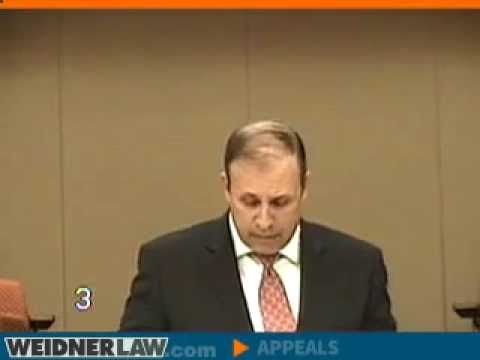
This is the recording of the actual oral argument, posted on the channel. What lawyers and judges say at argument is not the ruling; the decision is summarized above.
🔍 D'Oench Duhme and a Condo Partial-Release Clause | 717 Estate Management v. BB&T, 3D12-3181
Go Deeper
- No FDIC Consent Produced: Could the Loan Buyer Use D'Oench? (Say Flagler v. First Citizens)
- Personal Guaranty Upheld, but Only the Guarantor Owes (Demida v. Master Excavators)
- A Condo Developer's Default Did Not Mean a Guarantee for Every Unit (Merco Group at Akoya v. General Computer Services)
Frequently Asked Questions
What is the D'Oench Duhme doctrine?
It is a federal rule, partly codified at 12 U.S.C. § 1823(e), that bars borrowers from using unrecorded side agreements against the FDIC or against banks that acquire a failed bank’s loans. To count, an agreement generally has to be in writing, properly executed and approved, and kept in the bank’s official records.
Does D'Oench Duhme apply when the agreement is in the written loan documents?
The developer in 717 Estate Management argued it does not, because its release right was in the signed loan agreement. BB&T argued the written terms required a current loan and a tendered payment that never happened. The Third District affirmed without an opinion, so the case does not resolve that argument.
Can a lender refuse to release condo units under a partial-release clause?
It depends on the clause. Many release clauses apply only while the loan is current and only when the borrower tenders the release price. If those conditions are not met, the lender usually has no duty to release.
Are guarantors liable when the bank that made the loan fails?
Generally, the guaranty is an asset that passes with the loan, and the buyer of the loan can enforce it. In this case BB&T obtained a judgment against the guarantors, and it was affirmed.
Talk to a Florida real estate litigation lawyer
Weidner Law, P.A. handles Florida real estate disputes, title problems and appeals from St. Petersburg. If you need a real estate litigation lawyer, call (727) 954-8752 or email weidner@mattweidnerlaw.com.
Read the law yourself, free: every Florida statute and court rule is on floridarules.net.
This article is general information about Florida law, not legal advice about your situation. Reading it, watching the videos, or contacting the firm does not create an attorney-client relationship. Every case turns on its own facts, and past results do not guarantee a similar outcome. The hiring of a lawyer is an important decision that should not be based solely upon advertisements.
