
In short: Usually not. Under Florida law, a creditor who holds a judgment against only one spouse cannot levy on property the spouses own together as tenants by the entireties, and a Florida homestead is protected from forced sale by the Florida Constitution. In Cocchia v. Augustine, sellers of a Connecticut business who held a judgment against the buyer, plus a New York fraudulent transfer judgment, tried to reach the couple’s Lake County home. The Fifth District affirmed the ruling against the creditors on December 20, 2016, without a written opinion.
The Facts
Arthur and Josephine Cocchia sold their Connecticut gunsmithing business to Robert J. Augustine in 2009 for more than $600,000, seller-financed. According to their lawyer, Mr. Augustine made only one or two payments, and the Cocchias obtained a deficiency judgment against him alone in Connecticut in 2011.
Robert and Linda Augustine had bought property in Clermont, Florida as husband and wife in 2008. According to the argument, the property was deeded to Mrs. Augustine in 2010. The Cocchias domesticated the Connecticut judgment in New York and obtained a New York judgment setting aside that 2010 transfer as fraudulent. The couple made the Clermont property their homestead in April 2012. The Cocchias then brought the judgments to Florida and sought to levy on the home. The Lake County circuit court ruled against them, and they appealed (No. 5D2016-0084).
The points below are what was argued, not findings by the court. C. Andrew Roy argued for the Cocchias; the Augustines’ counsel, Edward P. Jordan II, did not argue after the panel had no questions for him.
- The Cocchias argued that the New York fraudulent transfer judgment was binding under full faith and credit and established that the property was collectible, and that the Augustines should have raised homestead and tenancy by the entireties in New York.
- They argued tenancy by the entireties was raised for the first time on appeal and that the Augustines had not claimed it in their bankruptcy case, so it was waived.
- The panel pushed back hard. It noted that a judgment against one spouse cannot be satisfied from entireties property, that setting aside the transfer only put the property back the way it was, and that the New York court never decided whether the Florida property was homestead or could be levied on.
- Counsel conceded the property is homestead and that the New York court had no power to levy on Florida land.
The Decision
The Fifth District affirmed on December 20, 2016. The ACIS docket lists the disposition as “Per Curiam Affirmed,” with no written opinion, and the mandate issued January 9, 2017.
Because there is no opinion, the affirmance does not say which ground the court relied on. It means the ruling against the creditors stands. It does not create a new rule of law, but the questions from the bench track settled Florida law on entireties property and homestead.
The Law
Tenancy by the entireties is a form of ownership available only to a married couple. Each spouse owns the whole, not a half. A creditor with a judgment against only one spouse cannot reach entireties property; a creditor needs a judgment against both.
Separately, Article X, section 4 of the Florida Constitution protects a homestead from forced sale by most creditors. The main exceptions are taxes, purchase money mortgages, and obligations for improvements or repairs to the home.
Florida’s version of the fraudulent transfer act reflects the same principle. Under section 726.102(2), an “asset” that can be fraudulently transferred does not include property that is generally exempt, or an entireties interest to the extent a creditor of only one spouse could not reach it. The general rules for transfers that defraud creditors are in section 726.105. The Cocchias’ fraudulent transfer judgment came from New York, not under the Florida act.
Out-of-state judgments are brought into Florida under the Florida Enforcement of Foreign Judgments Act, starting at section 55.503. Domestication makes the judgment enforceable like a Florida judgment, but it does not take away Florida exemptions when the creditor tries to levy.
Lessons
- Sellers who finance the sale of a business: get both spouses to guarantee the note, or take a mortgage on real property. A judgment against the buyer alone may not reach a home the couple owns together.
- An out-of-state fraudulent transfer judgment does not automatically make Florida homestead or entireties property collectible.
- Homestead and entireties protection is usually raised when the creditor tries to levy, not when the judgment is domesticated.
- A per curiam affirmance decides only this case, but the panel’s questions show how skeptical Florida courts are of efforts to reach homestead property through a judgment against one spouse.
Source: Cocchia v. Augustine, No. 5D2016-0084 — Fla. 5th DCA docket (per curiam affirmed December 20, 2016).
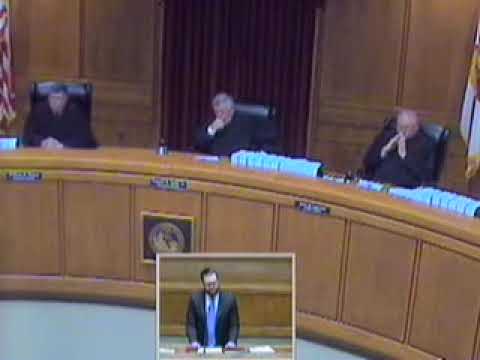
Watch the Oral Argument
This is the recording of the actual oral argument, posted on the channel. What lawyers and judges say at argument is not the ruling; the decision is summarized above.
📑 Buyer Paid Once on $600K Note — Can the Seller Now Levy on Florida Entireties Property? | 16-84
Go Deeper
- Sale Proceeds Owed to the Bank Went Into a Homestead: Equitable Lien Affirmed (Campani v. BankUnited)
- Insider Foreclosure Left a Creditor Empty-Handed (Real Estate Sales Force v. Mutual Reliance)
- Divorce Deal vs. Survivorship: Who Gets Joint Property When an Ex Dies? (Ebanks v. Ebanks)
Frequently Asked Questions
Can a creditor take my house if only my spouse owes the debt?
Generally no, if you and your spouse own the house as tenants by the entireties. A creditor with a judgment against only one spouse cannot levy on entireties property. If the house is also your Florida homestead, the Florida Constitution adds a second layer of protection.
Does an out-of-state judgment override Florida's homestead exemption?
No. A creditor can domesticate an out-of-state judgment in Florida, but Florida exemptions still apply when the creditor tries to collect against Florida property. In Cocchia, the creditors’ New York fraudulent transfer judgment did not get them the home, and the ruling against them was affirmed.
Can a transfer of homestead property be a fraudulent transfer in Florida?
Under Florida’s statute, exempt property and entireties property that a one-spouse creditor could not reach are not “assets” under section 726.102(2), so moving them generally does not hurt that creditor. Courts have allowed an equitable lien on a homestead in limited cases, such as when the money used to buy or improve it was obtained through fraud.
When do I have to raise the homestead exemption against a creditor?
Usually when the creditor tries to levy on or force a sale of the property. The panel in Cocchia questioned why the owners would have to raise homestead in an out-of-state case that never sought to levy on Florida land.
Talk to a Florida real estate litigation lawyer
Weidner Law, P.A. handles Florida real estate disputes, title problems and appeals from St. Petersburg. If you need a real estate litigation lawyer, call (727) 954-8752 or email weidner@mattweidnerlaw.com.
Read the law yourself, free: every Florida statute and court rule is on floridarules.net.
This article is general information about Florida law, not legal advice about your situation. Reading it, watching the videos, or contacting the firm does not create an attorney-client relationship. Every case turns on its own facts, and past results do not guarantee a similar outcome. The hiring of a lawyer is an important decision that should not be based solely upon advertisements.
