
In short: It depends on whether the person is bound by the court’s judgment. Florida courts can enforce a judgment by ordering a specific act, such as signing a deed, and can even make the judgment itself work as the conveyance. In Lista v. Alvarez, a father named in his daughter’s marital settlement agreement signed a quitclaim deed with a wrong legal description, then refused to sign the corrected deed and argued the family court had no jurisdiction over him. The Third District affirmed the trial court’s order without a written opinion on January 22, 2014.
The Facts
This appeal came out of a Miami-Dade divorce between Benjamin Alvarez and the daughter of Walter Lista. According to the lawyers at argument, the marital settlement agreement named Mr. Lista in two places. He did not sign the agreement itself, but he signed the general mutual releases attached to it and, as part of the deal, signed a quitclaim deed. In exchange, the husband’s lawyer said, Mr. Lista received about $1.5 million in consideration, releases from roughly six other lawsuits, and a partial release of a mortgage. The final judgment kept jurisdiction to enforce the agreement.
The legal description in the deed turned out to be wrong, through what everyone at argument called a scrivener’s error. The daughter signed a corrected deed after the trial court ordered her to. Mr. Lista refused. The trial court then ordered him to sign the corrected deed, with sanctions if he did not, and he appealed that post-judgment order (No. 3D13-2858). The case was argued on January 6, 2014. Arnaldo Velez argued for Mr. Lista and Paul B. Feltman for Mr. Alvarez. The points below are what the lawyers argued, not findings by the court.
- Mr. Lista argued he was never a party to the divorce, was never served, and so the court had no personal jurisdiction to order him to do anything in a summary post-judgment proceeding. Any dispute over the deed, he said, belonged in a separate lawsuit with proper service.
- He argued the releases involved other promises still in dispute, so the deed could not be treated in isolation.
- Mr. Alvarez argued Mr. Lista was a named third-party beneficiary who accepted the consideration, signed the releases incorporated into the judgment, and signed the first deed, which made him a party for enforcement purposes. He relied on rule 1.570 and the court’s retained jurisdiction.
- The panel pressed hard on practicality: Mr. Lista had already signed once and received his releases. One judge asked whether the court could simply order the daughter, who was a party, to produce a fully signed deed by a deadline. Another asked whether Mr. Alvarez could instead sue Mr. Lista separately for equitable relief such as unjust enrichment.
The Decision
The Third District affirmed on January 22, 2014. The ACIS docket lists the disposition as “Per Curiam Affirmed,” with no written opinion. Mr. Lista filed a motion for clarification on February 6, 2014, and the mandate issued on February 21, 2014.
A per curiam affirmance decides only this case. It leaves the trial court’s order in place, but it does not tell us whether the court agreed that Mr. Lista was effectively a party, that he consented to jurisdiction by signing and accepting benefits, or that some other ground supported the order. It is not a ruling that a court may always compel a stranger to a lawsuit to sign a deed.
The Law
Florida Rule of Civil Procedure 1.570 governs enforcement of final judgments. Subdivision (c) says that when a judgment requires a specific act, the court may issue a writ of attachment, hold the disobedient party in contempt, or appoint someone else to perform the act. Subdivision (d) goes further for land: a judgment for a conveyance “shall have the effect of a duly executed conveyance” once recorded. The family law rules contain a parallel enforcement rule, Family Law Rule 12.570.
Those tools work against parties. The fight in Lista was whether a person who was named in a settlement, signed releases, and accepted benefits counts as a party for enforcement. When that question is in doubt, the safer course is often an order against the party who is clearly before the court, a judgment that itself vests title, or a separate action for reformation of the deed, which is the traditional equitable remedy for a mistake in a legal description.
Lessons
- Check the legal description before anyone signs. A one-line scrivener’s error in a deed can turn into an appeal.
- If a nonparty must sign documents to make a settlement work, have that person sign the settlement agreement and expressly consent to the court’s jurisdiction to enforce it.
- Rule 1.570(d) lets a judgment act as the deed itself. Ask for that language when a conveyance is part of the relief.
- Refusing to sign a corrected deed after taking the benefit of the deal is a hard position to defend, even with a technical jurisdiction argument.
- A per curiam affirmance resolves only this case and creates no precedent on the jurisdiction question.
Source: Lista v. Alvarez, No. 3D13-2858 — Fla. 3d DCA docket (per curiam affirmed January 22, 2014).
Watch the Oral Argument
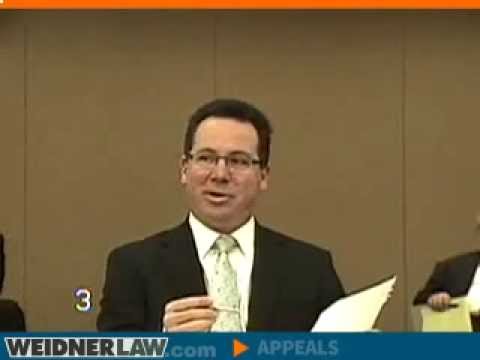
This is the recording of the actual oral argument, posted on the channel. What lawyers and judges say at argument is not the ruling; the decision is summarized above.
📑 "Why Are We Here? Your Client Already Signed the Deed" — A Scrivener's Error on Appeal
Read the Law on FloridaRules.net
The statutes and court rules discussed in this article, free to read on FloridaRules.net:
Go Deeper
- Deed Fraud in Florida: How Homes Are Stolen on Paper and How to Get Them Back
- “Less and Except” Means Not Yours: Deed Carve-Outs and Tax Deeds (Garden State v. Shazbop)
- $10 Recited but Never Paid: Can You Rescind the Deal? (Weiss v. MSR Partners)
Frequently Asked Questions
How do you fix a wrong legal description in a Florida deed?
The simplest fix is a corrective deed signed by the same grantor. If the grantor will not sign, the usual remedy is a lawsuit to reform the deed for mutual mistake, or, if a court already has the matter before it, an order or judgment that itself conveys title under rule 1.570.
Can a court order someone to sign a deed?
Yes, when the person is bound by the judgment. Under rule 1.570, the court can hold a party in contempt, appoint someone else to sign, or enter a judgment that has the effect of a recorded conveyance. In Lista v. Alvarez, the Third District affirmed an order directing a man named in a settlement to sign a corrected deed.
What happens if someone refuses to sign a corrected deed?
The other side can ask the court to enforce the settlement or judgment, seek contempt, or ask for a judgment vesting title. If the person was never a party to the case, a separate action for reformation or other equitable relief may be needed.
Is a scrivener's error in a deed enough to undo the whole deal?
Usually not. A typo in a legal description is generally corrected, not used to unwind the transaction. In Lista, the panel questioned why a mistake in the deed should let one side keep its releases and avoid signing.
Talk to a Florida real estate litigation lawyer
Weidner Law, P.A. handles Florida real estate disputes, title problems and appeals from St. Petersburg. If you need a real estate litigation lawyer, call (727) 954-8752 or email weidner@mattweidnerlaw.com.
Read the law yourself, free: every Florida statute and court rule is on floridarules.net.
This article is general information about Florida law, not legal advice about your situation. Reading it, watching the videos, or contacting the firm does not create an attorney-client relationship. Every case turns on its own facts, and past results do not guarantee a similar outcome. The hiring of a lawyer is an important decision that should not be based solely upon advertisements.
