
In short: No, not against a first mortgagee that never had notice of or authorized the receivership. In Federal National Mortgage Association v. JKM Services, LLC, the receiver for Cedar Woods Homes Condominium Association kept three units under receivership after Fannie Mae took title by foreclosure and demanded years of assessments plus its own fees. On October 3, 2018, the Third District reversed, holding Fannie Mae owed only the statutory safe harbor amount and assessments after it took title, and that on payment the units must be released.
The Facts
By 2009, more than 90 percent of the 165 units at Cedar Woods Homes, a Miami-Dade condominium, were delinquent on assessments, and most were in foreclosure. The association petitioned for a receiver, and in 2010 the trial court appointed JKM Services, LLC as receiver over units in foreclosure that were rented or abandoned. The receiver collected rents, brought evictions and applied the money to assessments and its own expenses. According to the opinion, the orders did not describe the units or notify the mortgage lenders.
Three of those units had 2006 mortgages owned by Fannie Mae. Its servicers foreclosed, did not join the receiver, and Fannie Mae took title to all three in 2014. When it asked for the safe harbor payoff, the receiver demanded a much larger amount that included years of assessments, receiver’s fees and attorney’s fees. In 2016 Fannie Mae moved to intervene, end the receivership as to its units and have the court set the safe harbor amount. The trial court denied the motions as moot and untimely, reasoning that Fannie Mae became subject to the receivership when it took title. At argument:
- Fannie Mae argued no statute lets a court make a first mortgagee subordinate to a receiver whose rights come from the association, that its liability is capped by the safe harbor, and that it was bound by an order entered without notice to it.
- The receiver argued the condominium statute authorizes receiverships to collect rent on abandoned units, that the recorded receivership order gave constructive notice, that Fannie Mae waited two years to act, and that a receiver who rehabbed and rented abandoned units must recover its costs before giving them back.
- The receiver also argued the foreclosure judgments named other lenders as the mortgage holders, so Fannie Mae had not proven it was entitled to the safe harbor.
The Decision
The Third District reversed and remanded on October 3, 2018.
Intervention was proper. The receivership was still open, Fannie Mae owned the units, and the receiver was demanding far more than Fannie Mae’s computation, so the motions were not moot.
The trial court had inherent equitable power to appoint a receiver over units that were in arrears and subject to the association’s lien, but that power reached the owners and occupants of those units. It did not automatically bring in the lenders foreclosing on them.
Fannie Mae’s mortgage liens had priority over the association’s lien for assessments, with two exceptions: the safe harbor arrearage and assessments that come due after Fannie Mae took title. Fannie Mae never asked for or authorized the receivership, so it had no apparent duty to pay the receiver’s expenses. The court said due process required notice to a foreclosing first mortgagee before it could be charged after the fact for services it never requested, and described the receiver, as to the lenders, as “little more than an officious intermeddler.”
Fannie Mae was entitled to the safe harbor as a loan purchaser and as an assignee of the foreclosure judgments. On remand the trial court must compute that amount, possibly after an evidentiary hearing. On payment, the units are released from further receivership claims, and Fannie Mae owes assessments as they come due from the date it took title. The court expressed no opinion on claims against the defaulting owners, tenants or the association.
The Law
Under section 718.116(5)(a), the association has a lien on each unit for unpaid assessments, but as to first mortgages of record the lien takes effect only when the association records a claim of lien. That is why a first mortgage recorded earlier generally comes first.
Under the safe harbor in section 718.116(1)(b), a first mortgagee or its successor or assignee that takes title by foreclosure or deed in lieu owes only the lesser of 12 months of past-due regular assessments or 1 percent of the original mortgage debt, if it named the association as a defendant in the foreclosure.
Section 718.116(6)(c) lets an association that is foreclosing its own assessment lien ask for a receiver to collect rent on a unit that is leased during the case. The court held that provision, and the court’s general equity power under rule 1.620, did not let this receivership bind lenders who were never made parties.
Lessons
- A receivership obtained by an association is not a super-priority lien. Lenders that are not parties are not bound by it.
- Associations seeking receivers over many units should identify the units and give notice to the mortgage holders if they expect to charge them.
- A first mortgagee claiming the safe harbor should be ready to prove it holds the loan or the judgment, and that it joined the association in the foreclosure.
- Bank buyers should ask about receiverships and estoppel amounts early; here the fight began only after title passed.
Source: Federal National Mortgage Ass’n v. JKM Services, LLC, as Receiver for Cedar Woods Homes Condominium Ass’n, No. 3D17-370 (Fla. 3d DCA Oct. 3, 2018); ACIS docket.
Watch the Oral Argument
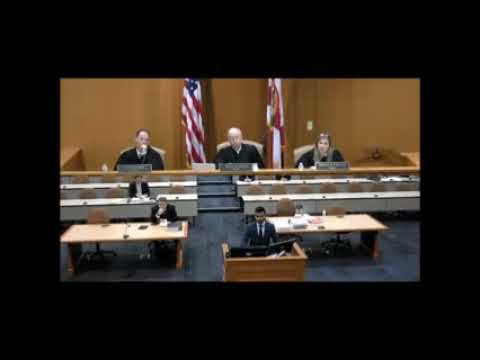
This is the recording of the actual oral argument, posted on the channel. What lawyers and judges say at argument is not the ruling; the decision is summarized above.
Can a Condo Association's Receiver Keep Units After Fannie Mae Forecloses? § 718.116 Limits
Read the Law on FloridaRules.net
The statutes and court rules discussed in this article, free to read on FloridaRules.net:
Go Deeper
- Splitting Rent Between the Bank and the Condo: No Fee Deduction (Ocean Bank v. 107 Avenue)
- How Far Back Does a Condo Buyer Owe Unpaid Assessments? (Park West v. Londono)
- Can a Foreclosure Receiver Finish Building the Houses? (Crestview II v. TotalBank)
Frequently Asked Questions
Can a condo association put a receiver in my unit?
In some cases. Section 718.116(6)(c) allows a receiver to collect rent on a leased unit while the association forecloses its assessment lien, and courts have equitable power to appoint receivers. In Fannie Mae v. JKM, the court held that power reached the owners and occupants, not the lenders foreclosing the mortgages.
How much does a bank owe the condo association after foreclosure?
Under the safe harbor in section 718.116(1)(b), a first mortgagee that joined the association owes the lesser of 12 months of past-due regular assessments or 1 percent of the original mortgage debt, plus assessments after it takes title. JKM held Fannie Mae owed that, not the receiver’s fees.
Does a condo association lien survive the bank's foreclosure?
Generally no, except to the extent of the safe harbor amount. A first mortgage recorded before the association’s claim of lien has priority under section 718.116(5)(a), and the association’s remedy against the lender is the capped amount.
Who pays a condo receiver's fees?
Under section 718.116(6)(c), receivership expenses are paid by the party that does not prevail in the association’s foreclosure. In JKM the court held a lender that never asked for the receivership and had no notice of it could not be charged for it after the fact.
Talk to a Florida real estate litigation lawyer
Weidner Law, P.A. handles Florida real estate disputes, title problems and appeals from St. Petersburg. If you need a real estate litigation lawyer, call (727) 954-8752 or email weidner@mattweidnerlaw.com.
Read the law yourself, free: every Florida statute and court rule is on floridarules.net.
This article is general information about Florida law, not legal advice about your situation. Reading it, watching the videos, or contacting the firm does not create an attorney-client relationship. Every case turns on its own facts, and past results do not guarantee a similar outcome. The hiring of a lawyer is an important decision that should not be based solely upon advertisements.
