
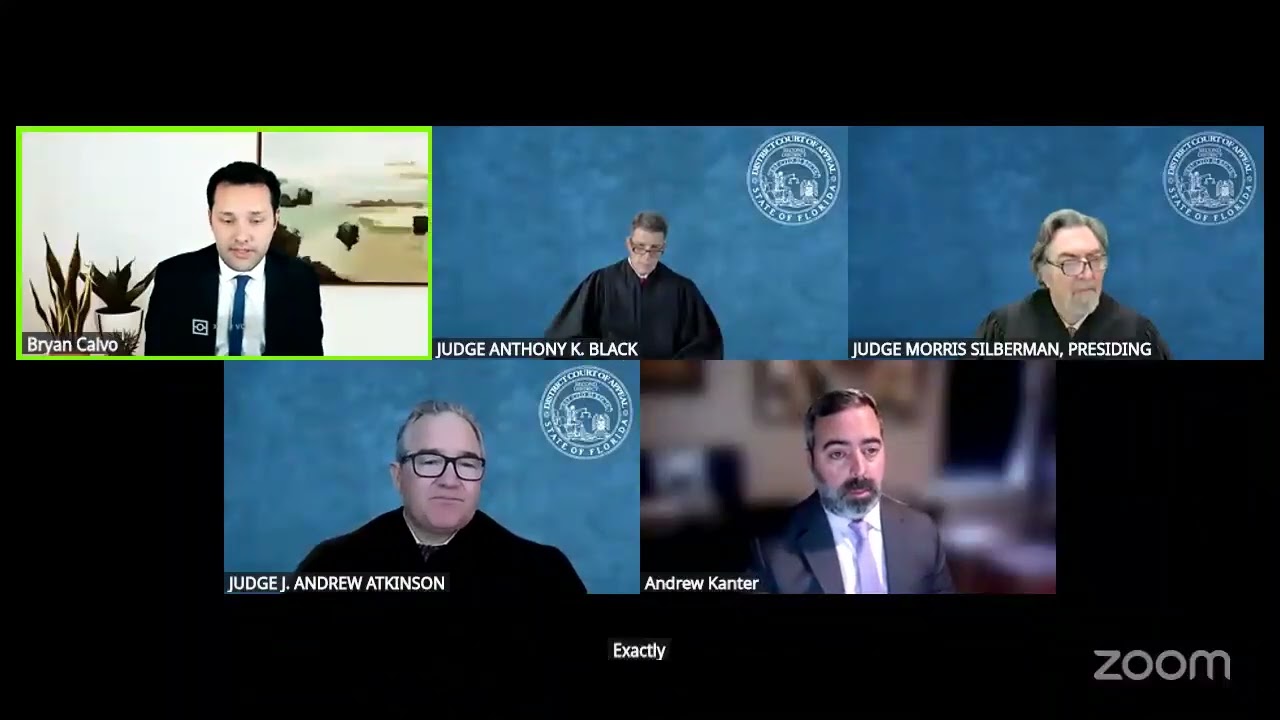
In short: No. Under section 713.21(4), the lienor’s 20 days to show cause start only when the clerk issues a summons, and a lienor that has already sued to foreclose its lien has done what the summons would require. In Custom Homes by Triumph, LLC v. Sverdlow, the Second District quashed a Hillsborough County order that discharged a builder’s lien on both grounds, in a written opinion issued August 29, 2025.
The Facts
Custom Homes by Triumph, LLC contracted to build a home for Benjamin and Kimberly Sverdlow. After the relationship ended, Custom Homes recorded a claim of lien and sued the Sverdlows in a two-count complaint: breach of contract, and foreclosure of the lien.
The Sverdlows filed a “Show Cause Counter-Complaint” under section 713.21(4) asking the court to discharge the lien. The clerk never issued a show-cause summons. About two months later, the Sverdlows moved to discharge the lien because Custom Homes had not responded within 20 days. The trial court agreed, discharged the lien, and dismissed the lien foreclosure count with prejudice. Custom Homes appealed.
- At the March 11, 2025 oral argument, Custom Homes argued that its foreclosure count already showed cause, and that without a clerk’s summons the 20-day period never started.
- The Sverdlows’ lawyer conceded no summons was issued and argued the counter-complaint itself put Custom Homes on notice. He also argued the order could not be reviewed by appeal and that the lien was recorded more than 90 days after Custom Homes was terminated.
- A judge on the panel observed that each side was asking to be excused from the statute’s literal steps: “what’s good for the goose.”
The Decision
The Second District first held that it could not hear the case as an ordinary appeal. The order was not final because the breach of contract count remained pending and was interdependent with the lien count, and an order discharging a lien is not on the list of appealable nonfinal orders in Florida Rule of Appellate Procedure 9.130.
It treated the appeal as a petition for certiorari instead. Discharge of a recorded lien is itself material harm, the court said, because the owners could sell or encumber the property and leave the lienor with no security, which could not be fixed on appeal at the end of the case.
On the merits, the court held the trial court departed from the essential requirements of law in two ways. First, section 713.21(4) makes the clerk’s summons the trigger for the 20 days, and because no summons issued, the deadline “never even commenced.” Second, Custom Homes had already commenced an action to enforce the lien, which is one of the two ways a lienor avoids discharge under the statute. The court granted the petition and quashed the order on August 29, 2025. It did not decide the Sverdlows’ argument that the lien was recorded too late.
The Law
Section 713.21(4) lets any interested party file a complaint to discharge a construction lien. The clerk then “shall issue a summons to the lienor to show cause within 20 days why his or her lien should not be enforced by action or vacated and canceled of record.” The court must cancel the lien only if the lienor fails to show cause or fails to commence an action to enforce it before the return date of the summons.
Other deadlines matter too. Under section 713.08(5), a claim of lien must be recorded no later than 90 days after the lienor’s final furnishing of labor, services or materials. Under section 713.22(2), an owner can record a notice of contest of lien, which shortens the time to sue to foreclose to 60 days. According to the argument, the Sverdlows used that tool before filing their show-cause counter-complaint.
Under section 713.05, no lien exists until a claim of lien is recorded, which is why the court treated discharge of the recorded claim as harm that could not wait for a final appeal.
Lessons
- Owners who want a fast discharge under section 713.21(4) need the clerk to issue a show-cause summons. Serving a counter-complaint alone does not start the 20 days.
- Under the Second District’s reasoning, a lienor that has already filed suit to foreclose the lien has already done what the summons would direct it to do.
- An order discharging a construction lien in the middle of a case is usually reviewed by certiorari, not by appeal. Count the 30 days from the order either way.
- Timeliness of the claim of lien under section 713.08(5) is a separate defense. It was argued here but not decided.
- Owners can use a notice of contest of lien to force the lienor to sue within 60 days.
Source: Custom Homes by Triumph, LLC v. Sverdlow, No. 2D2024-0148 (Fla. 2d DCA Aug. 29, 2025); ACIS docket.
Watch the Oral Argument
This is the recording of the actual oral argument, posted on the channel. What lawyers and judges say at argument is not the ruling; the decision is summarized above.
📜 No Summons, No Show Cause — Did the Court Wrongly Discharge This Lien? | 24-0148
Construction Lien Discharged—No Proper Summons | §713.214 Show Cause | 24-0148 FL DCA
Go Deeper
- Can a Contractor's Lien Reach a Tenant's Liquor License? (Solid Builders v. Inka Foods)
- Contractor Can't Undo a Default Over Who Took the Papers (KMG Properties v. Owl Construction)
- Can a Court Deny a Lis Pendens Bond Without a Hearing? (Bankers Lending v. Regents Park)
Frequently Asked Questions
How do I get a construction lien removed in Florida?
Options include a notice of contest of lien under section 713.22(2), which gives the lienor 60 days to sue, and an order to show cause under section 713.21(4), which gives the lienor 20 days after the clerk’s summons. The lien can also be transferred to a bond or cash deposit.
When does the 20-day show cause period start for a construction lien?
When the clerk issues the show-cause summons. In Custom Homes v. Sverdlow, the Second District held the 20 days never started because no summons was issued, even though the owners had served a show-cause counter-complaint.
Does filing a lien foreclosure lawsuit protect my lien from a show cause order?
Yes. Section 713.21(4) allows cancellation only if the lienor fails to show cause or fails to commence an action to enforce the lien. A lien foreclosure count already on file satisfies the second option.
Can you appeal an order discharging a construction lien?
Not as an ordinary appeal if other claims remain pending, the Second District held, but you can seek review by petition for writ of certiorari, because losing the lien is harm that cannot be fixed later.
Talk to a Florida real estate litigation lawyer
Weidner Law, P.A. handles Florida real estate disputes, title problems and appeals from St. Petersburg. If you need a real estate litigation lawyer, call (727) 954-8752 or email weidner@mattweidnerlaw.com.
Read the law yourself, free: every Florida statute and court rule is on floridarules.net.
This article is general information about Florida law, not legal advice about your situation. Reading it, watching the videos, or contacting the firm does not create an attorney-client relationship. Every case turns on its own facts, and past results do not guarantee a similar outcome. The hiring of a lawyer is an important decision that should not be based solely upon advertisements.
