
In short: Generally no. A judgment entered without notice to, or jurisdiction over, the owner of the land it affects is void as to that owner, and Florida rule 1.540(b) allows an independent action to set it aside. In Theodore v. Perry, Hillsborough County landowners who were never named in a 2006 easement case won summary judgment declaring that judgment void as to their parcel. The Second District affirmed on December 27, 2024; we could not locate a written opinion.
The Facts
Willie James Perry, Earl Perry, Jr. and Leo Edward Perry are record owners of a Hillsborough County parcel; their lawyer said the family had held record title since 1975. In 2006, other parties obtained a judgment declaring an easement for access to a neighboring landlocked parcel. One paragraph of the judgment’s legal description covered the Perry land, but the Perrys were not named or served. Charmant and Guilene Theodore later acquired the neighboring property and used the easement.
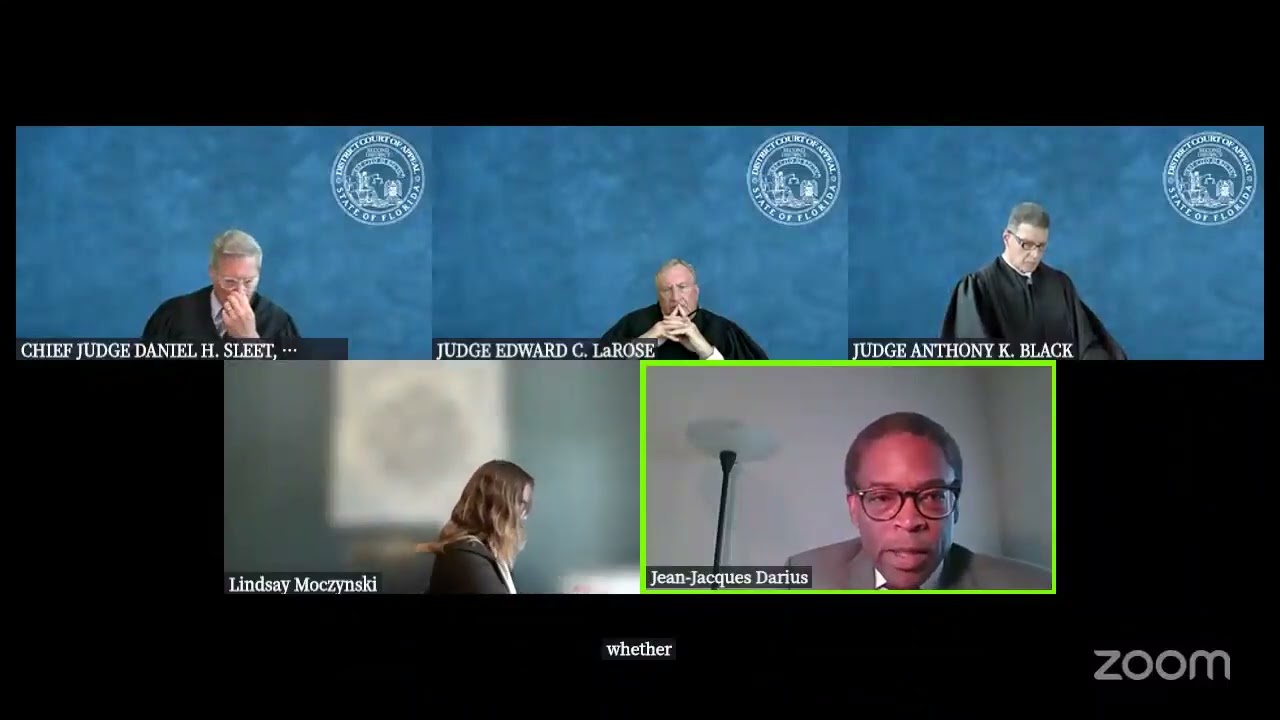
According to the Perrys, they did not learn of the 2006 judgment until 2020. They sued the Theodores to quiet title and, in an independent action, to have the 2006 judgment declared void as to their parcel. The trial court granted summary judgment voiding the judgment to that extent, while the quiet title claim and a counterclaim remained pending. The Theodores appealed (No. 2D2024-1076), which the court treated as a nonfinal appeal of an order on a motion for relief from judgment. The points below are what the lawyers argued at the December 17, 2024 video argument, not findings by the court.
- Jean-Jacques Antoine Darius, for the Theodores, argued the Perrys sued the wrong parties. To vacate a judgment, he said, you must sue the parties who obtained it, not later owners who were strangers to the 2006 case.
- He argued whether the Perrys were served was disputed because the 2006 court file had been destroyed, that the easement arose by operation of law when the land was partitioned so the judgment only recognized it, and that the pending quiet title claim was the proper vehicle.
- Counsel for the Perrys argued this was a due process case, not an access case. The Perrys were known record owners, not “unknown heirs” covered by a catch-all caption, and the clerk’s docket, the certified judgment and their affidavits showed they were never parties.
- She argued rule 1.540(b) preserves independent actions to set aside a judgment, and that the Theodores offered only affidavits about whether their land was landlocked, which did not create a dispute about service in 2006.
The Decision
The Second District affirmed on December 27, 2024, and the mandate issued January 27, 2025. The ACIS docket lists the disposition only as “Affirmed.” We could not locate a written opinion, and the docket entry gives no reasons, so we treat it as an affirmance without opinion.
That means the order declaring the 2006 judgment void as to the Perry parcel stands. It does not decide whether the Theodores have an easement over the Perry land by some other route, such as an easement created when the land was divided; that question was left for the quiet title claim still pending in the trial court.
The Law
A court cannot bind a person it never acquired jurisdiction over. A judgment entered against someone who was never served is void as to that person, and a void judgment can be attacked at any time.
Rule 1.540(b) lets a court relieve a party from a void judgment, and the rule expressly does not limit the power of a court to entertain an independent action to relieve a party from a judgment. The Perrys used that independent action route. Orders on motions for relief from judgment are reviewed as nonfinal appeals under Florida Rule of Appellate Procedure 9.130(a)(5).
Quiet title is a separate remedy. Circuit courts have jurisdiction to quiet title and remove clouds under section 65.021, and the Theodores argued that was where any easement question belonged. Whether an easement exists by necessity or implication is governed by different rules; Florida’s way of necessity statute is section 704.01.
Lessons
- If you buy land that depends on an easement created by a court judgment, check that every owner of the burdened land was named and served in that case.
- Record owners are not “unknown” parties. Naming “unknown heirs” does not reach someone whose deed is in the public records.
- A landowner who was never served can ask a court to declare a judgment void as to them, even many years later, through an independent action.
- Winning the void-judgment fight does not end the access question. A neighbor may still claim an easement on other grounds, so expect a second round.
- Keep copies of old case files. Here the 2006 court file had been destroyed, and the clerk’s docket and certified judgment carried the day.
Source: Theodore v. Perry, No. 2D2024-1076 — Fla. 2d DCA docket (affirmed December 27, 2024).
Watch the Oral Argument
This is the recording of the actual oral argument, posted on the channel in two uploads of the same argument. What lawyers and judges say at argument is not the ruling; the decision is summarized above.
👨⚖️ 18-Year-Old Easement Judgment Tossed — Were the Perrys Ever Served? | Theodor v. Perry
⚖️🏠 Family Property Dispute: Theodore v. Perry Civil Appeal | 2D24-1076
Read the Law on FloridaRules.net
The statutes and court rules discussed in this article, free to read on FloridaRules.net:
Go Deeper
- Does a Quiet Title Judgment Wipe Out an Easement Nobody Pleaded? (Keys Island v. Crow)
- Is a Foreclosure Judgment Void If You Never Got Notice of the Hearing? (Abreu v. HSBC)
- Easement Disputes in Florida: Utility, Access, and Prescriptive Easements
Frequently Asked Questions
Is a judgment void if I was never served?
Generally yes, as to you. A court that never obtained jurisdiction over a person cannot bind that person. In Theodore v. Perry, a 2006 easement judgment was declared void as to landowners who were never named or served, and the Second District affirmed.
How long do I have to challenge a void judgment in Florida?
A void judgment can be attacked at any time. Under rule 1.540(b), the Perrys challenged a 2006 judgment around 18 years after it was entered.
Who do I sue to set aside an old judgment that affects my land?
That was the main fight in this case. The current neighbors argued they were the wrong defendants because they were not parties to the old case; the landowners sued them anyway because they now claimed the easement. The affirmance left the trial court’s ruling for the landowners in place.
Can a neighbor still claim an easement if the court judgment is void?
Possibly. Voiding the judgment removes that judgment as a source of the easement, but the neighbor may argue an easement arose another way, such as when a larger tract was divided. In this case that question was left for the pending quiet title claim.
Talk to a Florida real estate litigation lawyer
Weidner Law, P.A. handles Florida real estate disputes, title problems and appeals from St. Petersburg. If you need a real estate litigation lawyer, call (727) 954-8752 or email weidner@mattweidnerlaw.com.
Read the law yourself, free: every Florida statute and court rule is on floridarules.net.
This article is general information about Florida law, not legal advice about your situation. Reading it, watching the videos, or contacting the firm does not create an attorney-client relationship. Every case turns on its own facts, and past results do not guarantee a similar outcome. The hiring of a lawyer is an important decision that should not be based solely upon advertisements.
