
In short: In Dadd v. Houde, a 6.5-foot strip in Key West was in the next-door owner’s legal description but had been fenced in with Ann Dadd’s property since at least 1976. The trial court ruled for the record owner and ordered Dadd off the strip. On September 9, 2015, the Third District reversed, holding that title had vested in Dadd’s predecessor under the pre-1987 version of section 95.16, and directed judgment quieting title in Dadd.
The Facts
Ann Dadd owns 701 Catherine Street in Key West, and Richard Houde owns 703 Catherine Street next door. A strip about 6.5 feet wide and 79.5 feet long lies within Houde’s legal description, but a substantial fence has enclosed it together with Dadd’s property since 1976 or earlier.
Dadd bought her property in 1989 by warranty deed from the Estate of Richard Wood. Houde bought his in 2001. In 2010, while Dadd was improving the fence, Houde disputed where it stood. Dadd sued to quiet title to the strip by adverse possession under the 1974 version of section 95.16, Florida Statutes, and Houde counterclaimed for ejectment based on his deed.
After a bench trial, the court ruled for Houde based on his longstanding record title and ordered Dadd ejected from the strip. Dadd appealed, and two related appeals (Nos. 3D13-3044 and 3D13-3036) were consolidated. The points below are what the lawyers argued, not findings by the court.
- Dadd’s counsel argued that under the 1974 statute, land protected by a substantial enclosure was possessed, the fence existed throughout the relevant period, and title vested in Wood before the 1987 amendment changed the law.
- Counsel conceded the record did not show whether Wood built the fence or bought the property with it already in place.
- Houde’s counsel argued that nobody knew who put the fence up or why, that the strip was overgrown and the fence hard to see for years, that intent or belief in ownership still mattered, and that Dadd had a full trial and failed to carry her burden. He also told the court Houde paid the taxes on the strip after he took title.
- The panel asked whether a fence placed six feet over the line and left for seven years without objection was enough under the 1974 law, and whether the case should go back for findings on intent.
The Decision
The Third District reversed in an authored opinion filed September 9, 2015. It held the trial court misapplied the statute. Under the 1974 version of section 95.16, as construed by the Florida Supreme Court in Seddon v. Harpster, contiguous land protected by a substantial enclosure is treated as possessed even if the paper title does not describe it.
The court held that by 1983, and well before 1987, Richard Wood had met all the requirements of the statute as construed. Title to the strip vested in Wood and passed to Dadd with her 1989 deed. Later corrective quitclaim deeds from Wood’s side were irrelevant, and the 1987 amendment could not be applied to take away rights that had already vested.
The court reversed and remanded with directions to enter judgment quieting title to the disputed strip in Dadd. Houde’s motion for rehearing was denied on October 23, 2015, and the Florida Supreme Court denied review on March 14, 2016.
The Law
Section 95.16 governs adverse possession under color of title: possession for 7 years under a written instrument, decree or judgment. Land counts as possessed if it is cultivated or improved, protected by a substantial enclosure, or used for certain other purposes.
Under the 1974 version applied here, all contiguous land protected by the enclosure was deemed included in the instrument. That is why a fenced strip outside the deed’s description could still be acquired.
Current law (2026): Since the 1987 amendment, section 95.16 says that if only part of an enclosed area is described in the instrument, only that part is deemed possessed. A fence alone no longer extends color of title to land outside the deed’s description. Adverse possession without color of title is governed by section 95.18, which requires a return with the property appraiser and payment of taxes.
Lessons
- In a boundary dispute, find out when any adverse possession period ran. Rights that vested under an older statute can survive later amendments.
- Old fences matter. Testimony and surveys showing how long a fence has stood can decide who owns the land behind it.
- Buyers should compare the survey with the legal description. A fence that does not match the deed is a warning sign before closing.
- A record owner who pays taxes on land fenced into a neighbor’s yard may still lose it if the neighbor’s title vested years earlier.
Source: Dadd v. Houde, Nos. 3D13-3044 & 3D13-3036 (Fla. 3d DCA Sept. 9, 2015) (reversed and remanded with directions); ACIS docket (rehearing denied Oct. 23, 2015; Florida Supreme Court review denied Mar. 14, 2016).
Watch the Oral Argument
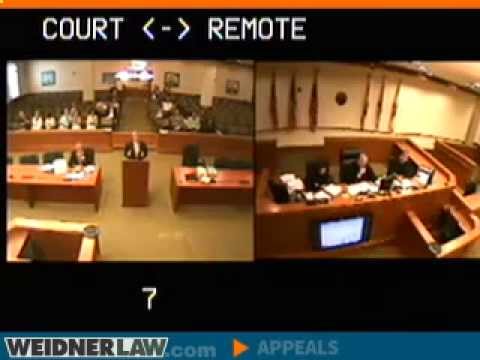
This is the recording of the actual oral argument, posted on the channel. What lawyers and judges say at argument is not the ruling; the decision is summarized above.
🎯 Nobody Knows Who Put the Fence Up: Adverse Possession by Enclosure
Go Deeper
- A Chain-Link Fence Since the 1950s Settled a Key West Boundary (Kaczmarek v. Kruer)
- Easement Disputes in Florida: Utility, Access, and Prescriptive Easements
- A Shared Well, a Dirt Driveway and an Easement Fight Between Odessa Neighbors (Marlette v. Carullo)
Frequently Asked Questions
Can a neighbor's fence give them my land in Florida?
It can, if the requirements of an adverse possession statute are met for the full period. In Dadd v. Houde, a fence that enclosed a strip since at least 1976 led to title vesting in the neighbor’s predecessor under the law in effect before 1987.
How long does adverse possession take in Florida?
Seven years of continuous possession under sections 95.16 or 95.18, along with the other requirements of the statute that applies. In Dadd, the court found the seven-year requirement was met by 1983.
What is the difference between adverse possession with and without color of title?
Under section 95.16 the claimant holds a written instrument, such as a deed, that appears to give title. Under section 95.18 there is no such instrument, and the claimant must file a return with the property appraiser and pay the taxes. Dadd was decided under section 95.16.
Does the 1987 change to the adverse possession law apply to old fences?
Not where title had already vested before the change. The Third District held the 1987 amendment could not take away rights that vested in 1983 under the earlier statute.
Talk to a Florida real estate litigation lawyer
Weidner Law, P.A. handles Florida real estate disputes, title problems and appeals from St. Petersburg. If you need a real estate litigation lawyer, call (727) 954-8752 or email weidner@mattweidnerlaw.com.
Read the law yourself, free: every Florida statute and court rule is on floridarules.net.
This article is general information about Florida law, not legal advice about your situation. Reading it, watching the videos, or contacting the firm does not create an attorney-client relationship. Every case turns on its own facts, and past results do not guarantee a similar outcome. The hiring of a lawyer is an important decision that should not be based solely upon advertisements.
