
In short: In Altman v. Brown, a Miami-Dade court removed Pamela Altman as trustee of a family trust that paid income to her mother, surcharged her $134,000, and ordered her to pay it into the trust income account within sixty days. On July 5, 2023, the Third District affirmed the removal and the rest of the order, but it quashed the sixty-day payment requirement as an improper interim payment order and dismissed the appeal of a fee entitlement ruling as premature.
The Facts
The trust paid income for life to Sheila E. Brown. Her daughter, Pamela L. Altman, was one of the trustees. According to the argument, trust income flowed into a separate account titled jointly in the names of Sheila and Pamela, and Pamela wrote checks from it. Sheila and her son, Jeffrey M. Brown, sued in circuit court in 2018 after learning about the account, alleging Pamela used the income for her own expenses.
After an evidentiary hearing, the trial court removed Pamela as trustee under section 736.0706, imposed a $134,000 surcharge payable into the trust income account within sixty days, without prejudice to further surcharges, and found the plaintiffs entitled to attorney’s fees. Pamela appealed. The case was argued on February 1, 2022. The points below are what the lawyers argued, not findings by the court.
- Pamela argued the $134,000 was arbitrary because it covered 2008 to 2012, when bank statements were no longer available, so it rested on what she could not document rather than proof she took anything.
- She argued the account was a joint account with right of survivorship, not a trust account, that the claims were time-barred under section 95.11 or section 736.1008, and that she was entitled to a jury trial.
- The beneficiaries argued the Trust Code puts the duty to keep records and account on the trustee, that the limitations period did not start until they had actual knowledge in 2018, and that sections 736.0706 and 736.1001 let the court order a removed trustee to pay money.
- The panel first questioned whether it had jurisdiction, since the order was without prejudice to further surcharges.
The Decision
The Third District issued a per curiam opinion on July 5, 2023, with three rulings.
First, it dismissed the part of the appeal challenging attorney’s fees. An order that decides only entitlement to fees, without setting an amount, is nonfinal and not appealable, citing Garcia v. Valladares, 99 So. 3d 518 (Fla. 3d DCA 2011).
Second, it treated the challenge to the sixty-day payment requirement as a petition for certiorari, granted it and quashed that part of the order. Relying on People’s Trust Insurance Co. v. Gonzalez, 318 So. 3d 583 (Fla. 3d DCA 2021), the court said an interim order to pay money while intertwined factual issues remain unresolved presents the type of irreparable harm and departure from the essential requirements of law that certiorari corrects.
Third, in all other respects the order was affirmed. The removal and the $134,000 surcharge stand, but Pamela was not required to pay it within sixty days while the rest of the case remained pending. The opinion did not separately discuss the limitations, joint account or jury trial arguments.
The Law
Section 736.0706 lets a court remove a trustee for a serious breach of trust, among other grounds. Section 736.1001 lists remedies for breach of trust, including compelling the trustee to redress a breach by paying money or restoring property, and ordering any other appropriate relief.
Section 736.0813 requires a trustee to keep qualified beneficiaries reasonably informed and to provide trust accountings. A trustee who cannot produce records is in a weak position to rebut claims about missing money.
Section 736.1008 sets the time limits for beneficiary claims against a trustee. Short periods apply to matters adequately disclosed in a trust disclosure document; for matters not adequately disclosed, the chapter 95 period runs from when the beneficiary has actual knowledge, which must be shown by clear and convincing evidence.
On appeal, Florida Rule of Appellate Procedure 9.130 limits which nonfinal orders can be appealed immediately. When an order does not fit, the court may treat the appeal as a petition for certiorari, as the Third District did with the payment deadline.
Lessons
- Trustees must keep records. When bank statements are gone, the trustee bears the risk that the court will not accept an explanation it cannot verify.
- Do not route trust income into an account the trustee controls personally. Joint titling invites exactly this kind of dispute.
- Beneficiaries who did not receive proper disclosures may not be barred by the short trust limitations periods; the clock can start with actual knowledge.
- An order to pay money before the case is over can be challenged by certiorari, as here. An order that only decides fee entitlement usually cannot be appealed until the amount is set.
Source: Altman v. Brown, No. 3D20-1771 (Fla. 3d DCA July 5, 2023) (affirmed in part; appeal dismissed in part; certiorari granted in part).
Watch the Oral Argument
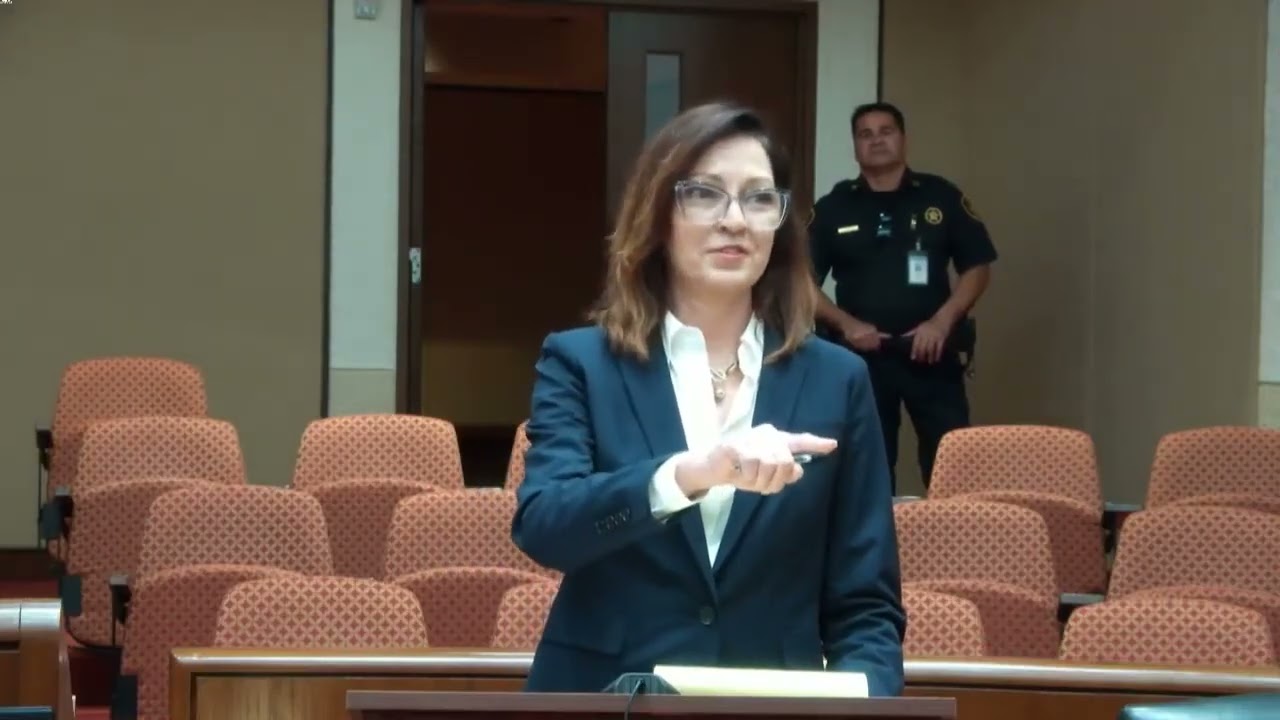
This is the recording of the actual oral argument, posted on the channel. What lawyers and judges say at argument is not the ruling; the decision is summarized above.
Trustee Surcharged $134,000 for Years With No Bank Records: Arbitrary, Time-Barred, Jury Issue?
Go Deeper
- A $2.5 Million Golf Course Sold for $12 Million: Trustee Surcharged in McCormick v. Cox
- Co-Trustee Removed, but $2.17 Million of the Judgment Reversed: Breach-of-Trust Damages (Battaglia v. Battaglia)
- Someone Stealing From an Estate in Florida? How to Find Hidden Assets and Get the Money Back
Frequently Asked Questions
What is a surcharge against a trustee in Florida?
A surcharge is a court order requiring a trustee to pay money back to the trust to make up for losses caused by a breach of trust. Section 736.1001 lists it among the remedies. In Altman v. Brown, the trial court surcharged the removed trustee $134,000, and the Third District affirmed that part of the order.
Can a court remove a trustee in Florida?
Yes. Section 736.0706 allows removal for a serious breach of trust, lack of cooperation among co-trustees, unfitness or persistent failure to administer the trust effectively, among other grounds. The removal in this case was affirmed.
How long do beneficiaries have to sue a trustee in Florida?
It depends on what was disclosed. Section 736.1008 sets short deadlines for matters adequately disclosed in trust disclosure documents. For matters not adequately disclosed, the chapter 95 limitations period generally runs from when the beneficiary has actual knowledge of the facts.
Can a trustee be ordered to pay before the case is over?
The trial court did that here, ordering payment within sixty days while other surcharge issues remained pending. The Third District quashed that requirement, holding that such an interim payment order can cause irreparable harm.
Talk to a Florida trust litigation lawyer
Weidner Law, P.A. handles Florida trust disputes and probate appeals from St. Petersburg. If you need a trust litigation lawyer, call (727) 954-8752 or email weidner@mattweidnerlaw.com.
Read the law yourself, free: the full Florida Probate Code and Probate Rules and the Florida Trust Code are on floridarules.net.
This article is general information about Florida law, not legal advice about your situation. Reading it, watching the videos, or contacting the firm does not create an attorney-client relationship. Every case turns on its own facts, and past results do not guarantee a similar outcome. The hiring of a lawyer is an important decision that should not be based solely upon advertisements.
