
In short: In Falkin v. Cruz Robles, a relative challenged a Key West man’s amended will that left a rental property said to be worth over $1 million to his longtime handyman. After a seven-day bench trial, the Monroe County probate court found the testator had capacity and was not unduly influenced, and denied the petition to revoke the will. The Third District affirmed without a written opinion on August 10, 2022, and awarded the handyman his appellate attorney’s fees.
The Facts
The testator owned two properties in Key West: the house he lived in and a rental property. About nine years after making his original will, he signed a 2015 will that left the rental property to Javier Cruz Robles, a handyman who had worked for him for about a decade and whom, according to his lawyer at argument, he described as being like a son. The new will also changed gifts to family members.
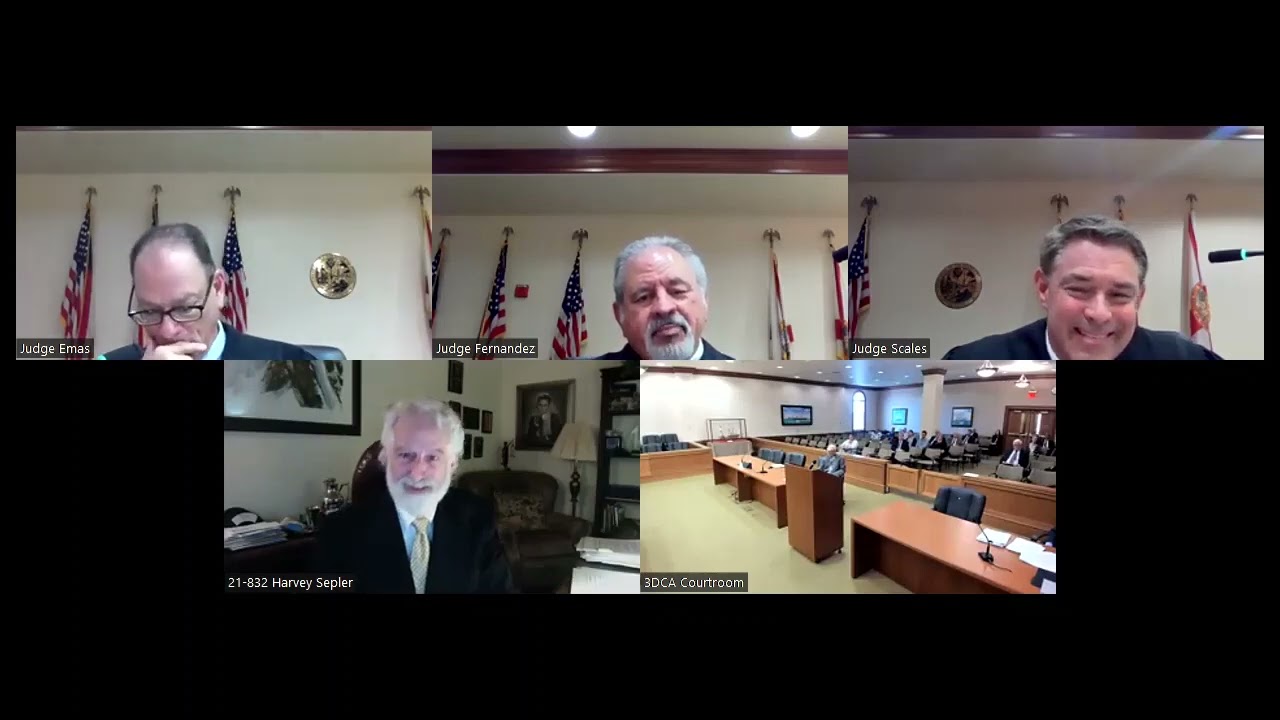
Marilyn Falkin, a family member, petitioned to revoke the 2015 will for lack of testamentary capacity and undue influence. After a seven-day bench trial with 16 witnesses, the trial court entered a detailed final judgment denying the petition. Falkin appealed, and the case was argued in Key West on July 29, 2022. The points below are what the lawyers said at argument, not findings by the appellate court.
- Falkin’s counsel argued the evidence of incapacity and undue influence far outweighed the contrary proof. He said the testator told the drafting lawyer he wanted the more valuable property to go to family, when in fact the family property was worth far less, which suggested he did not understand what he owned.
- He argued that the handyman had a confidential relationship with the testator, that the handyman’s side offered no evidence to rebut undue influence, and that the trial court looked only at the moment the will was signed instead of the testator’s condition before and after.
- The handyman’s counsel argued the trial court weighed 16 witnesses and resolved conflicts in the evidence, including testimony from the testator’s treating physician, a psychologist, the two witnesses to the will, and the drafting lawyer, who said the testator gave reasons for each change, including keeping the rental’s tenants in place.
- The panel stressed that on competent substantial evidence review, an appellate court looks at whether the evidence supporting the trial court’s findings is enough, not whether the other side had more evidence.
The Decision
The Third District affirmed on August 10, 2022. The docket lists the disposition as “Per Curiam Affirmed,” with no written opinion. The same day, the court granted the handyman’s motion for appellate attorney’s fees and costs and sent the amount back to the trial court. The mandate issued August 26, 2022.
A per curiam affirmance decides only this case. It means the trial court’s judgment upholding the will stands. It is not a ruling that leaving property to a caregiver or helper is always valid, and the facts above come from the argument, not from findings by the appellate court.
The Law
To make a valid will in Florida, the testator must be of sound mind when signing, under section 732.501. Courts measure testamentary capacity at the time of execution: the testator must understand the nature and extent of the property, his relationship to the people who would naturally receive it, and the practical effect of the will.
Section 732.5165 makes a will void if it was procured by fraud, duress, mistake or undue influence. When a substantial beneficiary had a confidential relationship with the testator and was active in procuring the will, Florida law presumes undue influence, and section 733.107 treats that presumption as one that shifts the burden of proof to the person defending the will.
On appeal, findings after a bench trial are reviewed for competent substantial evidence. When the evidence conflicts, as it often does in capacity and undue influence cases, the trial judge decides which witnesses to believe, and the appellate court will not reweigh that evidence.
Lessons
- A will contest is usually won or lost at trial. Once the trial judge weighs conflicting testimony about capacity and influence, an appeal rarely changes the result.
- A confidential relationship alone is not enough to void a will. Evidence of who arranged the lawyer, who attended the meetings, and whether the testator gave his own reasons can decide the case.
- Testimony from the drafting lawyer and the attesting witnesses about the signing carries real weight on capacity.
- Losing a will contest can be expensive. Here the court awarded the will’s defender his appellate attorney’s fees.
- A testator who plans to leave property outside the family can reduce the risk of a contest by using independent counsel and documenting his reasons.
Source: Falkin v. Cruz Robles, No. 3D2021-0832, Fla. 3d DCA docket (per curiam affirmed August 10, 2022), appeal from Monroe County Circuit Court No. 15-133-K.
Watch the Oral Argument
This is the recording of the actual oral argument, posted on the channel. What lawyers and judges say at argument is not the ruling; the decision is summarized above.
Key West Property Left to the Testator's Handyman: Undue Influence or a Valid Amended Will?
Go Deeper
- Testamentary Capacity in Florida: When Dementia Makes a Will, Deed, or POA Invalid
- Last-Minute Will and Trust Changes in Florida: When a Deathbed Amendment Can Be Challenged
- Caregiver Changed the Beneficiary Before Death? Florida POD Accounts, POA Abuse, and What You Can Do
Frequently Asked Questions
Can I contest a will that leaves everything to a caregiver or helper?
Yes, if you are an interested person and have grounds such as lack of capacity or undue influence. Leaving property to a non-family member is not itself a ground. In Falkin v. Cruz Robles, the will leaving a Key West rental to the testator’s handyman was upheld after a full trial.
What is the presumption of undue influence in Florida?
It arises when a substantial beneficiary had a confidential relationship with the testator and was active in procuring the will. Section 733.107 makes it a presumption that shifts the burden of proof to the person defending the will. The court then weighs all the evidence, including the testator’s own reasons for the change.
How is testamentary capacity proven in a Florida will contest?
Capacity is judged at the moment the will is signed. Courts hear from the drafting lawyer, the witnesses, doctors and family. In Falkin, the defense relied on the treating physician, a psychologist, the attesting witnesses and the lawyer who prepared the will.
Can I appeal if I lose a will contest at trial?
Yes, but the appellate court will not reweigh conflicting evidence. It asks whether competent substantial evidence supports the trial judge’s findings. In Falkin, the Third District affirmed without an opinion and awarded the other side appellate fees.
Talk to a Florida probate litigation lawyer
Weidner Law, P.A. handles Florida probate disputes and probate appeals from St. Petersburg. If you need a probate litigation lawyer, call (727) 954-8752 or email weidner@mattweidnerlaw.com.
Read the law yourself, free: the full Florida Probate Code and Probate Rules and the Florida Trust Code are on floridarules.net.
This article is general information about Florida law, not legal advice about your situation. Reading it, watching the videos, or contacting the firm does not create an attorney-client relationship. Every case turns on its own facts, and past results do not guarantee a similar outcome. The hiring of a lawyer is an important decision that should not be based solely upon advertisements.
