

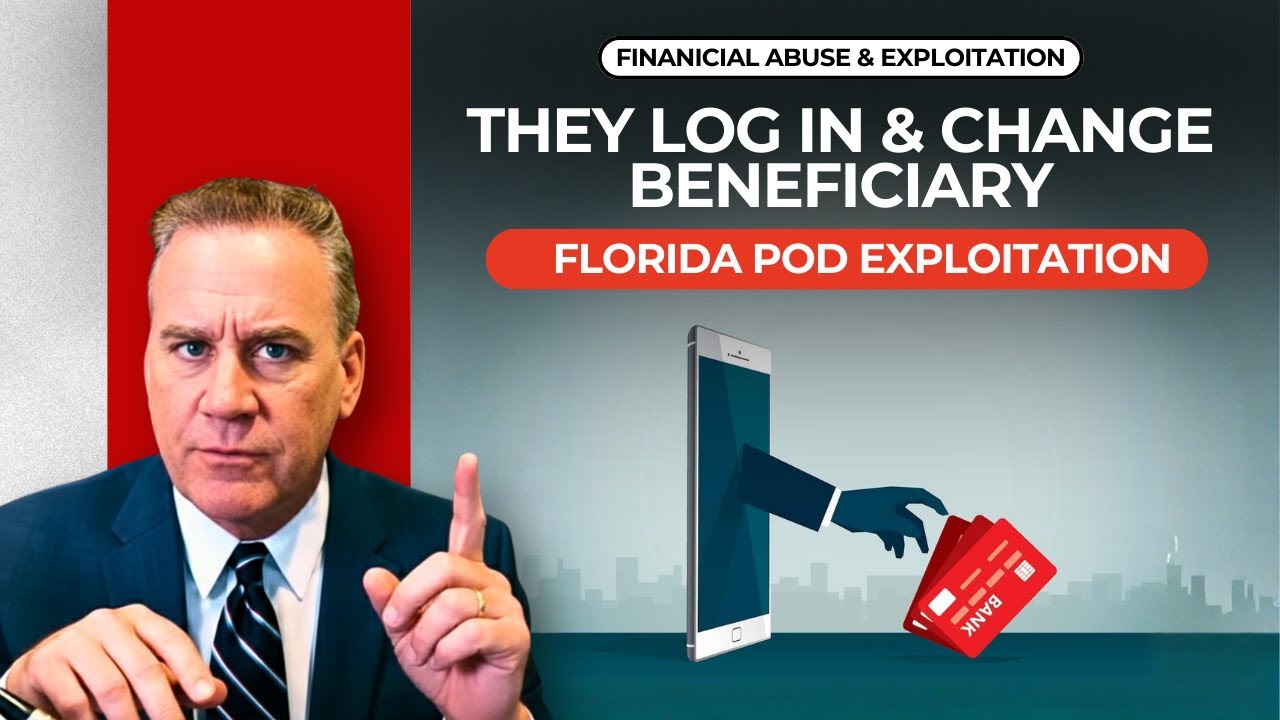
In short: Payable-on-death and beneficiary designations pass money outside probate, which makes them the easiest target for exploitation. In Florida, an agent under a power of attorney can’t create or change a beneficiary designation or survivorship right unless the principal separately signed or initialed that specific power (§ 709.2202). Late-life changes can be challenged for lack of capacity, undue influence, fraud, or forgery, and misuse of an elderly person’s money can be a crime under § 825.103.
Matt calls payable-on-death accounts the single biggest target for exploitation of vulnerable adults. A will goes through a lawyer’s office, witnesses, and a probate court. A beneficiary change on a brokerage account can happen at a kitchen table with a laptop, and nobody finds out until after the funeral.
How It Happens
The pattern Matt sees: Dad’s accounts named all the kids for years. A caregiver, a new spouse, or one child moves in. Dad’s memory starts slipping. The statements switch to electronic delivery, the mailing address changes, and the POD or TOD designation quietly changes to the person living in the house. After death, the family opens probate expecting $5 million and finds $3 million.
What a Power of Attorney Can’t Do Without Specific Authority
A Florida power of attorney does not automatically let the agent rearrange the principal’s estate plan. Section 709.2202(1) requires the principal to separately sign or initial next to each of these powers:
- Create an inter vivos trust
- Amend or revoke the principal’s trust, if the trust allows it
- Make a gift
- Create or change rights of survivorship
- Create or change a beneficiary designation
- Waive joint and survivor annuity rights
- Disclaim property
If the POA doesn’t have those initials, an agent who changed a beneficiary may have acted without authority.
The Agent’s Duties
An agent under a POA is a fiduciary who must act in good faith, within the scope of authority, and in the principal’s best interest (Chapter 709). Matt’s warning to well-meaning family agents: living rent-free on Mom’s money, buying cars and Christmas gifts with it, or putting the house in your name because “Mom said so” can look like exploitation to a judge. Keep records proving every transaction benefited the principal. He calls the careless agent the “accidental felon.”
Joint Accounts Are Different
A joint account with right of survivorship is presumed to belong to the survivor. Under § 655.79(2), that presumption “may be overcome only by proof of fraud or undue influence or clear and convincing proof of a contrary intent.” A POD beneficiary, by contrast, has no right to the money while the owner is alive (§ 655.82).
How to Challenge a Late-Life Change
- Get the records. Account opening documents, change forms, IP and login records, who requested the change, and when.
- Look at capacity and timing. Medical records around the date of the change. See capacity.
- Look for undue influence. A confidential relationship plus active procurement can shift the burden. See undue influence.
- Act fast. Ask the court for an injunction or to freeze funds before they’re spent.
- Remedies. Constructive trust, civil theft (treble damages under § 772.11, which requires a 30-day written demand first), and criminal referral under § 825.103.
The oral arguments below include an IRA beneficiary changed while the owner was incompetent, a joint account emptied before death, and a bank that transferred money after a POA was suspended.
Watch: the videos behind this article
Caregiver Moves In, Changes Florida POD Account, You Find Out After Death (Too Late)
The Power of Attorney Emergency Checklist: Rights, Responsibilities, and Red Flags
POA WARNING: The “License to Steal” Trap #powerofattorney #probate #inheritancedrama
POWER OF ATTORNEY WARNING — READ THIS BEFORE IT’S TOO LATE
More Short Videos on This Issue


Watch the Real Appellate Arguments
These are recordings of actual Florida appellate oral arguments, posted on the channel. Watch how the judges question both sides. Read the written opinion before relying on any outcome: an argument is not a ruling.
IRA Beneficiary Changed While Mom Was Incompetent — Who Inherits? | 23-855
Joint Account Emptied Before Death — Does That Sever Survivorship and Create a Conversion Claim?
Power of Attorney Was Suspended—So Why Did the Bank Transfer the Money? | Trustco v. Webb
Go Deeper
- Sibling Taking a Parent’s Money? POA & Guardianship
- Florida Elder Financial Exploitation Law
- Undue Influence in Florida Wills
- Someone Stealing From an Estate in Florida? How to Find Hidden Assets and Get the Money Back
Frequently Asked Questions
Can someone with power of attorney change a beneficiary in Florida?
Only if the power of attorney specifically grants that authority and the principal signed or initialed next to it. Section 709.2202 requires that separate signature or initials for powers including creating or changing a beneficiary designation, creating or changing survivorship rights, and making gifts.
Can you contest a POD or beneficiary change after death in Florida?
Yes. A change can be challenged for lack of capacity, undue influence, fraud, duress, or forgery. Because these assets pass outside probate, the claim may be brought in the probate court or as a separate civil action against the recipient, often seeking a constructive trust.
Who gets a joint bank account when one owner dies in Florida?
The survivor is presumed to own it. Under § 655.79, that presumption may be overcome only by proof of fraud or undue influence or by clear and convincing proof of a contrary intent.
Is misusing a parent’s money under a POA a crime in Florida?
It can be. Exploitation of an elderly person or disabled adult under § 825.103 is a felony; $50,000 or more is a first-degree felony. Civil theft under § 772.11 also allows treble damages.
Talk to a Florida probate litigator
Weidner Law, P.A. handles Florida probate, trust, guardianship, and will disputes from St. Petersburg. If you need a probate litigation lawyer in St. Petersburg or anywhere in Florida, call (727) 954-8752 or email weidner@mattweidnerlaw.com.
Read the law yourself, free: the full Florida Probate Code and Probate Rules and the Florida Trust Code are on floridarules.net.
This article is general information about Florida law, not legal advice about your situation. Reading it, watching the videos, or contacting the firm does not create an attorney-client relationship. Every case turns on its own facts, and past results do not guarantee a similar outcome. The hiring of a lawyer is an important decision that should not be based solely upon advertisements.
