
In short: In CDC Builders, Inc. v. Biltmore-Sevilla Debt Investors, LLC, a newly formed company managed by the developers’ principal bought the senior construction mortgage and foreclosed, wiping out the general contractor’s construction liens on eight Coral Gables homes. The Third District reversed the summary judgment on September 17, 2014. It held that a borrower cannot buy back its own mortgage, directly or through a controlled entity, mainly to eliminate junior liens, and that fact questions about control and purpose had to be tried.
The Facts
CDC Builders, Inc. built 25 luxury homes in two developments for Riviera Biltmore, LLC and Riviera Sevilla, LLC. SunTrust Bank made the construction loans, which were personally guaranteed by Brian McBride and others. The developers did not pay for the last eight homes, and CDC recorded construction liens and sued to foreclose them. In an earlier appeal, CDC Builders, Inc. v. Riviera Almeria, LLC, 51 So. 3d 510 (Fla. 3d DCA 2010), the Third District reversed an order discharging those liens.
According to the opinion, McBride managed the developers through McBride Family Properties, which held about a 90% membership interest. In April 2010 McBride formed Biltmore-Sevilla Debt Investors, LLC (BSDI), a company with no assets, which he also managed. In June 2010 BSDI borrowed about $10 million and bought the SunTrust loans at full face value. Less than a week after the mandate issued in the earlier lien appeal, BSDI filed a foreclosure naming CDC as a junior lienor. The developers did not defend. The Miami-Dade circuit court entered final summary judgment of foreclosure for BSDI, which extinguished CDC’s liens.
At oral argument, the two sides framed the case this way:
- CDC argued that when an entity tied to the borrowers and guarantors buys the senior mortgage, it either merges and extinguishes the mortgage or cannot use subrogation to wipe out junior liens without a full look at the equities, and that the trial court treated the formal assignment as the end of the inquiry.
- CDC also argued that the movant bore the burden on summary judgment and that discovery into the investor entities was incomplete.
- BSDI argued it was a separate entity from the mortgagors, that CDC had years for discovery, that the property was underwater, and that under existing Florida cases partial overlap among investors is not enough.
- The panel focused on how much identity between the borrower’s investors and the buyer’s investors is required, and on gaps in the record about who owned the LLCs.
The Decision
The Third District reversed the parts of the final judgment that adjudicated CDC’s rights and remanded for further proceedings on CDC’s counterclaim and affirmative defenses. The opinion was issued September 17, 2014. Rehearing and rehearing en banc were denied December 9, 2014.
The court stated the general rule: a borrower cannot borrow from a bank, give a mortgage, incur junior liens, buy the mortgage back, and foreclose it mainly to eliminate the junior liens. It relied on the Florida Supreme Court’s decision in Clermont-Minneola Country Club v. Loblaw, 143 So. 129 (Fla. 1932), where a mortgagor had the mortgage assigned to a corporation she and her husband essentially owned in order to foreclose out a contractor’s lien, and the lien survived. The principle is that a person may not do indirectly what the law forbids directly, and the rule applies even when the borrower acts through a controlled company. The court also cited Restatement (Third) of Property (Mortgages) section 6.4.
The court noted that Florida cases describe the basis for the rule in different ways, as a limit on subrogation or as merger, and said it did not need to settle that debate. It found genuine issues of material fact: a jury could find McBride controlled both the developers and BSDI, the timing of BSDI’s formation, purchase and foreclosure tracked the lien litigation, SunTrust documents suggested McBride was protecting the developers’ position against the liens, no legitimate business reason for the purchase was offered, and discovery was incomplete. The court distinguished cases where the new entity was formed by investors bringing new capital whose interests differed from the original investors’.
The Law
Construction lien priority. Under Florida’s Construction Lien Law, Chapter 713, a construction lien generally has priority over interests recorded after it attaches but not over a mortgage recorded earlier. See section 713.07. That is why a foreclosure of the senior construction mortgage normally cuts off the contractor’s junior lien.
The insider buy-back limit. CDC Builders applies a long-standing equitable limit to that normal result. When the party primarily responsible for the debt, or an entity it controls, acquires the senior mortgage, it may not use that mortgage to foreclose out junior lienors. Whether the buyer is truly independent is a fact question, which is why summary judgment was reversed here.
Summary judgment. The court applied the summary judgment rule as it stood in 2014, under which the moving party had to conclusively show there was no genuine issue of material fact.
Current law (2026): Effective May 1, 2021, the Florida Supreme Court amended Florida Rule of Civil Procedure 1.510 to adopt the federal summary judgment standard. The older “slightest doubt” approach no longer controls, and a nonmoving party must now point to evidence showing a genuine dispute. The equitable rule from Clermont-Minneola and CDC Builders is not affected, but the summary judgment analysis in a case like this would be run under the new standard.
Lessons
- A contractor’s junior lien is not automatically lost when the senior mortgage changes hands. If the buyer is the borrower or controlled by the borrower’s insiders, the contractor may be able to keep its lien.
- Look at who formed the buyer, who manages it, where its money came from, and when it bought. Timing tied to the lien litigation mattered in this case.
- Push for discovery into the ownership of the entities and preserve the dispute on the record if it is refused. Incomplete discovery was one reason summary judgment was reversed.
- Investors who buy a distressed senior loan should be ready to show a legitimate business purpose and real independence from the borrower.
- Summary judgment rules changed in 2021. Check the current standard before relying on older cases about what defeats a motion.
Source: CDC Builders, Inc. v. Biltmore-Sevilla Debt Investors, LLC, No. 3D13-603 (Fla. 3d DCA Sept. 17, 2014); rehearing denied Dec. 9, 2014 (ACIS docket).
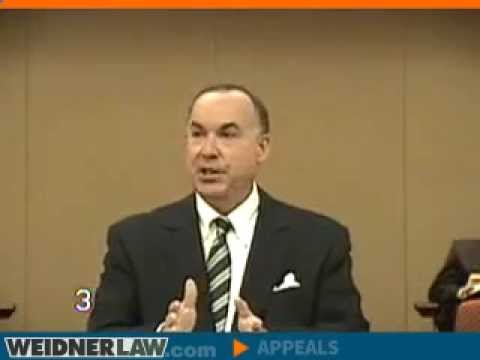
Watch the Oral Argument
This is the recording of the actual oral argument, posted on the channel. What lawyers and judges say at argument is not the ruling; the decision is summarized above.
🏛️ Mortgage Bought by a Related Entity: Mechanic's Lien Wiped Out? | CDC Builders, 3D13-0603
Go Deeper
- A Mid-Trial Jury Instruction Change and a Lost Condo Defect Case (Eloquence v. CDC Builders)
- Fraudulent Construction Lien and FDUTPA Claims on Appeal (Riverfront v. Wisenbaker)
- Unlicensed Contractor's Lien and a Sanctions Award Reversed (MacAlister v. Bevis)
Frequently Asked Questions
Does a mortgage foreclosure wipe out a contractor's construction lien in Florida?
Usually, if the mortgage was recorded before the lien attached, the foreclosure cuts off the junior construction lien. CDC Builders recognizes an exception when the borrower or an entity it controls buys the senior mortgage mainly to eliminate junior liens.
Can a borrower buy its own mortgage and foreclose out junior liens?
No. Under Clermont-Minneola Country Club v. Loblaw and CDC Builders, a borrower cannot do that directly or through a controlled company. Whether a buyer is controlled by the borrower is a question of fact.
What is equitable subrogation in a Florida foreclosure?
It lets a party who pays off a debt step into the creditor’s position, including its lien priority, when fairness supports it. Courts will not apply it to let the party primarily responsible for the debt defeat junior lienholders. The CDC Builders court noted Florida cases describe the rule in terms of both subrogation and merger.
What should a contractor do if a related company buys the construction loan?
Raise the issue as a defense and counterclaim in the foreclosure and take discovery into who owns and controls the buyer, where its money came from, and why it bought. In CDC Builders, those facts were enough to defeat summary judgment.
Talk to a Florida real estate litigation lawyer
Weidner Law, P.A. handles Florida real estate disputes, title problems and appeals from St. Petersburg. If you need a real estate litigation lawyer, call (727) 954-8752 or email weidner@mattweidnerlaw.com.
Read the law yourself, free: every Florida statute and court rule is on floridarules.net.
This article is general information about Florida law, not legal advice about your situation. Reading it, watching the videos, or contacting the firm does not create an attorney-client relationship. Every case turns on its own facts, and past results do not guarantee a similar outcome. The hiring of a lawyer is an important decision that should not be based solely upon advertisements.
