
In short: In Silva v. Silva, a Miami-Dade physician conceded on the record that he was partially incapacitated, then appealed the later orders that removed his rights and named his son as guardian. On June 12, 2024, the Third District dismissed the challenge to the incapacity finding as untimely, affirmed the son’s appointment, and reversed the removal of rights because it rested on examining committee reports that were hearsay. The Florida Supreme Court declined review on December 22, 2025.
The Facts
In 2016, Dr. Orlando Silva signed a declaration of preneed guardian naming his son Jorge as his guardian. By 2022 his children believed he could no longer manage his health and finances. In October 2022, two of his sons petitioned for an emergency temporary guardianship, and in November the court appointed Jorge as emergency temporary guardian and named a three-member examining committee.
All three examiners recommended a limited guardianship, though one recommended removing fewer rights. At a January 12, 2023 hearing, Dr. Silva’s lawyer agreed on the record to a finding of limited incapacity and asked for a full evidentiary hearing only on who should serve as guardian. The court found partial incapacity by clear and convincing evidence and set a later hearing on the guardian and the scope of rights to be removed.
At the later two-day hearing, Dr. Silva produced a February 2023 declaration naming a professional guardian instead of Jorge. Over a hearsay objection, the court relied on the first two examiners’ reports, though those examiners did not testify. On March 30, 2023, it entered one order removing a broad set of rights and another appointing Jorge as limited guardian. Dr. Silva appealed both.
At oral argument, the points below are what the lawyers argued, not findings by the court.
- Dr. Silva argued his concession covered only keeping the emergency temporary orders in place until trial, that he never agreed to which rights would be removed, and that he was entitled to a full adjudicatory hearing with cross-examination.
- He argued two of the examining committee reports were hearsay never admitted through a witness, and that the reports were stale by the time of trial.
- Jorge argued the January order was itself an appealable incapacity order that was never timely appealed, that objections to the reports were not filed five days before the hearing as section 744.331 requires, and that invited error and estoppel barred Dr. Silva from undoing his own concession.
- The panel asked how a person alleged to be incapacitated can stipulate away the protections the guardianship statutes give him.
The Decision
The Third District issued a written opinion on June 12, 2024, reported at 394 So. 3d 1235. It reached three different results on three different parts of the case.
Dismissed in part. The January 2023 ruling determined incapacity, and under Florida Rule of Appellate Procedure 9.170(b) an order determining incapacity is appealable when entered. Dr. Silva did not appeal it within 30 days. The March order repeated that finding, but repeating a ruling does not restart the time to appeal, so the court had no jurisdiction to review the incapacity determination itself.
Affirmed in part. The appointment of Jorge as limited guardian stood. The February 2023 declaration naming a professional guardian came after the court had already found Dr. Silva partially incapacitated, so it was not a preneed designation under section 744.3045. The record contained evidence supporting Jorge’s suitability, and the appellate court does not reweigh that evidence.
Reversed in part. The order removing specific rights was reversed. The examining committee members whose reports the court relied on did not testify, no hearsay exception applied, and the evidence code applies in guardianship proceedings. Without that evidence, the finding that Dr. Silva could not exercise the removed rights was unsupported. The case was remanded. Both sides’ motions for rehearing were denied on August 20, 2024, and on December 22, 2025 the Florida Supreme Court declined to accept jurisdiction and denied review (No. SC2024-1389).
The Law
Section 744.331 governs the petition to determine incapacity, the three-member examining committee, the committee reports, and the adjudicatory hearing. It lets a party object to all or part of an examining committee report in writing, but the objection has to be filed and served no later than five days before the hearing.
Section 744.1095 lists the rights of an alleged incapacitated person at a guardianship hearing, including the right to present evidence and to confront and cross-examine witnesses. Florida Probate Rule 5.170, on floridarules.net, applies the evidence code in probate and guardianship proceedings, which is why unsponsored reports were hearsay.
Section 744.3045 lets a competent adult designate a preneed guardian in advance, and the designation creates a rebuttable presumption that the named person is entitled to serve. The court held a designation signed after the incapacity finding did not get that treatment.
Florida Rule of Appellate Procedure 9.170(b) lists the probate and guardianship orders that are immediately appealable, including orders determining incapacity. The 30-day appeal clock runs from that order.
Lessons
- A concession to limited incapacity is not a small thing. Once the court rules on it, the time to appeal that finding starts running.
- If you object to an examining committee report, file a written objection at least five days before the hearing, and insist that the court rule on it.
- The party seeking to remove rights must prove inability to exercise each right with admissible evidence. A report sitting in the court file is not evidence by itself.
- A preneed designation has to be signed while the person is still competent. A new designation signed after an incapacity finding is unlikely to control who serves.
- Watch for separate appealable orders in guardianship cases. Waiting for the final order can forfeit review of an earlier one.
Source: Silva v. Silva, 394 So. 3d 1235 (Fla. 3d DCA June 12, 2024), No. 3D2023-0811; Fla. 3d DCA docket; review denied, No. SC2024-1389 (Fla. Dec. 22, 2025).
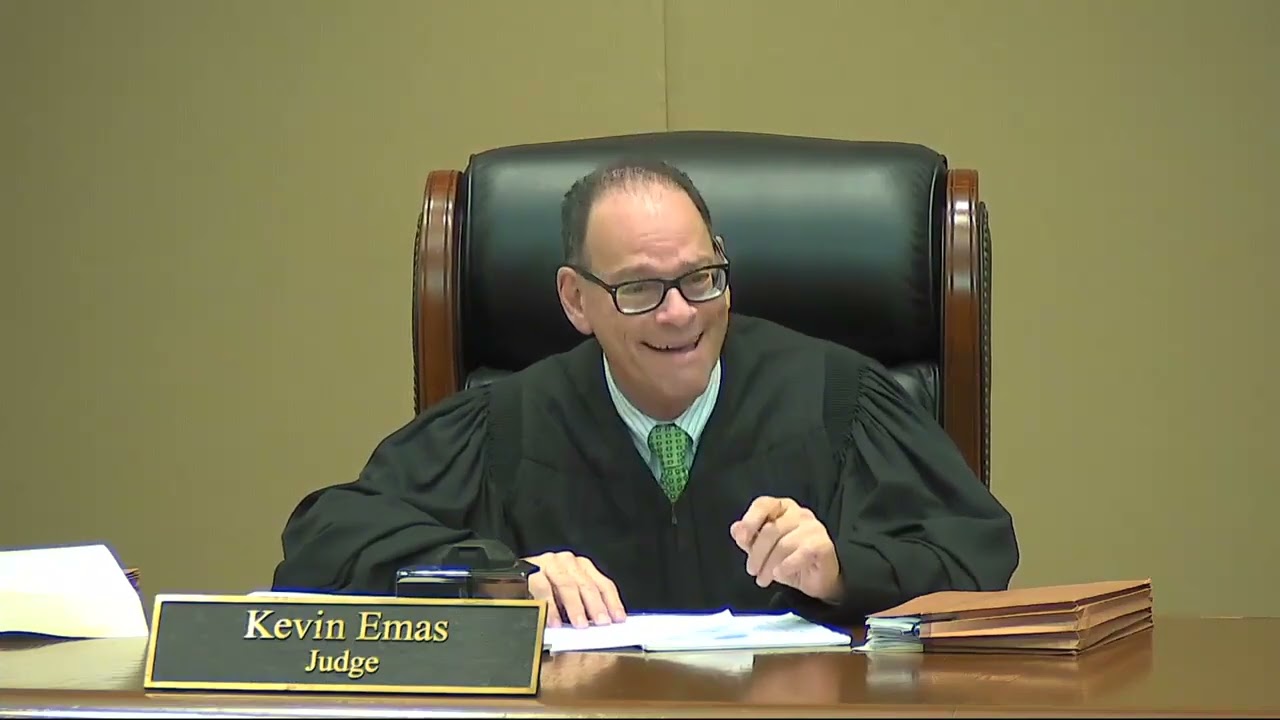
Watch the Oral Argument
This is the recording of the actual oral argument, posted on the channel. What lawyers and judges say at argument is not the ruling; the decision is summarized above.
🧓 Consent to "Limited" Incapacity — Does It Waive a Full Guardianship Hearing? Florida Appeal
Go Deeper
- How to Avoid Guardianship in Florida: The Power of Attorney Is the Least Restrictive Alternative
- Testamentary Capacity in Florida: When Dementia Makes a Will, Deed, or POA Invalid
- Guardianship Attorney Fees in Florida: Who Pays, How Much, and How to Object
Frequently Asked Questions
Are examining committee reports evidence in a Florida guardianship hearing?
Not automatically. In Silva v. Silva, the Third District held that reports from examiners who did not testify were inadmissible hearsay once a hearsay objection was made, because the evidence code applies in guardianship cases. The removal of rights based on those reports was reversed.
How long do you have to appeal an incapacity finding in Florida?
Thirty days from the order determining incapacity, which is separately appealable under Florida Rule of Appellate Procedure 9.170(b). In Silva, the ward waited for a later order that repeated the finding, and the Third District dismissed that part of his appeal as untimely.
Can a person sign a new preneed guardian designation after being found incapacitated?
A preneed designation is meant to be made by a competent adult before incapacity. In Silva, a declaration signed after the court found partial incapacity was not treated as a preneed designation, and the son named in the earlier 2016 declaration was appointed.
What rights does an alleged incapacitated person have at the hearing?
Under section 744.1095, the person has the right to remain silent, testify, present evidence, call witnesses, and confront and cross-examine witnesses. Those rights are why the Third District insisted on admissible evidence before rights could be removed.
Talk to a Florida probate litigation lawyer
Weidner Law, P.A. handles Florida probate disputes and probate appeals from St. Petersburg. If you need a probate litigation lawyer, call (727) 954-8752 or email weidner@mattweidnerlaw.com.
Read the law yourself, free: the full Florida Probate Code and Probate Rules and the Florida Trust Code are on floridarules.net.
This article is general information about Florida law, not legal advice about your situation. Reading it, watching the videos, or contacting the firm does not create an attorney-client relationship. Every case turns on its own facts, and past results do not guarantee a similar outcome. The hiring of a lawyer is an important decision that should not be based solely upon advertisements.
