
In short: When shareholders sued to dissolve a family company’s subsidiary, the subsidiary elected to buy their shares under section 607.1436. The trial court said it could not hear a request to set the election aside. In June 2026 the Fifth DCA reversed: either side may ask the court to set aside or modify an election on equitable grounds.
The Facts
Deltona Transformer Corporation is a closely held family company best known for the Battery Tender line of chargers. In 2013 it formed a subsidiary, Deltran Operations USA, Inc. In 2016 Deltran issued 100 Class A shares to four family members and one Class B share to Deltona Transformer. The Class B share carried no dividends but effectively gave its holder a veto over major decisions, such as paying dividends.
Family discord followed. Deltona Transformer, the father who ran it, and his daughter sued Deltran and the other shareholders (the father’s son and two nephews), alleging malfeasance and seeking to dissolve Deltran. Deltran responded by filing an election under section 607.1436 to buy the petitioners’ shares at fair value, and the individual shareholders filed a backup election.
The petitioners asked the court to set aside the election on equitable grounds. The Volusia County trial court ruled that it lacked the power to hear that request because the statute calls an election irrevocable. It then held evidentiary hearings and entered a valuation judgment. The daughter settled, and Deltona Transformer appealed.
The Decision
The Fifth District reversed. The statute says an election is irrevocable unless the court determines it is equitable to set aside or modify it, so the trial court plainly had power to consider the request. The harder question was who may ask. Courts in other states have split; Utah’s Supreme Court limited the equitable exception to the electing party, while New Hampshire and Connecticut courts did not.
The Fifth District sided with the broader reading, noting that the next subsection of the same statute expressly limits whose interests count, while subsection (1) has no such limit. It held that either the electing party or the petitioning shareholder may raise equitable grounds to set aside or modify an election. The valuation judgment was reversed and the case remanded for the trial court to decide whether the equities justify setting aside or modifying the election. The court did not reach the parties’ disputes over valuation.
The Law
Under section 607.1430, a shareholder can petition to dissolve a corporation on grounds such as deadlock, oppression or waste. section 607.1436 gives the corporation, or if it does not act, the other shareholders, the right to elect to buy the petitioner’s shares at fair value instead. The election generally must be filed within 90 days of the petition, after which the case cannot be settled or discontinued without court approval, and if the parties cannot agree on price the court determines fair value.
Subsection (1) states that an election is irrevocable unless the court finds it equitable to set it aside or modify it. Deltona Transformer is the first Florida appellate decision to hold that a petitioning shareholder, not just the electing buyer, can invoke that exception. Changed circumstances such as a sharp business decline, loss of key people, missing assets or a death are examples the court mentioned.
Current law (2026): Section 607.1436 as quoted in the opinion (Fla. Stat. 2026) is unchanged since the 2019 revision of chapter 607 (ch. 2019-90).
Lessons
- Filing to dissolve a closely held corporation can trigger a forced buyout. Know that risk before you file.
- A buyout election is not the end of the fight. A petitioning shareholder may ask the court to set it aside or modify it if the equities support that.
- Build an equities record early: changed circumstances, misconduct and unfair timing all matter.
- Unusual share classes, like a veto-only share, shape both leverage and valuation. Draft them carefully.
Watch the Oral Argument
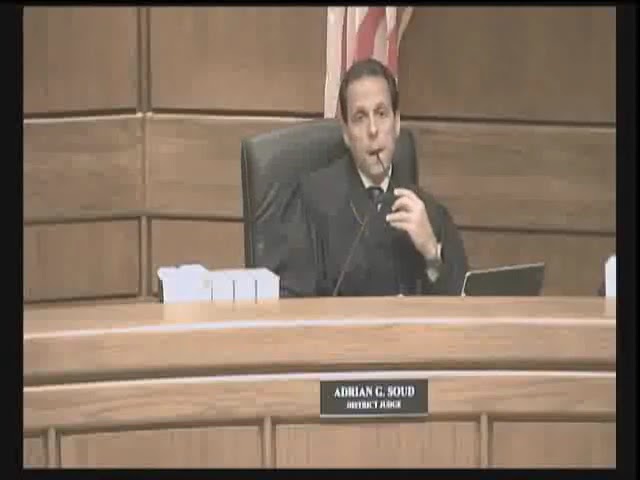
This is the recording of the actual oral argument, posted on the channel. What lawyers and judges say at argument is not the ruling; the decision is summarized above.
Family Business Takeover: Shareholder Buyout Valuation | Deltona Transformer Corp., 5D24-1156
Go Deeper
- Constructive Trusts in Family Business Fights: Why the Order Was Reversed (Abdo v. Abdo)
- A Developer, an Estate and a Family Trust Fight Over an LLC (Meehan v. Funk)
Frequently Asked Questions
What is an election to purchase in lieu of dissolution in Florida?
Under section 607.1436, when a shareholder petitions to dissolve a corporation, the corporation or the remaining shareholders can elect to buy the petitioner’s shares at fair value instead. If the parties cannot agree on price, the court determines fair value, and the buyout replaces dissolution.
Can a section 607.1436 buyout election be revoked?
The statute calls the election irrevocable unless the court finds it equitable to set it aside or modify it. In Deltona Transformer v. Deltran Operations (Fla. 5th DCA 2026), the court held that both the electing party and the petitioning shareholder can ask the court to do so on equitable grounds.
How long does a corporation have to elect to buy out a shareholder seeking dissolution?
Generally 90 days after the dissolution petition is filed, or a later time if the court allows. If the shareholders rather than the corporation elect, the corporation must notify the other shareholders, who then have 30 days to join. Missing the deadline without court permission can forfeit the buyout right.
How is fair value determined in a Florida shareholder buyout?
If the parties do not agree within 60 days of the election, the court determines the fair value of the petitioner’s shares, generally as of the day before the petition was filed or another date the court finds appropriate. Expert valuation testimony is usually central.
Talk to a Florida business litigation lawyer
Weidner Law, P.A. handles business, LLC, shareholder and contract disputes from St. Petersburg. If you need a civil litigation lawyer, call (727) 954-8752 or email weidner@mattweidnerlaw.com.
Read the law yourself, free: every Florida statute and court rule is on floridarules.net.
This article is general information about Florida law, not legal advice about your situation. Reading it, watching the videos, or contacting the firm does not create an attorney-client relationship. Every case turns on its own facts, and past results do not guarantee a similar outcome. The hiring of a lawyer is an important decision that should not be based solely upon advertisements.
