

In short: Owners who waited 8 to 12 years to attack amendments to their subdivision’s restrictive covenants lost. The First DCA reversed their win and held a challenge to a recorded covenant amendment must be filed within five years of recording under section 95.11(2)(b), even when the owner claims the amendment was never validly adopted.
The Facts
The case involved Paradise by the Sea, a subdivision in south Walton County. Its original restrictive covenants allowed most amendments with approval from owners of at least two-thirds of the lots, but required approval from all owners for any amendment that changed property rights. Amendments were recorded in September 2001 and April 2005. According to the owners who later sued, the 2001 amendments were never voted on, and the 2005 amendments had only about 70% approval even though they affected property rights.
In July 2013, David and Elizabeth Pearson sued the homeowners’ association, asking the court to declare both sets of amendments void. Other owners, the Hiltons, were allowed to intervene to oppose them and raised the statute of limitations. The trial court denied their summary judgment motion, held a bench trial in March 2015, declared the 2001 and 2005 amendments void, and ruled the original covenants still controlled.
The Decision
The First District Court of Appeal reversed and sent the case back with directions to enter judgment against the Pearsons. Following Harris v. Aberdeen Property Owners Association (Fla. 4th DCA 2014) and its own decision in Silver Shells Corp. v. St. Maarten at Silver Shells Condominium Association (Fla. 1st DCA 2015), the court held that a suit challenging an amendment to restrictive covenants must be filed within five years of the amendment’s recording. That is true even when the challenger says the amendment is void because it was improperly enacted. The Pearsons sued almost 12 years after the 2001 amendment and more than 8 years after the 2005 amendment, so both challenges were time-barred.
The court rejected the Pearsons’ argument that the defense was waived because the association itself had not pleaded it, noting the trial court let the intervenors raise it. It also refused to consider an estoppel argument first raised at oral argument. Because limitations decided the case, the court never reached whether the amendments were actually valid. The Pearsons sought Florida Supreme Court review, arguing conflict with a 1940 decision on void restrictions; the Supreme Court dismissed for lack of jurisdiction in November 2016 and awarded the other side fees.
The Law
Recorded covenants are treated as a written instrument, so actions founded on them fall under the five-year limitation period in section 95.11(2)(b), Florida Statutes. Under Harris, Silver Shells, and Hilton, the clock on an attack against a recorded amendment starts at recording, not when an owner later feels the effect of the amendment or discovers a defect in how it was adopted.
The vote thresholds themselves come from the declaration. Many Florida declarations, like this one, require a higher threshold, sometimes unanimity, for amendments that take away property rights. The lesson of Hilton is that a defective vote is not a permanent weapon: if no one sues within five years of recording, the amendment generally stands as recorded.
Current law (2026): Section 95.11(2)(b), Florida Statutes (2026), still provides a five-year period for actions founded on a written instrument; no statute has displaced the Harris/Silver Shells/Hilton rule as of 2026.
Lessons
- If you think a covenant amendment was improperly adopted, check the recording date now. Five years from recording is the working deadline in Florida.
- Calling an amendment "void" does not stop the clock. The court treated void-from-the-start arguments the same as any other challenge.
- Buyers and title examiners should treat recorded amendments older than five years as very difficult to undo.
- Owners who want to defend an old amendment may intervene and raise the statute of limitations even if the association does not.
Source: Hilton v. Pearson, No. 1D15-440 — Fla. 1st DCA (February 10, 2016).
Watch the Oral Argument
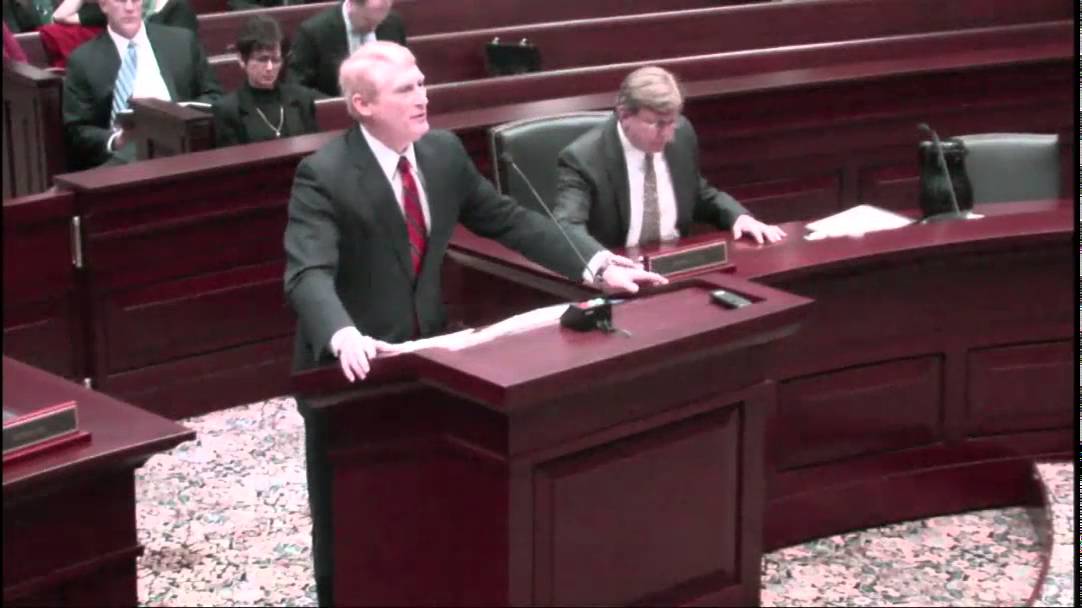
This is the recording of the actual oral argument, posted on the channel. What lawyers and judges say at argument is not the ruling; the decision is summarized above.
Were the HOA Covenant Amendments Valid? | Hilton v. Pearson, 1D15-440
Go Deeper
- Can a Later Amendment Extend Deed Restrictions on Land Already Sold? (Fiore v. Hilliker)
- A 1973 Golf-Course Restriction Wiped Out by the Marketable Record Title Act (La Minnesota Riviera)
- No Unit Count in the Deed, No Forfeiture of Building Rights (Presidential Estates)
Frequently Asked Questions
How long do I have to challenge an HOA covenant amendment in Florida?
Under Hilton v. Pearson and the cases it followed, a lawsuit attacking a recorded amendment to restrictive covenants generally must be filed within five years of the date the amendment was recorded, under section 95.11(2)(b). Waiting longer usually means the challenge is barred, regardless of how strong the argument against the amendment might have been.
What if the HOA amendment was never properly voted on?
In Hilton, the owners argued the 2001 amendment was never voted on at all and the 2005 amendment lacked the required unanimous approval. The court still held both challenges time-barred because they were filed more than five years after recording. An improper vote is grounds to sue, but only within the limitations period.
Does the five-year clock start when I buy my home?
Under this line of cases, the clock runs from when the amendment was recorded in the public records, not from when a particular owner bought the property or first learned of the amendment. A buyer who purchases ten years after recording generally inherits a time-barred challenge.
Can another homeowner raise the statute of limitations if the HOA doesn't?
In Hilton, the trial court allowed other owners to intervene and raise the limitations defense, and the appellate court rejected the argument that it was waived because the association had not pleaded it. Whether intervention is allowed depends on the case, but affected owners are not necessarily bound by the association’s litigation choices.
Talk to a Florida HOA dispute lawyer
Weidner Law, P.A. handles homeowners association, covenant and community disputes from St. Petersburg. If you need a property dispute lawyer, call (727) 954-8752 or email weidner@mattweidnerlaw.com.
Read the law yourself, free: every Florida statute and court rule is on floridarules.net.
This article is general information about Florida law, not legal advice about your situation. Reading it, watching the videos, or contacting the firm does not create an attorney-client relationship. Every case turns on its own facts, and past results do not guarantee a similar outcome. The hiring of a lawyer is an important decision that should not be based solely upon advertisements.
