
In short: In Hagelin v. U.S. Funding Group, the Second DCA reversed a summary judgment letting a neighbor use the dock on the Hagelins’ waterfront lot. The easement declaration was recorded after the first buyers’ deed, never clearly described a dock easement, and later amendments could not bind land the developer had already sold.
The Facts
The dispute involved lots on Little Gasparilla Island, between the Gulf and Little Gasparilla Sound. In February 2002 the original owner signed a Declaration of Covenants and Easements that referred to easements for access to docks on the sound. It mentioned a Master Site Plan, but none was attached. The only exhibit described one parcel (Parcel A) and mentioned a six-foot gulf-to-sound pedestrian easement, not a dock.
The same day, the owner delivered a warranty deed for Parcel A to the first buyers. Their deed mentioned only the pedestrian easement and did not refer to the Declaration. The deed was recorded about forty minutes before the Declaration. Later the owner signed an amended declaration (2002) and a further amendment (2005) by herself. U.S. Funding Group acquired two gulf-front parcels at a 2008 foreclosure sale, and the Hagelins bought Parcel A in 2011 with a deed that said nothing about a dock.
U.S. Funding sued in 2012 seeking, among other things, a declaration that it could use the dock on Parcel A. The trial court granted it summary judgment, and the Hagelins appealed.
The Decision
The Second District reversed. The first buyers took title before the Declaration was recorded, so their deed’s language making the conveyance subject to easements of record did not reach it. Nothing in the record showed they knew about a dock easement, and a buyer without notice takes free of an unrecorded easement. On top of that, the Declaration itself did not clearly create a dock easement over an identifiable piece of land: the site plan it relied on was missing, and its only exhibit described a pedestrian path.
The later amendments did not fix the problem. If the first buyers took Parcel A free of the Declaration, the developer could not burden that parcel afterward because she no longer owned it, and the record did not show the owner-majority approval the Declaration required for amendments. Because the documents were at best ambiguous and the facts were disputed, summary judgment was improper, and the case went back to the trial court.
The Law
An express easement must show a clear intent to create it and must identify the land it burdens with reasonable certainty; courts read easement documents like contracts. Florida’s recording act, section 695.01, protects a buyer for value who takes without notice of an unrecorded interest, which is why the order of recording mattered here. A deed that conveys property subject to easements of record covers only what was actually of record when title passed.
A developer can bind lots it still owns, but once a lot is sold free of a restriction, a later declaration or amendment signed by the developer alone generally cannot impose a new burden on it. Any amendment also has to follow the procedure the declaration itself sets out.
Lessons
- Order of recording matters. A declaration recorded after a deed may not bind that buyer unless the buyer had notice of it.
- An easement document should attach every exhibit it refers to. A missing site plan can sink a claimed dock or access right.
- Waterfront buyers should check whether the deed itself grants or reserves dock rights, not just whether a declaration exists somewhere in the chain.
- Developers cannot unilaterally amend a declaration to burden lots they have already sold, and amendments must follow the declaration’s own approval rules.
Source: Hagelin v. U.S. Funding Group, LLC, No. 2D14-2871 — Fla. 2d DCA (November 6, 2015).
Watch the Oral Argument
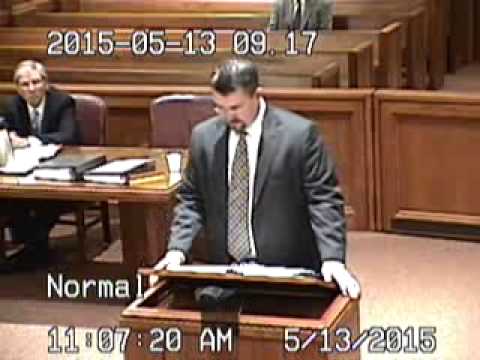
This is the recording of the actual oral argument, posted on the channel. What lawyers and judges say at argument is not the ruling; the decision is summarized above.
Dock Easement & Deed Recording Dispute | Hagelin v. U.S. Funding Group, 2D14-2871
Go Deeper
- Does an "Exclusive" Easement Lock Out the Owner Who Granted It? (Myers v. Garber)
- A Shared Well, a Dirt Driveway and an Easement Fight (Marlette v. Carullo)
- Easement Disputes in Florida: Utility, Access, and Prescriptive Easements
Frequently Asked Questions
Does a recorded declaration create an easement over my lot if I bought first?
Not automatically. If your deed was recorded before the declaration and you had no notice of it, Florida’s recording act generally protects you, and a deed ‘subject to easements of record’ only covers what was of record when you took title. In Hagelin, the deed was recorded about forty minutes before the declaration, and that timing mattered.
What makes an express easement valid in Florida?
The document must show a clear intent to create an easement and must describe the burdened land with enough certainty to locate it. Courts read easement documents like contracts. A declaration that refers to a site plan that was never attached, or that describes a different kind of easement, may fail to create the right someone later claims.
Can a developer amend a declaration after selling lots?
Only within the limits the declaration sets, and generally not to place a new burden on a lot it has already sold free of that burden. In Hagelin, amendments signed by the developer alone after the first sale did not bind that lot, and there was no proof the owner-majority approval required by the declaration was obtained.
Is a pedestrian easement to the water the same as a right to use a dock?
No. A gulf-to-sound walking easement is a right to cross land, not a right to use a particular dock structure. Courts look at what the documents actually say. If the deed and exhibits describe only a pedestrian path, a claimed dock right needs its own clear basis.
Talk to a Florida easement and boundary lawyer
Weidner Law, P.A. handles easement, boundary and access disputes from St. Petersburg. If you need a property dispute lawyer, call (727) 954-8752 or email weidner@mattweidnerlaw.com.
Read the law yourself, free: every Florida statute and court rule is on floridarules.net.
This article is general information about Florida law, not legal advice about your situation. Reading it, watching the videos, or contacting the firm does not create an attorney-client relationship. Every case turns on its own facts, and past results do not guarantee a similar outcome. The hiring of a lawyer is an important decision that should not be based solely upon advertisements.
