
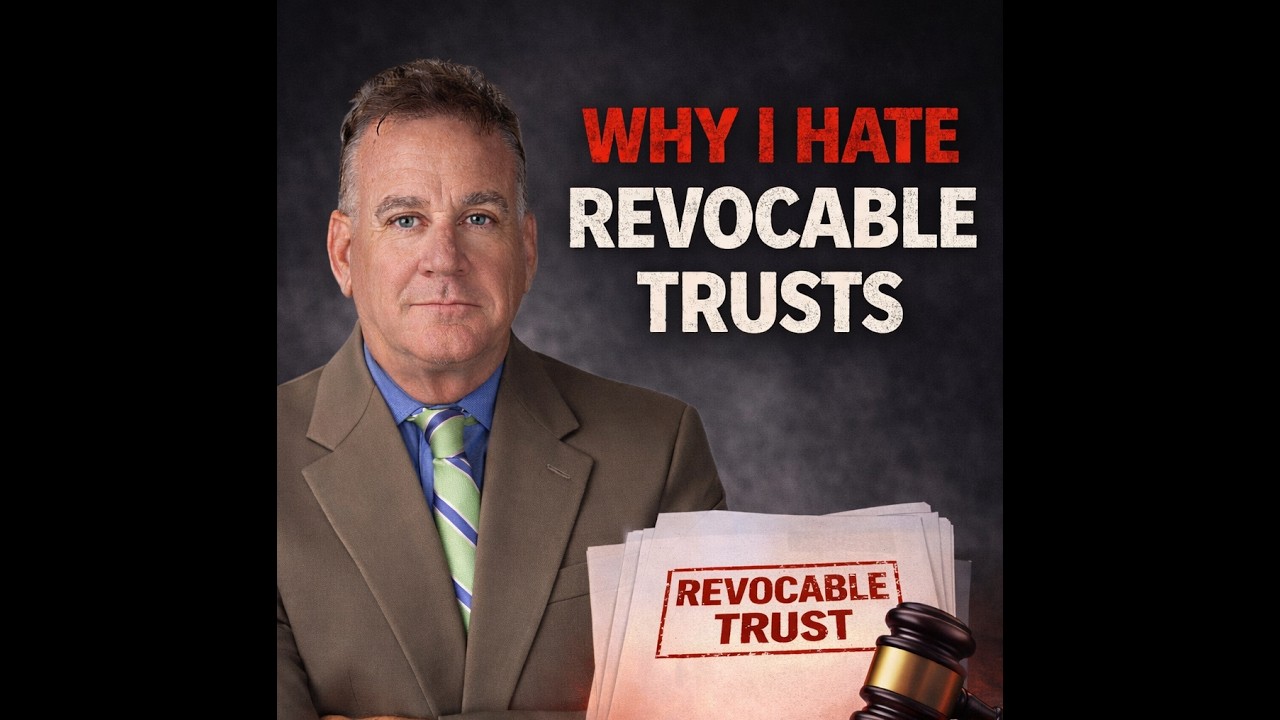
Most revocable trusts don’t fail because of bad drafting. They fail because they were never properly funded. After 26+ years of handling Florida estates, attorney Weidner has seen this pattern destroy family financial plans hundreds of times.
The Dirty Secret of the Revocable Trust Industry
Attorneys, financial advisors, and CPAs sell revocable living trusts as the gold standard of probate avoidance. And they’re right — in theory. The problem is what happens after the document is signed. In most cases: nothing. The house stays in the individual’s name. The bank accounts stay untitled. The brokerage accounts are never updated. And the trust sits in a drawer, untouched, until the owner dies and the family discovers that it’s worthless.
What “Funding a Trust” Actually Means
Funding a trust means transferring actual legal title to your assets into the trust during your lifetime. For each major asset class, this requires a separate legal step:
- Real estate: A new deed transferring title to the trust must be recorded in the county where the property is located
- Bank accounts: Accounts must be retitled in the trust’s name at each financial institution
- Investment accounts: Brokerage and investment accounts must be retitled — a process that varies by institution
- Beneficiary designations: Life insurance and retirement account beneficiary designations must be reviewed and coordinated with the trust
- Vehicles and personal property: Depending on value, these may need to be assigned to the trust
When Revocable Trusts ARE the Right Answer
Revocable trusts remain powerful estate planning tools when used correctly. They are particularly valuable for: estates with real property in multiple states (avoiding ancillary probate); families with minor children or special needs beneficiaries; situations where privacy matters (trusts don’t become public records like probate cases); complex distribution scenarios over time; and comprehensive incapacity planning.
The Audit: What You Need to Check Right Now
If you already have a revocable living trust, the most important question is not whether the document is well-drafted — it’s whether your assets are actually in it. Pull out the trust document and compare it against your actual asset list. Check your real estate deeds. Check your bank account titles. Check your investment account ownership. If there are gaps, fix them now — before it’s too late.
📌 Related Reading:
Frequently Asked Questions
What happens if I have a trust but my assets aren’t in it?
Assets not held in the trust at death will likely go through probate — defeating the purpose of having the trust in the first place. In some cases, a “pour-over will” can transfer those assets into the trust through probate, but this still requires the full probate process and eliminates the privacy and speed advantages of trust administration.
Can I fund my trust myself, or do I need an attorney?
Some funding steps are straightforward — like contacting your bank to retitle an account. Others, like real estate deeds, require an attorney to prepare and record a legally valid document. Using an attorney to oversee the funding process ensures it is done correctly and that nothing is missed.
What is the difference between a revocable trust and an irrevocable trust?
A revocable trust can be changed or terminated by the creator during their lifetime. An irrevocable trust cannot (with limited exceptions). Revocable trusts avoid probate but do not protect assets from creditors. Irrevocable trusts can provide creditor protection and tax benefits, but at the cost of permanently relinquishing control over the assets.
Is Your Trust Actually Funded?
An unfunded trust avoids nothing. Get your trust and asset plan reviewed by attorney Weidner — 26+ years of Florida trust and probate law experience.
Key Statutes Referenced in This Article
The exact text of Florida law cited in this article is published word-for-word — free, complete, and fully organized — at FloridaRules.net. Direct links:
- § 736.0801 — Duty to Administer Trust | FloridaRules.net
- § 736.0804 — Prudent Administration | FloridaRules.net
FloridaRules.net — Every Florida Probate Rule, Statute, and Case Commentary. In One Place.
