
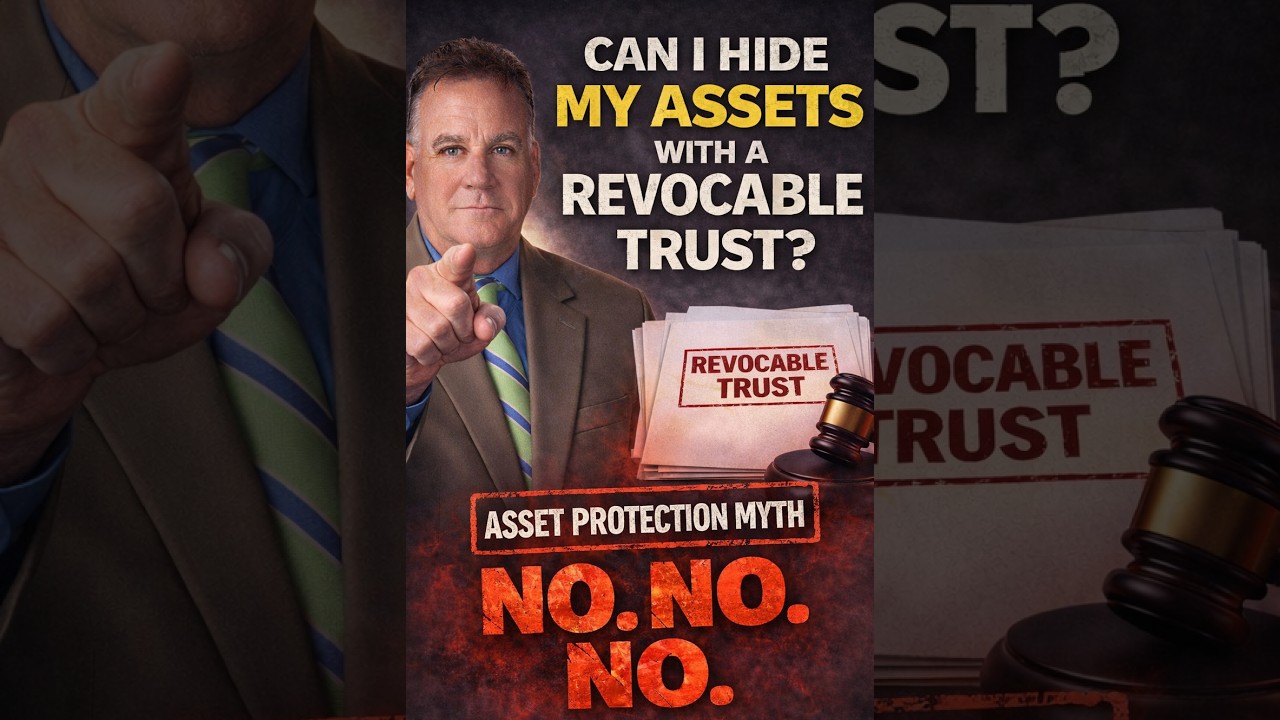
Can I hide my assets in a trust to protect them from creditors, courts, or the IRS? Short answer: No. Long answer: Trying to do so may make things dramatically worse.
A Revocable Trust Provides ZERO Creditor Protection
If you created a revocable living trust and believe it protects your assets from creditors — you were misled. Under Florida and federal law, a revocable trust provides no protection from creditors, courts, or government agencies. The legal test is simple: if you control it, benefit from it, or can revoke it, it is still your asset for all legal purposes.
Florida’s Fraudulent Transfer Act: Courts Can Unwind Your “Protection”
Under Florida Chapter 726 — the Florida Uniform Fraudulent Transfer Act — courts have broad authority to void asset transfers made with the intent to hinder, delay, or defraud creditors. This means: if you transfer assets into a trust after a lawsuit is filed, after a creditor claim arises, or even in anticipation of a future claim, those transfers can be reversed. The trust doesn’t protect them — it just creates additional legal exposure for you.
The IRS Has Even More Power Than Ordinary Creditors
Federal tax liens attach to all property and rights to property of a taxpayer — including property held in trusts. The IRS is not bound by state asset protection rules. A trust that might provide limited protection against a commercial creditor provides essentially no protection against the IRS. Tax obligations must be addressed through legitimate tax law strategies, not through asset transfers.
What Legitimate Asset Protection in Florida Looks Like
Florida does provide meaningful asset protection through legitimate statutory tools — but they work very differently from trust-based “hiding” schemes. Florida’s constitutional homestead protection is among the strongest in the country. Tenancy by the entirety protects jointly held property for married couples from the individual debts of either spouse. Statutory exemptions protect retirement accounts, life insurance, and annuities from most creditors. These protections work because they are built into Florida law — not because you tried to hide something.
The Golden Rule of Asset Protection: Plan Early, Plan Legitimately
Legitimate asset protection in Florida must be done well in advance of any creditor issue and without the intent to defraud specific known creditors. Waiting until a lawsuit is filed — or worse, waiting until a judgment is entered — to start thinking about asset protection is too late. And using asset transfers to defeat creditors after a claim arises is not just ineffective; it is potentially criminal.
📌 Related Reading:
Frequently Asked Questions
Can a living trust protect my house from creditors in Florida?
A revocable living trust does not protect your home from creditors. Florida’s homestead exemption, however, provides very strong protection for your primary residence from most creditor claims — but this protection exists by virtue of homestead law, not trust law.
What kind of trust actually protects assets from creditors?
An irrevocable trust established well in advance of any creditor claim, with a truly independent trustee, can provide creditor protection in some circumstances. Domestic Asset Protection Trusts (DAPTs) exist in some states but not Florida. Florida residents can use Florida-compliant irrevocable trusts for legitimate asset protection — but these must be properly structured and executed before any creditor issues arise.
Can I get in trouble for hiding assets in a trust?
Yes. Fraudulent transfers expose you to civil liability (the court reverses the transfer and awards damages), and in some cases, criminal exposure for fraud. Additionally, hiding assets in bankruptcy proceedings is a federal crime.
Concerned About Creditors and Your Assets?
Don’t make a move that creates more problems than it solves. Talk to attorney Weidner about legitimate, lawful asset protection strategies in Florida.
Read the Exact Statute
The exact text of Florida law cited in this article is published word-for-word — free, complete, and fully organized — at FloridaRules.net. Direct links:
FloridaRules.net — Every Florida Probate Rule, Statute, and Case Commentary. In One Place.
