
In short: Usually it is hard. A subcontractor contracts with the general contractor, not the owner, so its claims for unexpected site conditions generally run up the contract chain. In Gator Boring & Trenching, Inc. v. Westra Construction Corp., a directional-drilling subcontractor hit hard rock under the Alafia River on a Tampa Electric Company pipeline and sued TECO for fraud and other claims over a second geotechnical report it never saw. The trial court entered summary judgment for TECO, and the Second District affirmed without a written opinion on March 13, 2019.
The Facts
Tampa Electric Company (TECO) hired Westra Construction Corp. in August 2012 to build a pipeline of roughly 14 miles for about $14 million, according to TECO’s lawyer. Part of the line had to be drilled under the north prong of the Alafia River. When the project was bid, TECO did not yet have access to the private land next to the crossing, so the only soil report covered other areas. Bidders were told to do their best from the right-of-way and public sources.
After the prime contract was signed, TECO’s engineers obtained access, took more borings and produced a second report in 2013 that flagged harder weathered limestone in that area. In the summer of 2013, after the original drilling subcontractor left, Westra brought in Gator Boring & Trenching, Inc. Gator says it asked whether anything had changed and was told no. The second report was not given to Gator until discovery in the lawsuit. Gator hit rock in late 2013, damaged equipment, and claimed extra costs that TECO refused to pay.
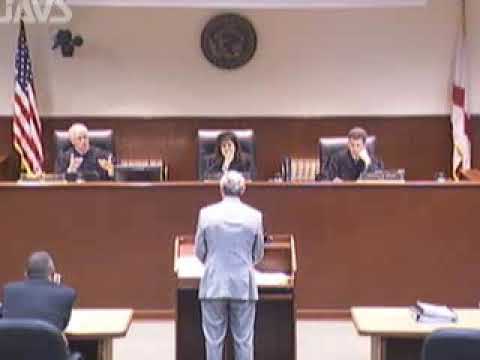
The Sarasota County litigation involved Gator, Westra, Westra’s surety Travelers Casualty and Surety Company of America, and TECO. Gator brought tort, fraud and contract claims against TECO. The trial court entered summary judgment for TECO, and Gator appealed (No. 2D2017-0902). Westra and Travelers separately appealed a judgment in the same Sarasota County case (No. 2D2017-1822), which shared the same record. Both were argued on March 5, 2019. The points below are what the lawyers argued in Gator’s appeal, not findings by the court.
- Gator argued the contract incorporated a geotechnical standard requiring the owner to investigate subsurface conditions and share the results, and that an owner who gives some soil information must give complete information. Its president testified Gator would not have signed if it had seen the second report.
- Gator argued that at meetings after it hit rock, a TECO project engineer told it to track its costs and it would be paid, which created fact issues on its contract and fraud claims that summary judgment should not have cut off.
- TECO argued it had no contract with Gator and owed it no duty, that it never spoke with Gator before Gator signed, that it forwarded its engineer’s warning about rock to Westra, and that the subcontract put the risk of non-man-made obstructions on the driller.
- The panel noted that the new borings were some distance from the actual river crossing, that limestone is common in Polk County, and that fraud claims rarely end on summary judgment unless there is no duty or no false statement.
The Decision
The Second District affirmed both appeals on March 13, 2019, in per curiam affirmances without written opinions. The mandates issued April 23, 2019. The summary judgment for TECO stands, as does the judgment Westra and Travelers appealed in No. 2D2017-1822.
Because there are no opinions, the cases do not explain the reasons. A per curiam affirmance decides only these cases. The second upload covers the Westra and Travelers appeal, which the channel titled as a fraudulent lien dispute; it has no transcript, and we could not confirm the issues argued in it.
The Law
Construction risk follows the contracts. An owner’s duties usually run to the general contractor it hired, and the general contractor’s duties run to its subcontractors. A subcontractor that wants to recover for differing site conditions generally must look to the terms of its subcontract and to the general contractor, which may then pursue the owner under the prime contract.
Florida courts have recognized that when an owner makes representations about subsurface conditions, it can be responsible if those representations are incomplete or misleading. Gator relied on that line of cases. TECO’s answer was that it made no representations to Gator at all.
The trial court decided the case on summary judgment under rule 1.510. Current law (2026): Florida’s summary judgment rule was amended effective May 1, 2021, to adopt the federal standard, which makes summary judgment easier to obtain than when this case was decided.
Lessons
- Subcontractors should ask, in writing, for every geotechnical report and boring log that exists, not just those in the original bid package.
- Read the differing-site-conditions and obstruction clauses before signing. Here the subcontract allowed no adjustment for natural obstructions, according to TECO.
- Assurances at a jobsite meeting are weak protection. Get change orders in writing from someone with authority.
- A claim against an owner you never contracted with faces a duty problem that a claim against your own contractor does not.
- Per curiam affirmances decide only these cases.
Source: Gator Boring & Trenching, Inc. v. Westra Construction Corp., No. 2D2017-0902 — Fla. 2d DCA docket (per curiam affirmed March 13, 2019); Westra Construction Corp. v. Gator Boring & Trenching, Inc., No. 2D2017-1822 — Fla. 2d DCA docket (per curiam affirmed March 13, 2019).
Watch the Oral Argument
The first video is the argument in Gator’s appeal against Tampa Electric; the second is the related Westra appeal argued the same morning. What lawyers and judges say at argument is not the ruling; the decision is summarized above.
🏗️ Contractor FRAUD & Concealed Site Conditions: Summary Judgment Error? | Gator Boring v. Westra
Fraudulent Lien- 17 1822 WESTRA CONSTRUCTION CORP v GATOR BORING AND TRENCHING
Read the Law on FloridaRules.net
The statutes and court rules discussed in this article, free to read on FloridaRules.net:
Go Deeper
- When Is an Overstated Construction Lien Fraudulent in Florida? (Cherry Bomb Electric)
- Can a Contractor’s Lien Reach a Tenant’s Liquor License? (Solid Builders v. Inka Foods)
- Developer’s Insiders Bought the Mortgage to Wipe Out the Contractor’s Lien (CDC Builders)
Frequently Asked Questions
Can a subcontractor sue the property owner directly in Florida?
Sometimes, for example through lien or bond rights or a direct promise by the owner, but contract claims usually run to the general contractor. In Gator Boring, the subcontractor’s claims against the owner, TECO, ended on summary judgment, which the Second District affirmed without an opinion.
Who pays when a contractor hits unexpected rock or soil conditions?
The contracts decide. A differing-site-conditions clause may shift the risk to the owner; a clause denying adjustments for natural obstructions keeps it on the contractor. Gator’s subcontract allowed adjustment only for man-made obstructions, according to TECO.
Does the owner have to share soil reports with bidders?
That depends on the contract and specifications, and on whether the owner made representations about site conditions. Gator argued the incorporated standard required sharing the later report; TECO argued it owed Gator nothing because they had no contract.
Can a fraud claim be decided on summary judgment?
Fraud claims are fact-heavy and often go to trial, but summary judgment can be entered if there was no false statement or no duty to disclose. TECO argued both, and the summary judgment in its favor was affirmed.
Talk to a Florida real estate litigation lawyer
Weidner Law, P.A. handles Florida real estate disputes, title problems and appeals from St. Petersburg. If you need a real estate litigation lawyer, call (727) 954-8752 or email weidner@mattweidnerlaw.com.
Read the law yourself, free: every Florida statute and court rule is on floridarules.net.
This article is general information about Florida law, not legal advice about your situation. Reading it, watching the videos, or contacting the firm does not create an attorney-client relationship. Every case turns on its own facts, and past results do not guarantee a similar outcome. The hiring of a lawyer is an important decision that should not be based solely upon advertisements.
