
In short: Usually not. If the new complaint alleges the borrower missed a payment “and all subsequent payments,” each missed installment is a separate default, and the payments that came due within five years of filing are not time-barred. In Bank of New York Mellon v. Arnoux, the bank dismissed a 2007 foreclosure in 2012 and refiled in February 2013; the Miami-Dade trial court entered summary judgment for the borrower on limitations. The Third District reversed on October 31, 2018.
The Facts
According to the opinion, the bank first sued to foreclose in 2007, alleging a default on the April 1, 2007 payment. It voluntarily dismissed that case in 2012 and filed a second foreclosure in February 2013, alleging that Carl Arnoux failed to pay the February 1, 2008 installment and all subsequent payments. The trial court ruled the second case was barred by the five-year statute of limitations and entered summary judgment and an involuntary dismissal for Arnoux. The bank appealed (No. 3D16-2064).
Arnoux died while the appeal was pending. A separate appeal over the substitution of his daughter as personal representative (No. 3D18-313) was consolidated with this one. The points below are what the lawyers argued, not findings by the court.
- The bank, argued by Marc J. Gottlieb, said the law in the Third District was settled: a complaint alleging a continuing default places payments within five years of filing at issue, so the case is not time-barred.
- Arnoux’s lawyer, Scott J. Wortman, conceded the district’s limitations law and asked the court to affirm on a different ground under the “tipsy coachman” doctrine. He argued that once the first case was dismissed the loan was decelerated, so the bank had to send a new paragraph 22 default letter before the second foreclosure, which it did not do until May 2015, two years into the case.
- The bank answered that the default-letter argument was never raised in the summary judgment motion, and that the Third District had already held a new letter is not required when the default was never cured.
- Both sides told the court the substitution appeal had been resolved by agreement.
The Decision
The Third District reversed the summary judgment and the involuntary dismissal in a per curiam opinion on October 31, 2018, and remanded for further proceedings. Relying on its earlier decisions, including the en banc decision in Deutsche Bank Trust Co. Americas v. Beauvais, 188 So. 3d 938 (Fla. 3d DCA 2016), and Bank of New York Mellon Corp. v. Anton, 230 So. 3d 502 (Fla. 3d DCA 2017), the court held the “all subsequent payments” language alleged a series of separate defaults, so the action was not time-barred.
The court declined to affirm on the default-letter theory. That ground was not raised in Arnoux’s summary judgment motion, so the tipsy coachman doctrine could not be used to affirm on it. The court added that Nationstar Mortgage, LLC v. Silva, 239 So. 3d 782 (Fla. 3d DCA 2018), would defeat the argument on the merits anyway. It dismissed the substitution appeal as moot after the parties’ stipulation.
The Law
An action to foreclose a mortgage must be brought within five years under section 95.11(2)(c). The Florida Supreme Court held in Bartram v. U.S. Bank, N.A., 211 So. 3d 1009 (Fla. 2016), that when a foreclosure is dismissed, the parties return to their positions before acceleration, and the lender may bring a new foreclosure based on later defaults that occurred within five years of the new filing.
Separately, section 95.281 sets an outer limit on the life of a mortgage lien, measured from the maturity date stated in the mortgage or a recorded document.
Summary judgment is governed by rule 1.510. Arnoux turned on the rule that a summary judgment cannot be affirmed on a ground the motion never raised. Current law (2026): Florida rewrote rule 1.510 effective May 1, 2021 to adopt the federal summary judgment standard, so check the current text of the rule before relying on older summary judgment cases.
Lessons
- A dismissed foreclosure does not usually end the mortgage. Missed payments within five years of a new filing remain enforceable.
- Read the default date and the “all subsequent payments” language in the new complaint. That language drives the limitations analysis.
- Put every ground for summary judgment in the motion. A ground raised only at the hearing, or for the first time on appeal, may be lost.
- If a borrower dies during a foreclosure or appeal, a personal representative has to be substituted, which can delay the case.
Source: Bank of New York Mellon v. Arnoux, Nos. 3D16-2064 & 3D18-313 (Fla. 3d DCA Oct. 31, 2018) (per curiam opinion); ACIS docket.
Watch the Oral Argument
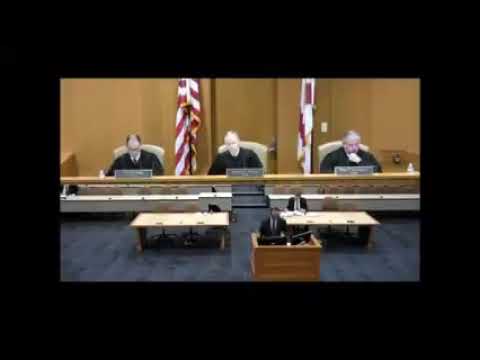
This is the recording of the actual oral argument, posted on the channel. What lawyers and judges say at argument is not the ruling; the decision is summarized above.
Foreclosure Limitations and Continuing Default: Can Tipsy Coachman Save the Summary Judgment?
Read the Law on FloridaRules.net
The statutes and court rules discussed in this article, free to read on FloridaRules.net:
Go Deeper
- Foreclosure Statute of Limitations in Florida: Bartram, Refiled Cases, and the 5-Year Rule
- Does a Default Letter Start the Foreclosure Clock? (Snow v. Wells Fargo)
- Foreclosure After the Borrower Dies in Florida: Heirs, Probate, and Zombie Mortgages
Frequently Asked Questions
Is there a statute of limitations on foreclosure in Florida?
Yes. An action to foreclose a mortgage must be brought within five years under section 95.11(2)(c). But each missed installment can be a new default, so a lender can often refile based on payments missed within the last five years.
Can the bank refile a foreclosure after the first case was dismissed?
Usually yes. Under Bartram v. U.S. Bank, a dismissal generally returns the parties to their positions before acceleration, and the lender may sue again on later defaults. In Arnoux, the bank refiled in 2013 after dismissing a 2007 case, and the Third District let it proceed.
Does the bank have to send a new default letter before a second foreclosure?
Not in the Third District when the original default was never cured. The court in Arnoux pointed to Nationstar Mortgage v. Silva, which held a new letter was not required in that situation.
What happens to a foreclosure if the borrower dies?
The case does not simply end. A personal representative or other proper party must be substituted, as happened in Arnoux, and the estate or heirs take the place of the borrower.
Talk to a Florida real estate litigation lawyer
Weidner Law, P.A. handles Florida real estate disputes, title problems and appeals from St. Petersburg. If you need a real estate litigation lawyer, call (727) 954-8752 or email weidner@mattweidnerlaw.com.
Read the law yourself, free: every Florida statute and court rule is on floridarules.net.
This article is general information about Florida law, not legal advice about your situation. Reading it, watching the videos, or contacting the firm does not create an attorney-client relationship. Every case turns on its own facts, and past results do not guarantee a similar outcome. The hiring of a lawyer is an important decision that should not be based solely upon advertisements.
