
In short: No. Under the Third District’s en banc decision, transferable development rights (TDRs) and ROGO points do not count as an economically beneficial use of land, so offering them does not defeat a categorical taking claim; they go to how much compensation is owed. In Shands v. City of Marathon, a family whose offshore Keys island could be used only for camping and beekeeping sued after the city refused relief. On February 5, 2025, the en banc court reversed the judgment for the city and ordered partial summary judgment for the owners; the Florida Supreme Court declined review in December 2025 and the U.S. Supreme Court denied the city’s petition on June 8, 2026.
The Facts
Dr. Shands bought Shands Key, a 7.9-acre island off Marathon in the Florida Keys, in 1956. At the time it was zoned for one home per acre. In 1986 Monroe County rezoned it “Conservation Offshore Island,” and the City of Marathon later carried those rules forward. The city denied a dock permit in 2004 and offered development credits under its Rate of Growth Ordinance (ROGO) and building permit allocation system if the land was dedicated to the public.
The Shands family sued for inverse condemnation. After two earlier appeals and a bench trial, the trial court ruled for the city. It treated the case like the court’s earlier Beyer decisions, which had held that ROGO points plus recreational use met an owner’s expectations, and it applied the Penn Central balancing test instead of the categorical rule of Lucas v. South Carolina Coastal Council.
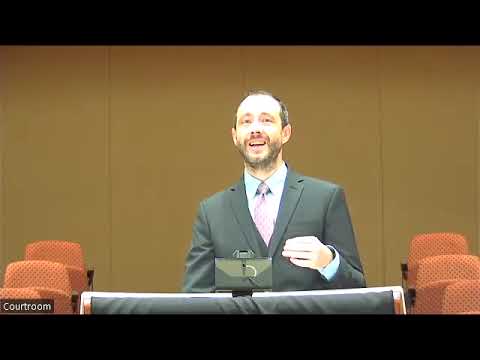
The family appealed (No. 3D21-1987), and a panel heard argument on February 8, 2023. That is the argument in the video. The points below are what the lawyers argued, not findings by the court.
- The owners argued they had an as-applied categorical (Lucas) claim, not a facial one, and that the trial court wrongly refused to decide it.
- They argued ROGO points and TDRs are at most residual value that a third party pays for, not an economically beneficial use of the island itself.
- On Penn Central, they argued the court ignored the before-regulation value (they put it at $3 to $3.5 million against about $147,000 after), used a vested-rights test for investment-backed expectations, and skipped the character of the government action.
- The city argued that both appraisers agreed the island had market value of roughly $45,000 to $60,000 for personal recreational use apart from the ROGO points, so Lucas could not apply because not all value was gone.
- The city also argued the family’s small investment in the land supported the Penn Central ruling.
The Decision
A panel reversed in an authored opinion on May 3, 2023. The city moved for rehearing en banc, and on February 5, 2025 the full court withdrew the panel opinion and issued a new one. The en banc court reversed the final judgment and remanded with instructions to enter partial summary judgment for the owners on their categorical, as-applied takings claim.
The court held that the regulations left the island economically idle: the only permitted uses were camping and beekeeping, and the owners could not even build a dock. It rejected the idea that the ability to sell the land is itself an economic use, warning that a government may not evade compensation by leaving an owner a “token interest.” Adopting Justice Scalia’s reasoning in Suitum v. Tahoe Regional Planning Agency, it held that TDRs relate to compensation, not to whether a taking occurred, and it receded from its earlier decisions to the extent they held that an award of TDRs always defeats a Lucas claim.
Concurring opinions noted that TDR offers remain relevant to the amount of just compensation and fees. The chief judge dissented, and would have affirmed because the island kept substantial market value through TDRs and recreational use.
The court denied the city’s motion to certify a question to the Florida Supreme Court on May 14, 2025. The Florida Supreme Court declined to accept jurisdiction in December 2025, and the U.S. Supreme Court denied the city’s petition for certiorari (No. 25-1251) on June 8, 2026. The amount of compensation is a separate question for the trial court.
The Law
The Fifth Amendment, applied to the states, requires just compensation when private property is taken for public use, and Florida’s constitution has its own takings clause. A regulation can be a taking. Under Lucas, a regulation that denies all economically beneficial or productive use of land is a categorical taking unless background principles of property or nuisance law already barred the use. Anything short of that is judged under the Penn Central factors: the economic impact, the interference with reasonable investment-backed expectations, and the character of the government action.
Monroe County and the Keys cities limit growth with ROGO, which allocates a small number of building permits each year. Owners of land that cannot be built on may receive points or TDRs they can sell to someone else who wants to build. Shands holds that this kind of credit does not keep a taking from happening in the Third District; it is part of the compensation discussion.
One concurrence pointed to the eminent domain fee statute, section 73.092, as a place where TDR offers may matter.
Lessons
- In the Third District, a government cannot defeat a categorical taking claim just by offering ROGO points or transferable development rights.
- “Value” is not the same as “use.” Land that can be sold but not used for anything productive may still be taken under Lucas.
- Takings cases are long. This one began decades after the 1986 rezoning and went through several appeals before liability was settled.
- Winning liability is not the end. Compensation is tried separately, and offered credits can still affect the number and the fees.
- If you own land in the Keys that regulations have frozen, the beneficial use process and the record you build there can decide whether you have a ripe claim.
Source: Shands v. City of Marathon, No. 3D21-1987 (Fla. 3d DCA Feb. 5, 2025) (en banc); ACIS docket; certiorari denied, City of Marathon v. Shands, No. 25-1251 (U.S. June 8, 2026).
Watch the Oral Argument
This is the recording of the actual oral argument, posted on the channel. What lawyers and judges say at argument is not the ruling; the decision is summarized above.
⚖️ Can ROGO Points Defeat a Lucas Taking Claim for an Undevelopable Keys Island?
Go Deeper
- Florida Real Estate- Bert Harris Claims, Flood Insurance And Construction Permits
- Does a Quiet Title Judgment Wipe Out an Easement Nobody Pleaded? (Keys Island v. Crow)
- Code Enforcement Appeals Get Full Appellate Review (MGM of West Florida v. Manatee County)
Frequently Asked Questions
What is a Lucas taking?
It is a categorical regulatory taking: a regulation that deprives land of all economically beneficial use requires compensation without the usual balancing test. In Shands, the Third District held that an island limited to camping and beekeeping met that standard.
Do ROGO points or TDRs count as a use of my land?
Not in the Third District. The en banc court in Shands held that transferable development rights are not an economically beneficial use of the regulated land and do not defeat a categorical taking claim. They may still affect how much compensation is owed.
Can I sue the government if zoning makes my land worthless?
Possibly, through an inverse condemnation claim. You usually must first seek relief through the local process, such as a beneficial use determination, so the claim is ripe. Whether you win depends on what uses remain and how the court applies Lucas or Penn Central.
Did the Supreme Court review Shands v. City of Marathon?
No. The Florida Supreme Court declined jurisdiction in December 2025, and the U.S. Supreme Court denied the city’s certiorari petition on June 8, 2026. The Third District’s en banc decision stands.
Talk to a Florida real estate litigation lawyer
Weidner Law, P.A. handles Florida real estate disputes, title problems and appeals from St. Petersburg. If you need a real estate litigation lawyer, call (727) 954-8752 or email weidner@mattweidnerlaw.com.
Read the law yourself, free: every Florida statute and court rule is on floridarules.net.
This article is general information about Florida law, not legal advice about your situation. Reading it, watching the videos, or contacting the firm does not create an attorney-client relationship. Every case turns on its own facts, and past results do not guarantee a similar outcome. The hiring of a lawyer is an important decision that should not be based solely upon advertisements.
