
In short: In Khoury v. Deutsche Bank, a Miami-Dade couple appealed a foreclosure judgment on a home the husband owned before their 2004 marriage. The wife signed neither the foreclosed mortgage nor the loan it refinanced, and the couple argued the bank’s proof of standing was hearsay. The trial court entered foreclosure and, in the alternative, an equitable lien. The Third District affirmed without a written opinion on July 2, 2014, and denied rehearing on August 28, 2014.
The Facts
Because the Third District affirmed without an opinion, the facts here come from the oral argument and are what the parties argued or said the record showed, not findings by the appellate court.
According to the argument, Abdallah Khoury owned the home before he married Faten Khoury in 2004. His first mortgage, signed while he was single, was refinanced into an Argent loan and then into a Long Beach Mortgage loan, which is the mortgage Deutsche Bank later foreclosed as trustee. The wife signed none of these mortgages. The bank filed an assignment of mortgage the day after it filed suit, then relied instead on the original note endorsed in blank and on a loan schedule from the securitization trust, which a Chase servicing witness brought to court after the trial judge gave the bank a week to produce it.
The final judgment foreclosed the mortgage and, in the alternative, found the bank held an equitable lien because the loan proceeds paid off the earlier mortgages. The trial court stayed the sale pending appeal.
- The Khourys argued the loan schedule was hearsay because the Chase witness had no personal knowledge of records created by another company, so the bank had no competent proof it owned the note when it sued. They argued there was no evidence the wife ratified the mortgage, and that any equitable lien on homestead property could not be foreclosed.
- Deutsche Bank’s counsel, Susan Capote, argued that a post-filing assignment does not defeat standing when the plaintiff held the endorsed note before suit, that the note came in without objection, that the loan schedule was offered only to show the loan was in the trust, and that a successor servicer may lay the foundation for a prior servicer’s records.
- Carlos D. Lerman, also for the bank, argued that the couple paid the mortgage from a joint checking account for years, which supported ratification, and that the stipulated chain of payoffs supported equitable subrogation.
The Decision
The Third District affirmed on July 2, 2014, in a per curiam affirmance without a written opinion. The Khourys moved for rehearing and rehearing en banc, which were denied on August 28, 2014, and the mandate issued September 15, 2014.
A per curiam affirmance decides only this case. It does not tell us whether the court accepted the bank’s standing proof, its ratification theory, the equitable lien, or simply found the issues unpreserved. It is not a ruling that a non-signing spouse’s homestead can always be foreclosed.
The Law
Article X, section 4(c) of the Florida Constitution allows a married owner to mortgage homestead property only if the owner’s spouse joins. That is why a mortgage signed by one spouse alone on a homestead is open to attack, and why lenders argue ratification or equitable subrogation when the spouse did not sign.
Equitable subrogation lets a lender whose money paid off an earlier valid lien step into that earlier lien’s position. Here the husband’s first mortgage was signed before the marriage, so the bank argued its loan proceeds traced back to a lien that was good against the property when the wife arrived.
A foreclosing plaintiff must show it was entitled to enforce the note when it filed suit. Records created by someone else are admissible under the business records exception, section 90.803(6), only with a proper foundation. The parties here argued over how much a successor servicer’s witness must know about records another company created.
Current law (2026): Section 702.015, added in 2013, now requires a residential foreclosure complaint to allege that the plaintiff holds the original note or is otherwise entitled to enforce it, and to attach a certification of possession or a lost-note affidavit. This case was filed before that statute took effect.
Lessons
- A spouse who never signed a homestead mortgage may have a strong defense, but lenders will argue ratification, estoppel or equitable subrogation. Raise the homestead issue early and with evidence of homestead status.
- Making payments from a joint account can be used as evidence of ratification. Spouses who object to a mortgage should say so in writing, not just stop paying later.
- Object to records evidence at trial, specifically and on the record. Hearsay objections that are not made, or that are waived by stipulation, cannot be raised on appeal.
- An alternative equitable lien in a final judgment can save a foreclosure even if the mortgage itself fails. Defend against both theories.
- A per curiam affirmance settles that case only. It is not precedent that similar facts will come out the same way.
Source: Khoury v. Deutsche Bank National Trust Co., No. 3D2013-1279 — Fla. 3d DCA docket (per curiam affirmed July 2, 2014; rehearing denied August 28, 2014); per curiam affirmance.
Watch the Oral Argument
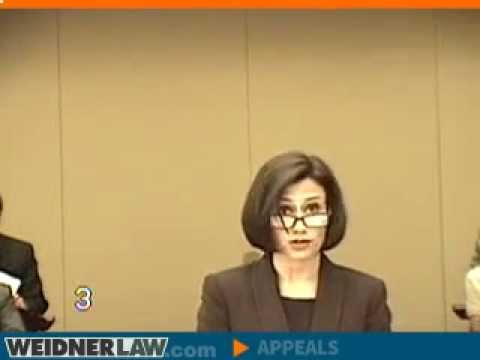
This is the recording of the actual oral argument, posted on the channel. What lawyers and judges say at argument is not the ruling; the decision is summarized above.
📋 Non-Signing Spouse, Loan Schedule Hearsay, Equitable Lien | Khoury v. Deutsche Bank, 3D13-1279
Go Deeper
- Can a Bank Foreclose on Parents’ Homestead They Never Mortgaged? (Wells Fargo v. Clavero)
- Refinance Missed the Second Mortgage, Subrogation Denied (Sherman v. Deutsche Bank)
- Note Payable to a Bank ‘Division’: Did a Merger Give TD Bank Standing? (Stone v. TD Bank)
Frequently Asked Questions
Can a bank foreclose on a Florida homestead if my spouse did not sign the mortgage?
The Florida Constitution requires a married owner’s spouse to join in a mortgage of homestead property, so a mortgage without the spouse’s signature is vulnerable. Lenders often respond with ratification or equitable subrogation, as the bank did in Khoury v. Deutsche Bank, where the foreclosure was affirmed without an opinion. The outcome depends heavily on the facts and the record.
What is equitable subrogation in a Florida foreclosure?
It lets a lender whose loan paid off an earlier valid mortgage take that earlier mortgage’s place. In Khoury, the trial court found an equitable lien in the alternative because the loan proceeds traced back to a mortgage the husband signed before he married.
Does an assignment of mortgage dated after the complaint defeat standing?
Not by itself. A plaintiff can show standing by proving it held the note, endorsed in blank or to it, before filing suit. In Khoury the bank relied on the endorsed note and a trust loan schedule rather than the later assignment.
Can a mortgage servicer's witness testify about another bank's records?
Florida courts have allowed a successor’s witness to lay a business-records foundation for a prior company’s records when the witness can show they were properly made, kept and checked, and the bank cited such cases in Khoury. The foundation required depends on the facts, and a timely, specific objection is essential.
Talk to a Florida real estate litigation lawyer
Weidner Law, P.A. handles Florida real estate disputes, title problems and appeals from St. Petersburg. If you need a real estate litigation lawyer, call (727) 954-8752 or email weidner@mattweidnerlaw.com.
Read the law yourself, free: every Florida statute and court rule is on floridarules.net.
This article is general information about Florida law, not legal advice about your situation. Reading it, watching the videos, or contacting the firm does not create an attorney-client relationship. Every case turns on its own facts, and past results do not guarantee a similar outcome. The hiring of a lawyer is an important decision that should not be based solely upon advertisements.
