
In short: Not always: a jury demand has to be timely, and a court can try the possession claim on its own before damages claims. In Simcha Connection, Inc. v. Harambam Congregation, Inc., a tenant that filed a constructive eviction counterclaim argued it was wrongly denied a jury on the landlord’s eviction claim. The Third District affirmed on December 28, 2011, without a written opinion.
The Facts
Harambam Congregation, Inc., the landlord, sued its nonresidential tenant, Simcha Connection, Inc., and Rabbi Faivish M. Dalfin in Miami-Dade County Court. The complaint had two counts: possession under the summary eviction procedure, with a 5-day summons, and damages, with a 20-day summons.
After the suit was filed, the tenant obtained leave to file a counterclaim for constructive eviction based on conduct it said happened after the case began. The counterclaim sought damages above the county court’s limit and demanded a jury on all issues, so the case was transferred to circuit court. The same judge, sitting as an acting circuit judge, severed the eviction count and tried it without a jury, offering a jury on damages. The tenant appealed (No. 3D11-1909).
There is no written opinion. What follows is what counsel argued at the December 2011 oral argument, not findings by the court.
- The tenant, represented by Lawrence R. Metsch, argued that its counterclaim injected a new issue and revived its right to demand a jury, relying on Hollywood, Inc. v. City of Hollywood, 321 So. 2d 65 (Fla. 1975), and on a Third District case holding that a transfer from county to circuit court created a new case.
- The panel asked why a jury was needed on possession when the tenant’s own counterclaim said it had been constructively evicted, and whether claims based on events after the suit was filed were tied closely enough to the eviction issues.
- The landlord, represented by Jeffrey D. Swartz, argued that the counterclaim was permissive and really a defense to the damages count, that the tenant did not give the statutory notice for a constructive eviction claim, and that the court had inherent power to sever and quickly try the eviction under the summary procedure statutes.
The Decision
The Third District affirmed on December 28, 2011 (“Affirmed – Per Curiam Affirmed”). On February 15, 2012, it denied the tenant’s motions for a written opinion and for rehearing en banc. It also denied the landlord’s motions for an order to show cause and for attorney’s fees under section 57.105. The mandate issued March 2, 2012.
Without an opinion, the affirmance does not say which ground the court accepted. It leaves the nonjury eviction judgment in place and is not a ruling that tenants never get a jury in an eviction.
The Law
A commercial landlord’s suit for possession under section 83.21 uses the summary procedure in section 51.011. That statute allows a jury where the law authorizes one, but the demand must be served no later than 5 days after the action is at issue.
In ordinary civil cases, Florida Rule of Civil Procedure 1.430 governs jury demands, and amended and supplemental pleadings are handled under rule 1.190. The tenant’s argument depended on treating its later counterclaim like an amended pleading that reopens the time to demand a jury.
A nonresidential tenant claiming the premises became wholly untenantable can use section 83.201, which requires written notice giving the landlord at least 20 days to make the repair before rent is withheld. The landlord argued the tenant never gave that kind of notice.
Current law (2026): the county court’s jurisdictional limit, which drove the transfer here, is now $50,000 under section 34.01 for cases filed on or after January 1, 2023.
Lessons
- Demand a jury early and in the right pleading. Under summary procedure, the window is short.
- A counterclaim filed later does not automatically reopen the right to a jury on issues already framed by the complaint.
- Courts often try possession first and leave damages for later, which can decide the practical outcome before any jury is seated.
- A commercial tenant claiming constructive eviction should give written notice and follow the statute before withholding rent or leaving.
Watch the Oral Argument
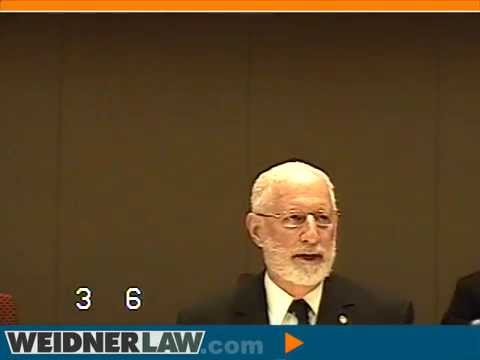
This is the recording of the actual oral argument, posted on the channel. What lawyers and judges say at argument is not the ruling; the decision is summarized above.
🚨 Denied a Jury Trial on a Constructive Eviction Counterclaim
Read the Law on FloridaRules.net
The statutes and court rules discussed in this article, free to read on FloridaRules.net:
Go Deeper
- Can an HOA Try Its Injunction Before the Owner's Jury Claims? (Clark v. Bluewater Key)
- Is a Landlord's "You Need to Relocate" Letter a Constructive Eviction? (In-Time v. Metromall)
- Leaky Roof Killed the Deli: Lost Profits, Not Market Value (Katz Deli v. Waterways Plaza)
Frequently Asked Questions
Can a tenant get a jury trial in a Florida eviction?
Sometimes. Summary procedure under section 51.011 allows a jury where the law authorizes one, but the demand must be made within 5 days after the case is at issue. In Simcha Connection, the eviction count was tried without a jury and the result was affirmed.
What is constructive eviction in Florida?
It is a claim that the landlord’s conduct made the premises unusable, forcing the tenant out even without a formal eviction. The tenant generally must actually leave. For nonresidential leases, section 83.201 sets a written notice procedure for premises that become wholly untenantable.
Does filing a counterclaim give me a new chance to demand a jury?
Not necessarily. A pleading that injects new issues can reopen the time for a jury demand on those issues, but it does not automatically revive a jury on issues already framed. The tenant in Simcha made that argument and lost.
Can a judge split the eviction from the damages claims?
Florida courts commonly decide possession quickly and leave damages claims for later. Here the landlord argued the court had inherent power to sever the eviction count, and the Third District affirmed without an opinion.
Talk to a Florida real estate litigation lawyer
Weidner Law, P.A. handles Florida real estate disputes, title problems and appeals from St. Petersburg. If you need a real estate litigation lawyer, call (727) 954-8752 or email weidner@mattweidnerlaw.com.
Read the law yourself, free: every Florida statute and court rule is on floridarules.net.
This article is general information about Florida law, not legal advice about your situation. Reading it, watching the videos, or contacting the firm does not create an attorney-client relationship. Every case turns on its own facts, and past results do not guarantee a similar outcome. The hiring of a lawyer is an important decision that should not be based solely upon advertisements.
