
In short: Florida law does not clearly answer this. A junior mortgagee named in the first lender’s foreclosure keeps a right to redeem until the certificate of sale is filed, and in Vulcan v. Sabadell the Third District let stand a ruling for a junior lender that foreclosed in its own separate case before the senior sale. The court affirmed without a written opinion on December 11, 2013, so the case sets no rule.
The Facts
Chase obtained a foreclosure judgment in a Miami-Dade case that named Sabadell United Bank, the second mortgagee, as a defendant. Before any sale in the Chase case, Sabadell foreclosed its own mortgage in a separate action, and Vulcan Dynamic Realty Fund bought the property at Sabadell’s sale. Vulcan then moved for relief under rule 1.540(b), arguing Sabadell had no right to bring a separate foreclosure. The trial court ruled for Sabadell, and Vulcan appealed (No. 3D13-1039).
Dorothy F. Easley argued for Vulcan. Edward G. Guedes argued for Sabadell, with Steven M. Lee. The points below are what the lawyers argued, not findings by the court.
- Vulcan argued foreclosure is a quasi in rem proceeding. Once the senior judgment is entered, a named junior’s lien shifts from the property to any surplus, leaving the junior with redemption, a claim to surplus, or a motion to compel the sale, not a new foreclosure.
- Vulcan said it could find no case allowing what Sabadell did, and that Sabadell collected about $200,000 from Vulcan and then nearly $100,000 more from the Chase surplus.
- Vulcan pointed to a notice of voluntary dismissal and cancellation of lis pendens, bearing another case’s style, that was recorded in the Chase action. It argued a title searcher would conclude the Chase case was dead. Sabadell had suggested below that it was a clerk’s filing error.
- Sabadell argued the right to foreclose is inherent in every mortgage, and that this court’s precedent holds a junior mortgage survives until the senior sale. Any foreclosure by Sabadell was subject to the Chase lien, and a buyer with notice takes subject to it.
- Sabadell argued Vulcan showed no due diligence and was trying to get out of a bad deal. The panel asked both sides whether a junior lender would be at the mercy of a senior lender that never sells.
The Decision
The Third District affirmed on December 11, 2013. The ACIS docket lists the disposition as “Per Curiam Affirmed,” with no written opinion, and the mandate issued December 27, 2013.
The affirmance leaves the trial court’s ruling for Sabadell in place. It does not hold that a named junior lender may always bring its own foreclosure after a senior judgment, and it does not explain which argument carried the day.
The Law
Under section 45.0315, the mortgagor or the holder of any subordinate interest may redeem before the later of the clerk’s filing of the certificate of sale or the time set in the foreclosure judgment, by paying the amount the judgment specifies. After that, there is no right of redemption.
A junior lienholder that is named in the senior foreclosure and does nothing is cut off by the sale. It may then claim surplus funds under section 45.032. A junior lender that is left out of the senior case keeps its lien, which is why omitted junior interests are cleared by reforeclosure.
A buyer at a junior foreclosure sale takes subject to the senior mortgage. Public notice comes from the recorded mortgage, the senior judgment and the lis pendens, which is governed by section 48.23. Relief from a judgment for mistake, fraud or a void judgment runs through rule 1.540.
Lessons
- Before bidding at any foreclosure sale, pull the title and the senior lender’s docket. Buyers at a junior lender’s sale usually take subject to the first mortgage.
- A confusing recorded document, like a misfiled dismissal, is a reason to dig deeper, not to assume a senior case is over.
- A junior lender named in a senior foreclosure should act before the certificate of sale: redeem, foreclose, or claim surplus.
- Rule 1.540 relief is not a cure for a bad purchase.
- A per curiam affirmance without an opinion decides only that case.
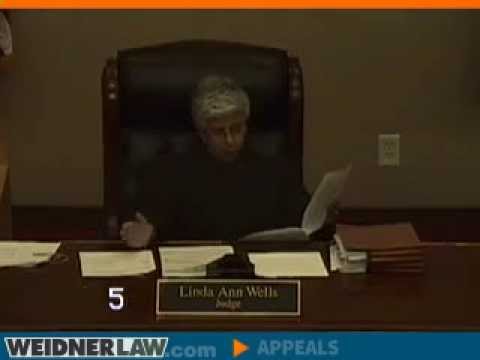
Watch the Oral Argument
This is the recording of the actual oral argument, posted on the channel. What lawyers and judges say at argument is not the ruling; the decision is summarized above.
🏗️ Can a Joined Junior Mortgagee Foreclose After Senior Judgment? | Vulcan v. Sabadell, 3D13-1039
Read the Law on FloridaRules.net
The statutes and court rules discussed in this article, free to read on FloridaRules.net:
Go Deeper
- Junior Lender Took the $176K Foreclosure Surplus, No Priority Ruling (Wells Fargo v. Aristo)
- The Florida Foreclosure Sale: Timing, Redemption, Surplus Funds, and When You Have to Move
- Refinance Missed the Second Mortgage, Subrogation Denied (Sherman v. Deutsche Bank)
Frequently Asked Questions
What happens to a second mortgage when the first mortgage forecloses in Florida?
If the second mortgagee is named in the case, its lien is cut off by the sale, and it can redeem before the certificate of sale under section 45.0315 or claim surplus funds under section 45.032. If it was left out of the case, its lien survives.
Can a second mortgage holder foreclose separately after the first lender gets a judgment?
Florida law does not squarely say. In Vulcan v. Sabadell the junior lender did exactly that before the senior sale, and the Third District affirmed the trial court’s ruling for it without an opinion.
If I buy at a second mortgage foreclosure sale, do I take subject to the first mortgage?
Generally yes. A junior lender can only sell what it had, which is the property subject to the senior mortgage. That is why a title search before bidding matters.
Can I undo a foreclosure sale purchase if I didn't know about the first mortgage?
It is hard. Relief under rule 1.540 requires grounds like mistake, fraud or a void judgment, and courts expect buyers to check the public record. Vulcan sought that relief and lost.
Talk to a Florida real estate litigation lawyer
Weidner Law, P.A. handles Florida real estate disputes, title problems and appeals from St. Petersburg. If you need a real estate litigation lawyer, call (727) 954-8752 or email weidner@mattweidnerlaw.com.
Read the law yourself, free: every Florida statute and court rule is on floridarules.net.
This article is general information about Florida law, not legal advice about your situation. Reading it, watching the videos, or contacting the firm does not create an attorney-client relationship. Every case turns on its own facts, and past results do not guarantee a similar outcome. The hiring of a lawyer is an important decision that should not be based solely upon advertisements.
