
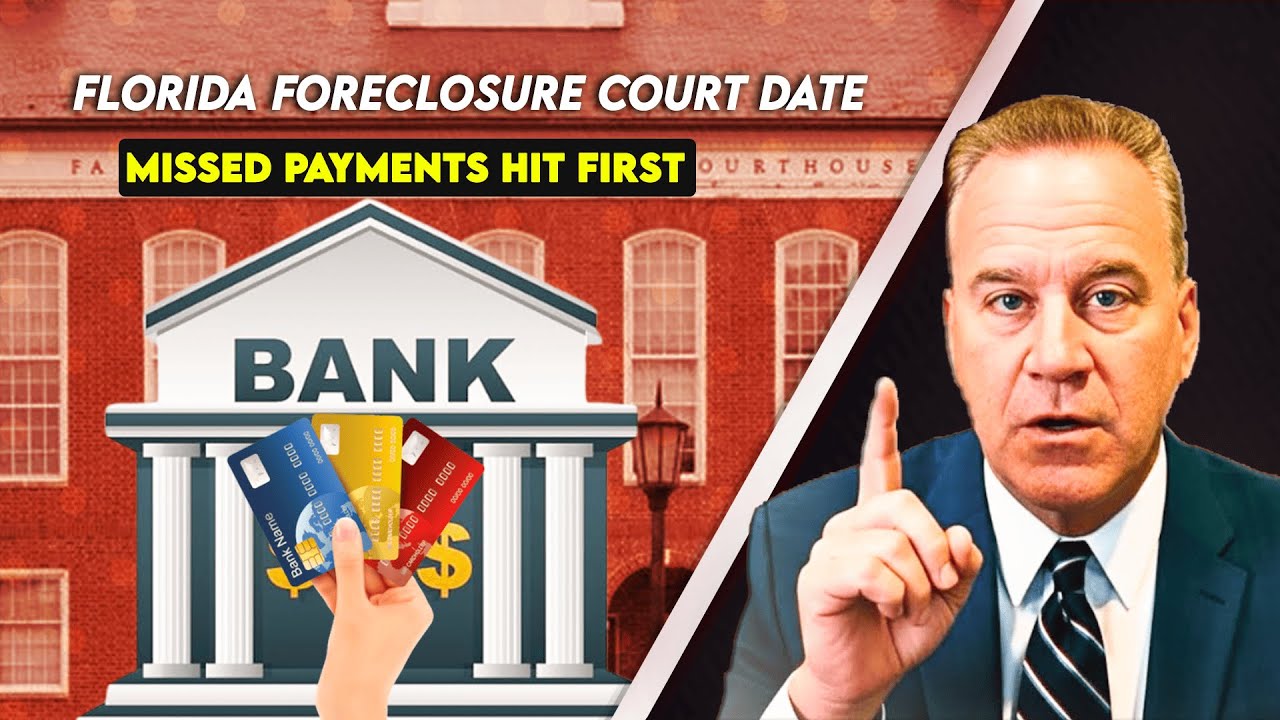

In short: The credit damage from a foreclosure starts with the first late payment, reported at 30, 60, 90, and 120 days, long before the lawsuit. A foreclosure can generally stay on your credit report for up to seven years under the Fair Credit Reporting Act (15 U.S.C. § 1681c). Getting out early, through a sale or short sale, usually means fewer late payments reported and a shorter wait before you can buy again.
Matt’s point in these videos is one most homeowners miss: by the time a foreclosure is filed, your credit has already been damaged. The question is how much more damage you allow.
The Damage Starts Long Before the Lawsuit
Mortgage servicers generally report a payment as late once it’s 30 days past due, then again at 60, 90, and 120 days. Federal rules generally keep a servicer from filing a foreclosure until a loan is more than 120 days delinquent. So by the time you’re served, there are usually several late payments already on your report. See the first 120 days.
How Long a Foreclosure Stays on Your Report
The Fair Credit Reporting Act limits how long most negative information can be reported, generally to seven years (15 U.S.C. § 1681c(a)). A foreclosure, and the late payments that led to it, generally fall within that rule.
Why Getting Out Early Helps
Every additional month of nonpayment is another late payment on your report. A sale, a short sale, or a negotiated exit while the loan is only a few months behind does less damage than riding the case to an auction. Matt’s advice: if you have a second home or condo, or a house that’s underwater, list it now, before the foreclosure is filed.
Short Sale vs. Foreclosure on Your Credit
Both show the loan wasn’t paid as agreed. But a short sale ends the account sooner, and future mortgage lenders generally require shorter waiting periods after a short sale or deed in lieu than after a completed foreclosure. Check the current guidelines of the loan program you want (conventional, FHA, VA) when you’re ready to buy again. See short sale vs. foreclosure.
Can You Buy Again?
Yes, eventually. But Matt is candid about 2026: credit is tightening, consumer debt is at record highs, and easy money is gone. Families who downsize early, clear other debts, and rebuild credit get back into a home faster than families who hold on until the sheriff arrives. See buying a home after foreclosure.
Check Your Report Now
Pull your reports at AnnualCreditReport.com. Look for errors: payments reported late that weren’t, or a forbearance or modification reported as a delinquency. You have the right to dispute inaccurate information with the credit bureaus.
Watch: the videos behind this article
Let’s talk about foreclosure and your credit in Florida
SHORT SALE vs FORECLOSURE: Which Saves Your Credit?
Can I Buy Another Home After Foreclosure in Florida?
Go Deeper
- Can I Buy Another Home After Foreclosure in Florida?
- Short Sale vs. Foreclosure in Florida: Which Is Better for You?
- Missed a Mortgage Payment in Florida? What Happens in the First 120 Days
- Can You Sell Your House During Foreclosure in Florida? Yes, and Often You Should
Frequently Asked Questions
How long does a foreclosure stay on your credit report?
Generally up to seven years. The Fair Credit Reporting Act, 15 U.S.C. § 1681c(a), limits how long most negative information can be reported.
When does foreclosure start hurting my credit?
With the first payment reported as 30 days late. By the time a foreclosure is filed, a homeowner usually has three or four late payments reported.
Is a short sale better for my credit than a foreclosure?
Usually. A short sale still shows the account wasn’t paid as agreed, and the late payments before it still count. But future mortgage lenders generally impose shorter waiting periods after a short sale than after a foreclosure.
How do I check my credit report for free?
Through AnnualCreditReport.com, the free site authorized by federal law, or directly from Equifax, Experian, and TransUnion.
Talk to a Florida foreclosure defense lawyer
Weidner Law, P.A. has defended Florida homeowners in foreclosure for more than 25 years, from St. Petersburg. If you need a foreclosure defense lawyer in St. Petersburg or anywhere in Florida, call (727) 954-8752 or email weidner@mattweidnerlaw.com.
Read the law yourself, free: Chapter 702, Florida Statutes (Foreclosure of Mortgages and Liens) and Chapter 45 (Judicial Sales).
This article is general information about Florida law, not legal advice about your situation. Reading it, watching the videos, or contacting the firm does not create an attorney-client relationship. Every case turns on its own facts, and past results do not guarantee a similar outcome. The hiring of a lawyer is an important decision that should not be based solely upon advertisements.
